
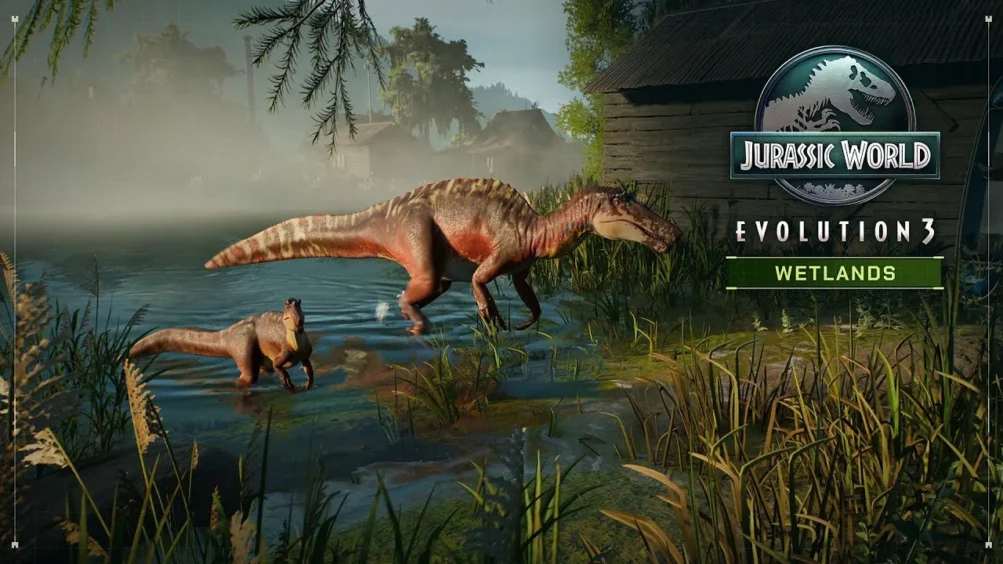
I know I’m a bit late to the party, but I was lucky enough to get hold of a copy of the new Jurassic World Evolution 3 Wetlands DLC pack for Jurassic World Evolution 3. The Jurassic World Evolution series has always been at its best when it leans into ecological complexity rather than pure spectacle. Dinosaurs are impressive on their own, sure—but watching them interact with an environment that actively pushes back is where the magic really happens.
With the Jurassic World Evolution 3 Wetlands DLC, the first expansion for Jurassic World Evolution 3, Frontier takes that philosophy and submerges it—sometimes literally—in mud, reeds, floodplains, and slow-moving water. This is not a flashy “more dinosaurs, bigger teeth” add-on. Instead, Wetlands is about systems, behaviours, and the uneasy balance between land and water. It’s a DLC that asks players to think like park managers and ecologists, often at the same time.
A Living, Breathing Wetlands Biome
At the heart of the Jurassic World Evolution 3 Wetlands DLC is the wetlands biome itself. These maps are defined by shallow waterways, marshy ground, dense vegetation, and terrain that resists neat enclosure design. Paths don’t always want to go where you want them. Fences demand more planning. Drainage, elevation, and water flow become meaningful considerations rather than background decoration.
What I find impressive is how wetlands aren’t treated as a static environment. Seasonal flooding and fluctuating water levels subtly alter enclosure layouts over time, occasionally shrinking usable land or cutting off access points if you’ve been careless. It’s not punishing, but it is persistent, and it encourages a more flexible design mindset than the rigid grid layouts veteran players might default to.
Expanded Creative Possibilities
With this addition, the Jurassic World Evolution 3 Wetlands opens up far more design avenues than before. I love the way that the Jurassic World Evolution 3 Wetlands pack offers a new level of creation for players, and it works especially well alongside Jurassic World Evolution 3’s new building functions. It wouldn’t be a complete DLC pack without the dinosaurs, am I right?
The Jurassic World Evolution 3 Wetlands DLC introduces a roster of species that finally make these environments feel purposeful rather than decorative. Semi-aquatic and swamp-adapted dinosaurs don’t just tolerate wetlands—they thrive in them. Their animations reflect this, from slow wading and partial submersion to hunting behaviours that take advantage of limited visibility and tight terrain.
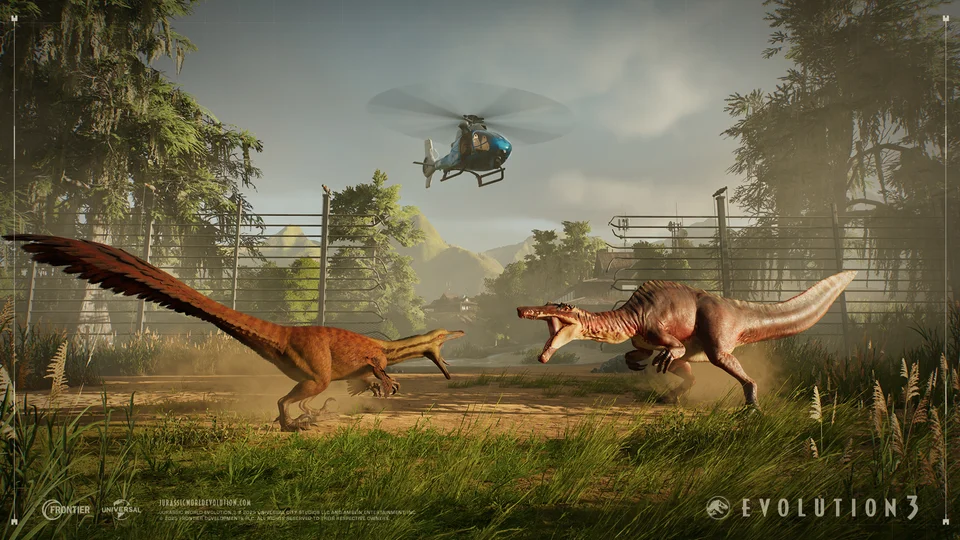
Predators in particular feel more dangerous here, not because they’re stronger on paper, but because the environment amplifies their strengths. Prey animals cluster closer together. Escape routes are narrow. Visibility drops. The result is emergent behaviour that feels less like scripted chaos and more like ecological pressure playing out in real time.
New Dinosaur Roster
Irritator
A fierce semi-aquatic spinosaurid from the Early Cretaceous era. With a sleek triangular skull, unique nostril placement, and sharp teeth, this versatile carnivore is adept at finding fish in deep water and hunting dinosaurs on land. The Irritator’s full family unit emerges with distinct dimorphic patterns and rich colours to unveil to your guests.
Austroraptor
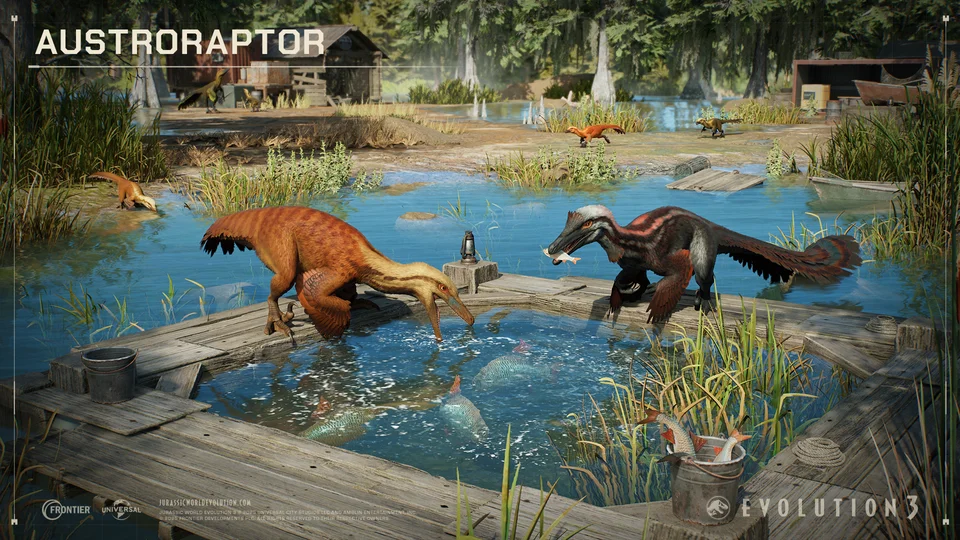
A larger relative of the Velociraptor, this fish-loving carnivore hails from the Late Cretaceous era. With a jaw adapted for catching fish, this species can often be seen skulking around fish feeders and seeking live prey on land, making it an ideal addition for any new wetland-themed enclosure.
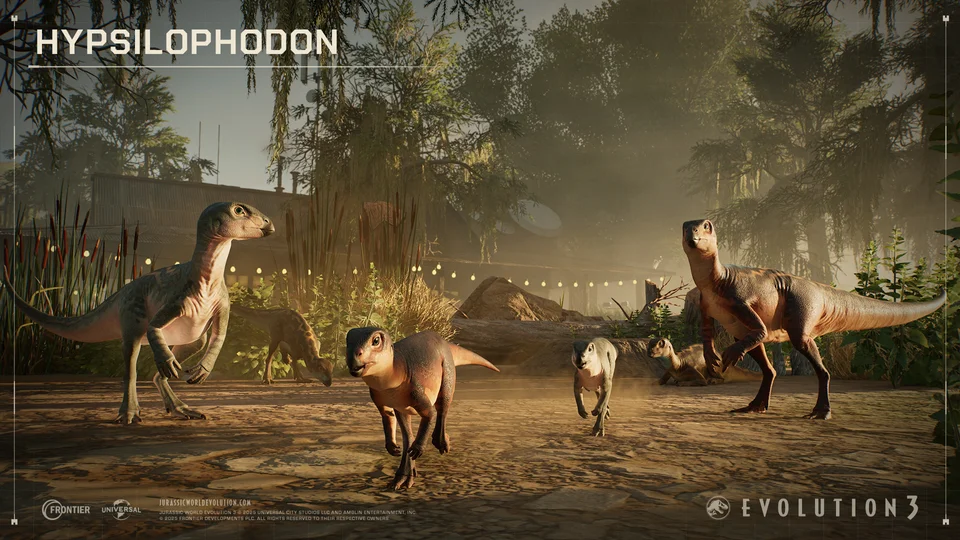
Hypsilophodon
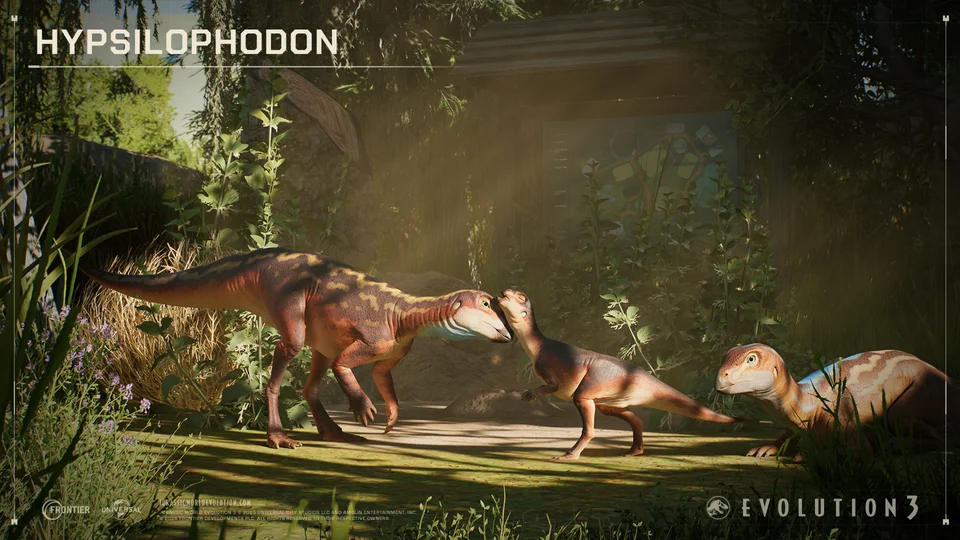
Built for speed, these lightweight herbivores are from the Early Cretaceous era and favoured warm, swampy environments. These herd-focused, sharp-crested bipeds use their strong beaks to grind down low-lying vegetation, making them perfect for foliage-heavy enclosures.
Deeper Management Systems
From a gameplay perspective, Jurassic World Evolution 3 Wetlands adds some of the most interesting management wrinkles Evolution 3 has seen so far. Disease spreads faster in humid environments. Power infrastructure is more vulnerable to flooding. Ranger access can be disrupted if water levels shift unexpectedly. These new features add a fresh challenge even for the most experienced park managers.
Crucially, these challenges don’t exist in isolation. Ignoring terrain stability to maximise guest visibility might come back to bite you during a storm. Overcrowding a marsh enclosure can trigger stress responses that wouldn’t appear in drier biomes. The DLC quietly reinforces one of the series’ core themes: efficiency without foresight is just delayed failure.
Campaign & Challenge Modes
The included campaign scenarios and challenge modes are refreshingly restrained. Rather than throwing artificial restrictions at the player, they lean into environmental storytelling and logistical problem-solving. You’re often tasked with rehabilitating unstable park regions or integrating wetlands into existing infrastructure that was never designed for them.
This is thoughtful design that trusts the player to engage with the systems rather than fight them. Success feels earned not because the game loosened the rules, but because you learned how to work with the environment instead of against it.
Visuals and Sound Design
Visually, Jurassic World Evolution 3 Wetlands is understated but striking. Mist hangs low over the water at dawn. Vegetation feels thicker and less ornamental. Dinosaurs partially obscured by reeds or murky water look genuinely imposing in a way wide-open plains can’t always match. Just when you think Frontier have done it all, they come back with more ways to make dinosaurs and environments pop.
At times, the park becomes a genuine joy to simply sit back and watch. The sound design deserves special mention. Ambient audio—distant calls, water movement, and insects—adds a layer of immersion that makes these parks feel alive even when nothing dramatic is happening. It’s a quieter kind of spectacle, but arguably a more convincing one. Sometimes it really is the little things that provide the biggest impact.
Final Verdict: A Strong, Thoughtful Start to JWE3’s DLC Cycle
The Jurassic World Evolution 3 Wetlands DLC doesn’t try to redefine Jurassic World Evolution 3. Instead, it deepens it. By introducing an environment that complicates construction, behaviour, and long-term planning, Frontier delivers an expansion that rewards patience and systems literacy. For players who enjoy the management side of the series as much as the dinosaurs themselves, this DLC feels essential.
It adds friction in the best possible way—encouraging smarter design, adaptive thinking, and a healthy respect for nature’s refusal to be neatly boxed in. Wetlands isn’t about bigger fences or louder roars. It’s about what happens when the ground beneath your park refuses to stay solid—and how well you adapt when it doesn’t. With an asking price of £7.99, it feels like a small price to pay for hours of park management fun and new dinosaurs to put on display. For these reasons, I’m giving the first Jurassic World Evolution 3 DLC pack a stellar score of 9 out of 10.
Jurassic World Evolution 3 Wetlands Trailer
Read more awesome reviews >>here<<.
The game was provided to us for the express purpose of reviewing.




You must be logged in to post a comment.