
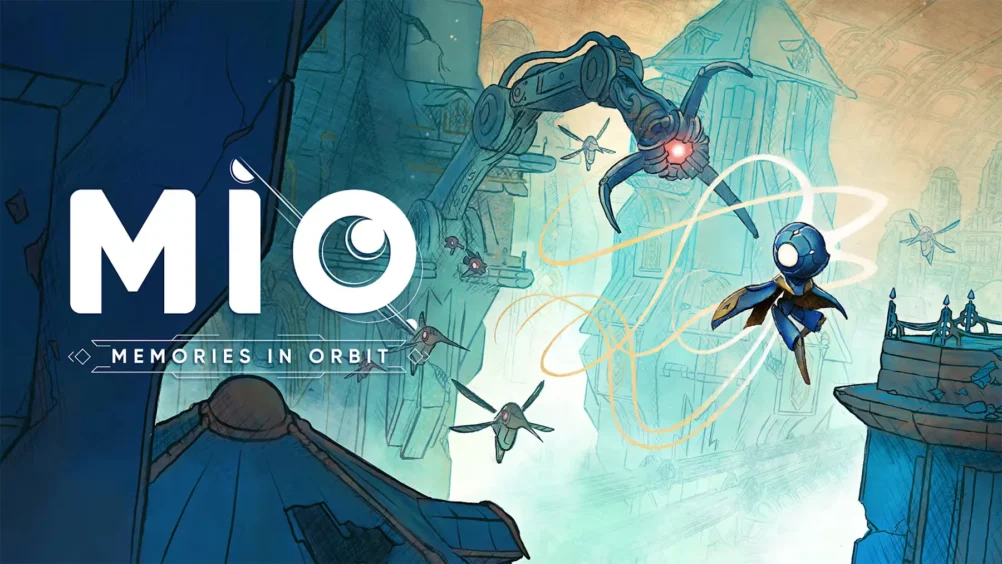
Some games grab you immediately with noise and spectacle. MIO Memories in Orbit does the opposite. It pulls you in quietly… and before you realise it, you’re fully invested.
Developed by Douze Dixièmes and published by Focus Entertainment, MIO Memories in Orbit launched in January 2026 across PC and consoles. On the surface, it’s another entry into the crowded Metroidvania genre. But once you spend a few hours aboard The Vessel, it becomes clear this isn’t just ticking genre boxes — it understands why the formula works.
You play as Mio, an android who awakens on a vast, failing space station drifting toward collapse. The AI caretakers known as the Pearls have gone silent, systems are breaking down, and the structure itself feels like it’s barely holding together. That’s about as much direct explanation as you get. After that, you’re left to figure things out.
And honestly? That restraint is refreshing.
Exploration That Actually Feels Meaningful
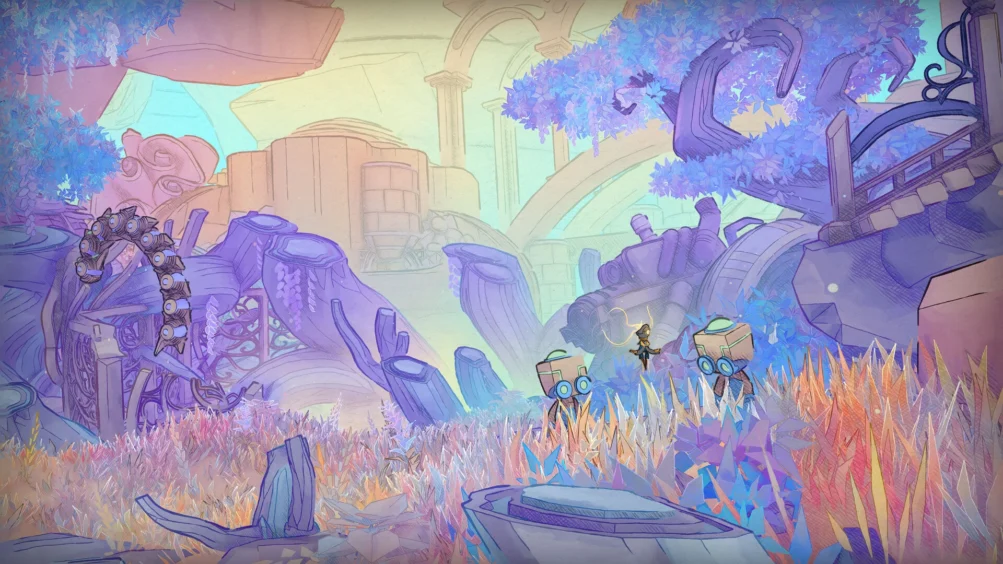
The Vessel isn’t built like a checklist of biomes. It feels like a real place. Industrial sectors bleed into frozen ruins. Overgrown botanical areas sit next to sterile laboratories. Every region has a distinct identity, but nothing feels randomly stitched together.
Progression follows classic Metroidvania logic. You unlock new traversal abilities — advanced jumps, gliding, wall climbing, a grappling hook — and suddenly previously unreachable routes open up. The difference here is how naturally those moments land. When you realise you can now access that ledge you noticed two hours ago, it feels earned.
There were times I wandered without a clear objective. Some players might find that frustrating. I didn’t. Getting slightly lost is part of the appeal. It makes discoveries feel personal rather than scripted.
One of the Best Art Directions This Year
Let’s talk visuals, because this game looks incredible.
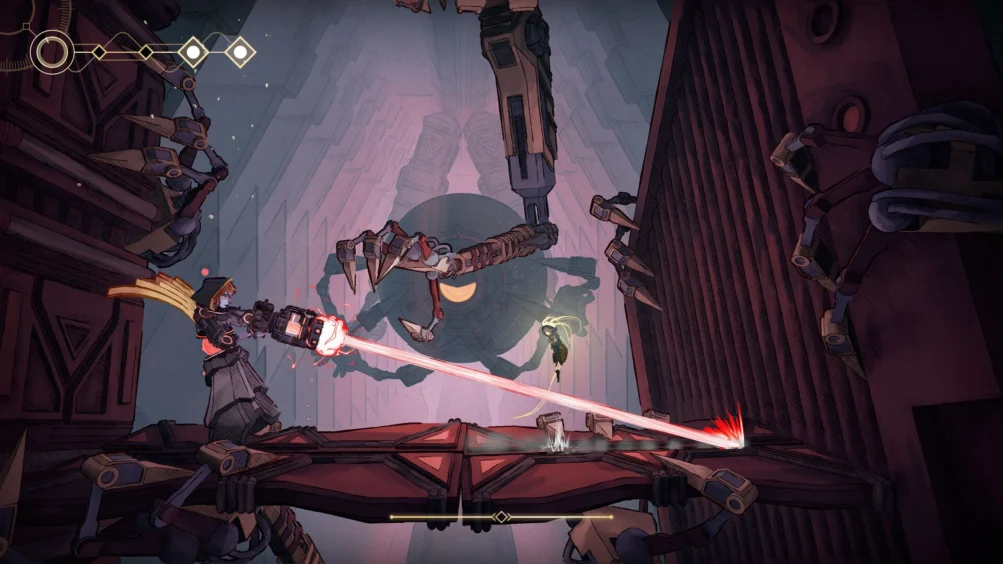
The art style blends hand-painted textures with layered 3D depth, giving everything a soft, almost illustrated quality. It doesn’t rely on pixel nostalgia. It doesn’t chase hyper-realism. It sits confidently in its own space.
Lighting does a lot of heavy lifting. Soft glows cut through metallic corridors. Distant machinery hums in silhouette. Ice-covered sections shimmer in pale blue tones, while overgrown areas lean into warmer, natural colours. It’s cohesive without feeling repetitive.
More than once, I stopped moving just to take it in. That doesn’t happen often in a platform-heavy game.
Movement Is the Star
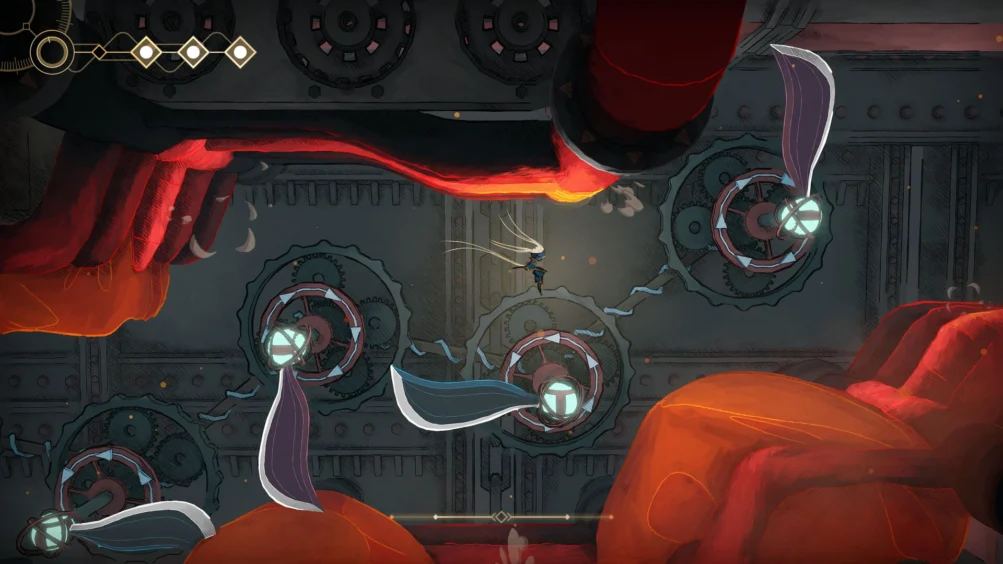
If a Metroidvania fails at movement, nothing else matters. Thankfully, MIO Memories in Orbit feels good from the start and only improves as you expand your toolkit.
Controls are tight. Jumps feel deliberate. Air control is responsive without being floaty. As abilities stack up, traversal becomes almost rhythmic. You start chaining moves together instinctively.
That said, the difficulty curve sharpens as you progress. Later platforming sequences demand precision. Miss a jump, and you might face a longer run back than you’d like. It’s not unfair, but it does expect focus.
The grappling hook is the one mechanic that occasionally feels slightly less polished than the rest. It works, but during high-pressure sequences it can feel just a touch less precise than the core movement. Not broken. Just noticeable.
Combat Is Measured, Not Flashy
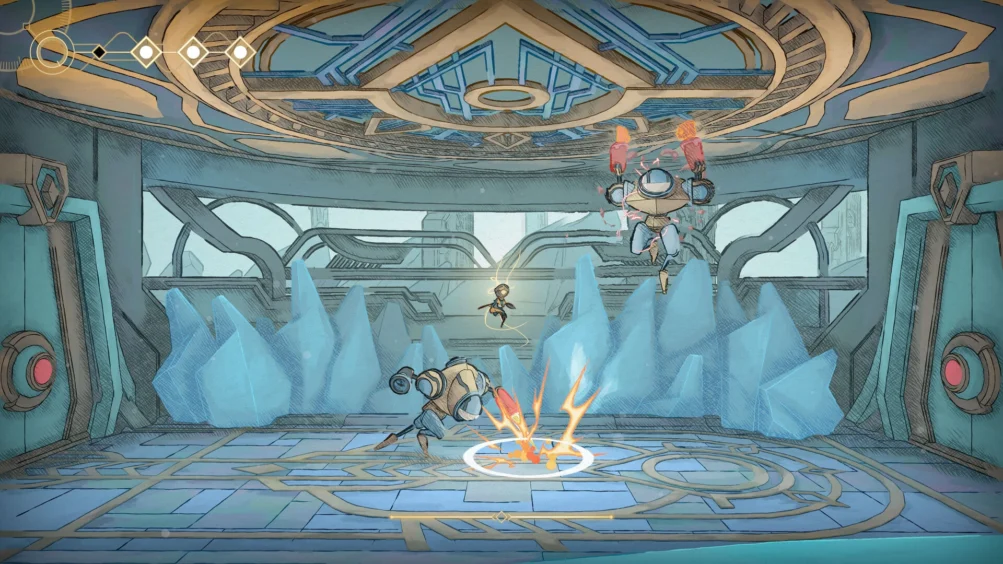
Combat doesn’t try to steal the spotlight. It supports the exploration.
MIO Memories in Orbit relies on controlled attacks, dodging, and tactical upgrades rather than massive combo strings. There’s a modifier system that lets you adjust how you approach encounters — boosting damage, increasing survivability, or enabling small quality-of-life tweaks. It’s flexible without becoming bloated.
Boss fights are visually strong and often pattern-driven. You’re learning behaviours, watching tells, reacting accordingly. Some encounters genuinely stand out. Others feel more functional — designed to test mastery before you move on.
Importantly, they don’t feel like padding.
Atmosphere Carries the Narrative
MIO Memories in Orbit doesn’t deliver heavy cinematic storytelling. Instead, it leans on tone.
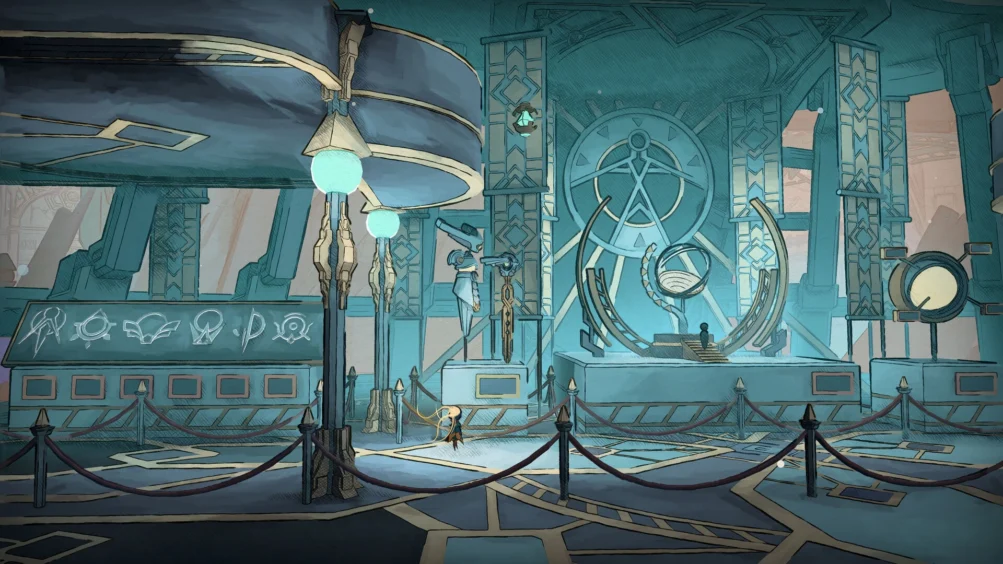
Fragments of lore, environmental clues, and subtle interactions slowly reveal what happened aboard The Vessel. It’s understated. Sometimes deliberately vague. But it fits the lonely, drifting atmosphere perfectly.
The soundtrack complements this approach beautifully. Ambient electronic tones shift during exploration, swelling slightly during combat without ever overwhelming the experience. Sound design — distant echoes, mechanical groans, subtle environmental hums — reinforces the feeling that this place is slowly dying around you.
Is It Perfect?
No.
Some platforming sections may push patience. The story won’t satisfy players who want direct narrative exposition. Combat depth isn’t genre-defining.
But none of those feel like oversights. They feel like conscious design choices.
What stands out most is consistency. Nothing feels thrown together. Every element supports the tone the developers clearly wanted to create.
MIO Memories in Orbit Trailer
MIO Memories in Orbit doesn’t try to reinvent the Metroidvania genre. It refines it with confidence, style, and a clear creative vision. If you value atmosphere, exploration, and movement that feels genuinely satisfying, this is absolutely worth your time.
Read more awesome reviews >>here<<.
The game was provided to us for the express purpose of reviewing.



You must be logged in to post a comment.