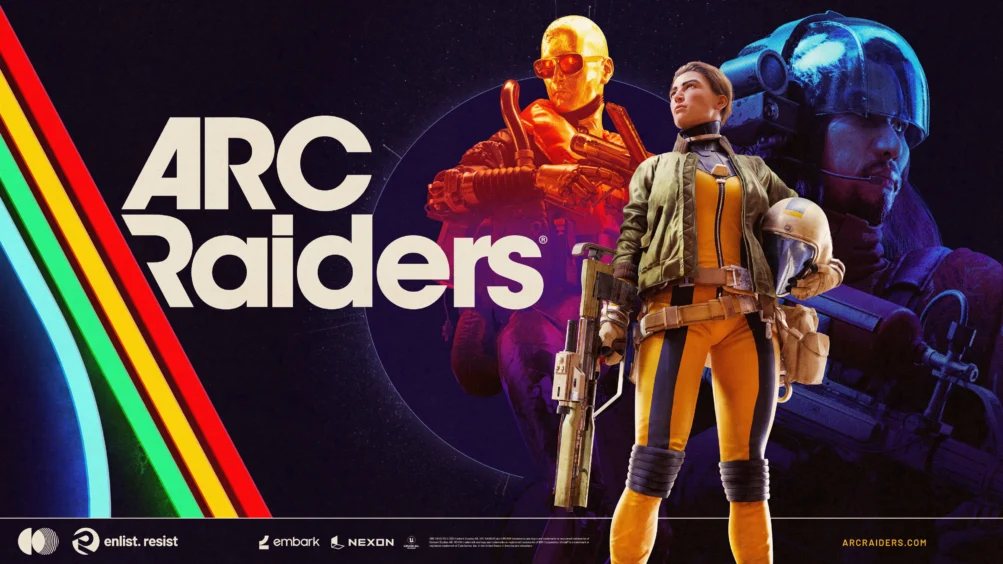
I’ve watched tens of live-service launches from the inside and out. ARC Raiders has just completed its third week of life, and the story has changed quickly: bigger peaks, faster patches, and a louder community. This update takes you through the hard numbers, the latest patch notes, and what that all means for the game’s chances of becoming a long-term success.
Quick snapshot (tl;dr)
- New Steam peak: ~481,966 concurrent players (mid-November). See SteamDB. SteamDB charts.
- Patch 1.3.0 (build 1.000.010) deployed — balance passes, Venator nerf, crash fixes. Reported across patch notes coverage. MP1st patch notes.
- Cross-platform reach: industry outlets reported combined platform peaks in the hundreds of thousands to 700k+ range during launch weekends. See reporting from PC Gamer and GameSpot.
What the numbers actually tell us
Raw peaks are newsworthy, but they don’t tell the whole story. My interest is in the trend: is this a single explosive weekend or a sustained climb? ARC Raiders’ mid-November numbers show both strong marketing momentum and real player curiosity turning into sustained play sessions.
High-level takeaways:
- Momentum beyond day-one: A later peak (not only day-one) suggests word-of-mouth and streaming discovery, which is healthier than a short-lived launch spike.
- Plateau targets grow with the peak: With a ~482k peak, a realistic, healthy plateau is now around 20–30% of that — roughly 96k–145k concurrent players. Hitting and holding that range will validate the game as a sustainable live service.
- Visibility brings pressure: Higher visibility means more scrutiny — patch failures, monetisation complaints, and anti-cheat issues amplify faster when millions are watching.
Patch 1.3.0 — what was changed and why it matters
Embark pushed Patch 1.3.0 shortly after the late surge. The important pieces were:
- Major weapon balance — notably a noticeable nerf to the widely used Venator pistol to slow the “one-weapon dominates” meta.
- Bug & crash fixes — server-side tweaks and client stability improvements aimed at reducing queue/backlog issues.
- Quality-of-life & matchmaking fixes — small QoL changes to spawn logic and match fairness.
Why that matters: rapid, sensible balance patches demonstrate the dev team is watching telemetry and player feedback closely. That responsiveness builds trust. But there’s a balancing act — nerf too hard or too fast, and you upset a core of high-skill players and streamers. The early community reaction to 1.3.0 has been mixed, but broadly pragmatic: players want balance even when it stings.
Patch coverage and community reaction are tracked in outlets like PC Gamer and forum threads on the Steam store.
Retention — the number that will decide everything
Here’s the blunt metric: peaks get people in the door, retention keeps them coming back. From the latest publicly available monitoring, ARC Raiders’ week-to-week drop looks better than many recent launches — early figures indicate lower-than-average initial churn. That’s encouraging.
Practical retention benchmarks:
- Stability range (good): 20–30% of peak sustained — for ARC that’s ~96k–145k concurrent.
- Risk range (worry): < 15% of peak — signals rapid erosion and creator churn.
We’ll need to monitor SteamDB’s 7- and 30-day moving averages to see whether the player base decays, stabilises, or regrows after subsequent content drops.
Community mood and creator ecosystem
Right now, the community is engaged. That’s visible in subreddit discussions, sustained Twitch viewership, and new streamers jumping on the bandwagon. Players complain — but they’re also making guides and tips, which is always a good sign. Negative threads have focused on matchmaking queues and a handful of balance gripes; these are fixable with focused patches.
Creators have a short attention span. If Embark can give them reasons to return (new modes, ranked play, events), that streaming multiplier will keep funnelling new players in:
What could blow this up — and fast
- Poorly received monetisation: Any pricing perceived as greedy or pay-to-win will create backlash rapidly.
- Server instability at scale: queue times and disconnects are the enemy of retention.
- Slow or flaky roadmap delivery: players expect content; delays erode trust.
Final verdict — candid, short, actionable
I’m optimistic but pragmatic. ARC Raiders has done something rare: it converted launch buzz into continued momentum, and the developers have shown they will patch and balance quickly.
That gives them a fighting chance to build a long-running live service.
If Embark continues to:
- Ship meaningful content on a predictable cadence,
- Communicate openly with the community, and
- Be decisive about anti-cheat and server stability,
— then ARC Raiders can plausibly stabilise in the healthy plateau range and become one of the few premium extraction shooters to last multiple years. If they fail on any of those three, the drop from this new peak will be harsh and very public.
Sources & further reading
- SteamDB — ARC Raiders charts (concurrent players & 24h peaks)
- PC Gamer — launch & analysis
- GameSpot — peak reporting & commentary
- Steam — ARC Raiders store page & reviews
- Forbes — industry reach & trends
- MP1st — Patch 1.3.0 notes and breakdown
- r/ArcRaiders subreddit — community conversations
If you enjoy games and gaming and want more NEWS from the Gaming World Click Here