
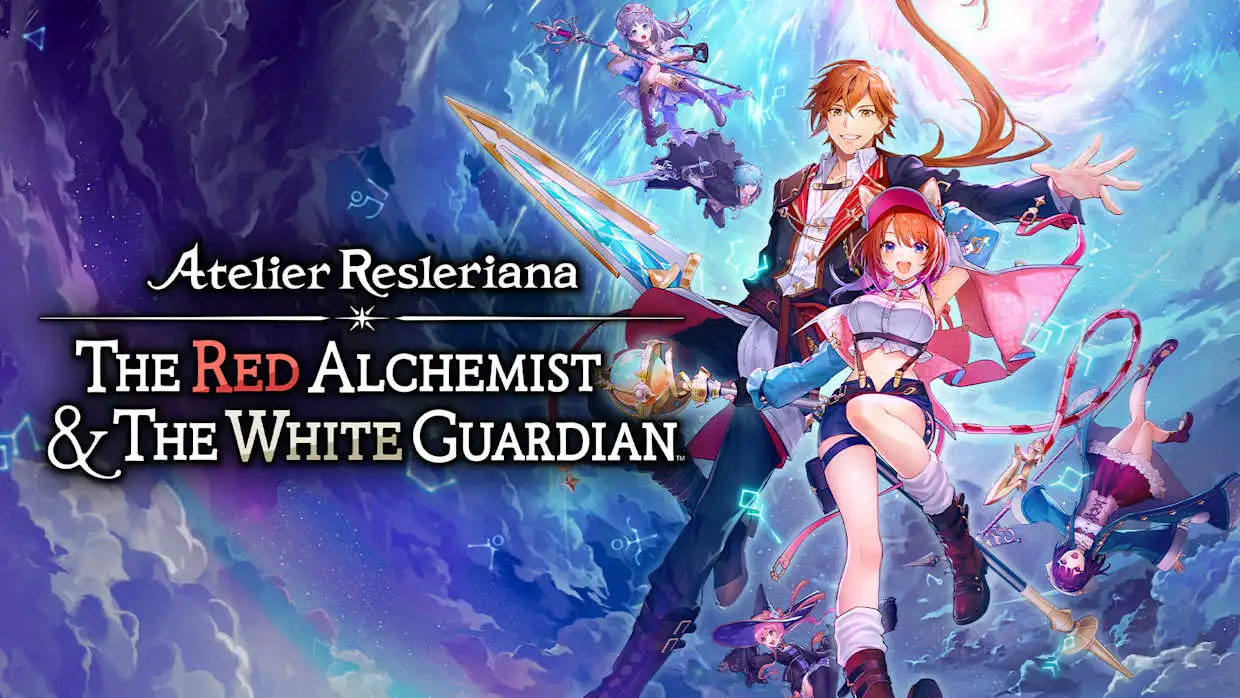
I’m probably going to butcher this, but Atelier Resleriana: The Red Alchemist & the White Guardian is one of the hardest things I have to pronounce in this review. So, to keep this short and simple, I’ll be referring to this as “Resly” from this point onward just to keep my sanity and yours at bay. To start things off, Resly is a game made by Gust, the company that debuted Atelier Marie: The Alchemist of Salburg back in 1997. The company was then bought by Koei Tecmo Games 14 years later, and the rest is history.
But going back to Atelier Resleriana itself, Resly is a game that mixes (and I mean that as both literally and figuratively) because that’s just what the game does. It’s literally about mixing all sorts of ingredients that you can find in your backyard or even in places you normally wouldn’t think of, just so you can craft something that even in a fantasy world seems very absurd.
To put it into context, we’re talking about using a huge cauldron, then throwing in metal bars, maybe even some dragon tusks for good measure, and then after a good mix, you end up with a Legendary-level staff that even a great hero from an RPG can only dream of having. On the flip side, it figuratively mixes both the art of crafting and the world of a turn-based RPG.
Engaging story that hooks you in…
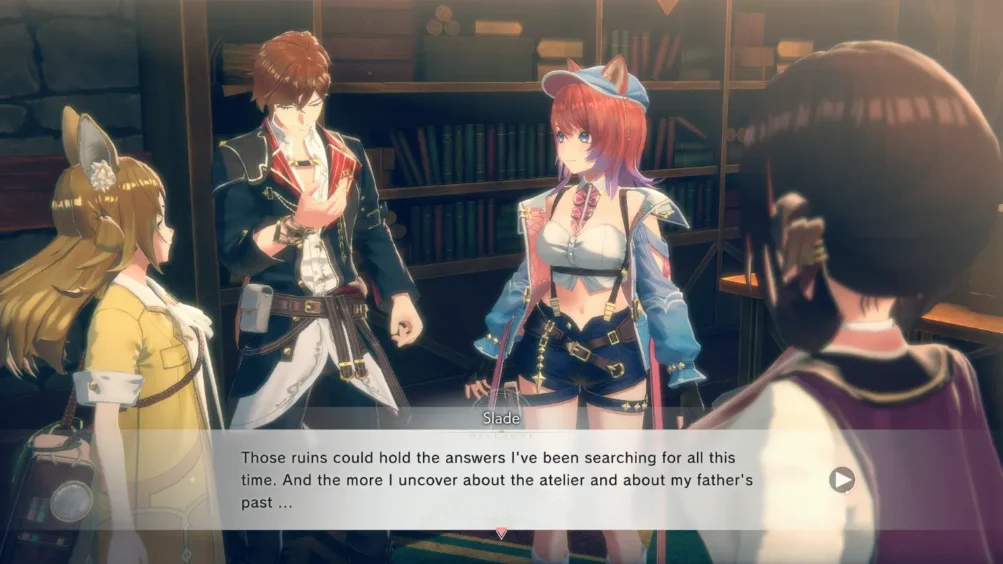
Story-wise, it provides a simple tale and an equally simple theme. Rias Eidreise is one of the two main protagonists who honestly doesn’t even have the resemblance to the game’s title but happens to be the center piece of the plot. She’s an adventurer and your soon-to-be resident alchemist who’s going to reshape the town of Hallfein after the incident that happened twelve years ago that left it in ruins. So, after adventuring on her own, she ends up bumping into Slade Clauslyter, the other main protagonist, who had the key to opening up a door into a hidden atelier. And that’s where the story unfolds.
Unlike the other main titles, though, Resly is a bit unique because it brings together a lot, and I really do mean A LOT of familiar faces into its story. You’ve got characters from all different titles from the series, such as Marie from the first ever game, to the more recent ones like Ryza and Firis. You’ve even got characters from Mana Khemia like Vayne Aurelius just casually strolling around town and engaging in all sorts of conversations throughout the game’s progression.
Sadly, Atelier Resleriana only has a couple of playable characters and the rest of the cast are just there to fill up the town or make requests. However, it does feel nice to see some nostalgic characters getting a glow up from their old and pixelated looks back in their own respective games.
Turn-based with a twist
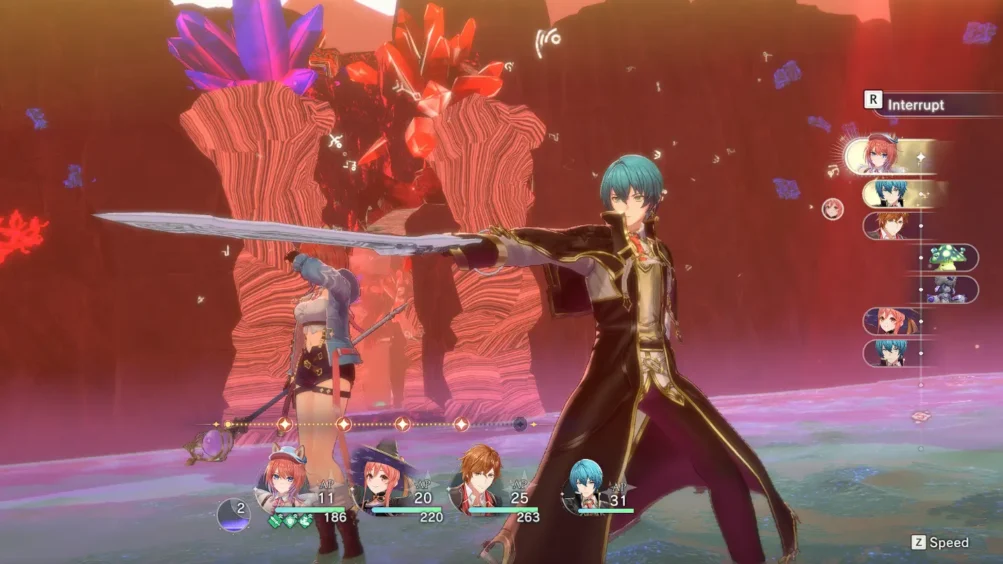
From a gameplay standpoint, I love the direction they went with this one. It goes back to its roots as a turn-based RPG rather than the more recent ones that have a more active battle system while still providing a unique twist to the genre. You have your front and backline characters that can switch in and out whenever you feel like it, but you also have the freedom to do combo attacks or interruptions to add more damage in a single turn or even provide support to those in dire need. In a sense, you have a lot more control during the flow of battle, which adds a bit of fun complexity.
However, they kind of dropped the ball once they introduced “Dimensional Paths” or, as I call it, the lazy dungeon. Basically, it’s a dungeon with multiple floors connected by rooms and a portal leading to the next floor. By the end of it, you get to fight a boss, open a chest and interact with a pedestal that allows you to learn a unique recipe. It sounds cool on paper, but it felt like it was made using a generic dungeon generator.

Synthesis, store management and town building
Much like the other titles in the series, crafting has mostly been unique or, in a way, different. They’re never completely the same from title to title. So, in Atelier Resleriana, each ingredient has two different colours. It could be green on the left side and yellow on its right side. The goal here is to use ingredients that match the colours to complete a link, which provides better effects or even morphs a recipe into something else completely. It’s a fun little mini-game where you’re really expected to hoard a lot of stuff. Beyond the usual crafting, you also unlock all sorts of different things inside the atelier that will help in progression.
Also, as I mentioned earlier in the review, the story is about reshaping or rather reviving, the ruined town of Hallfein. As such, you’re also tasked with developing the town by selling items, tackling missions and investing in the town’s progression. This eventually provides a visually striking change from a ruined town to a bustling city filled with all sorts of people who can also sell their wares. I really loved this aspect of Atelier Resleriana because it just shows how much of a difference you’ve actually made so far.

An eye candy of visuals
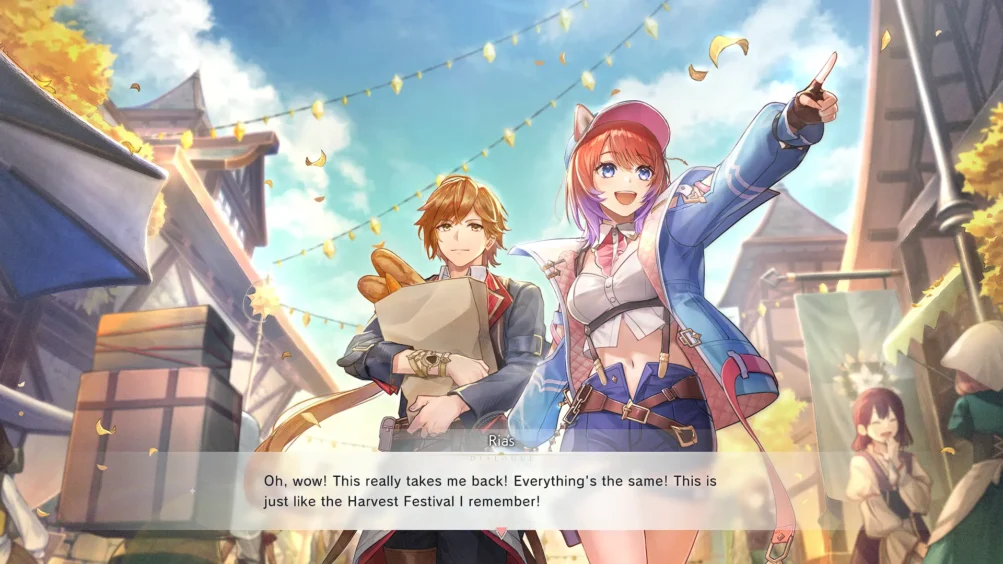
Visually, it’s a really pretty game, only heightened by its great animations both in cutscenes and its battles. I may have complained about previous games feeling static or even robotic in its delivery but I’m happy to announce that I now feel a genuine enjoyment in seeing how characters express themselves, even in the tiniest bit of dialogue. Most scenes are properly animated and voiced, while others have quality images that I just can’t help but snap a photo of.
There are also a lot of pretty-looking characters throughout the series, and it only feels criminal for Gust not to even allow us to add them as party members. The world where Resly lies is also filled with varying landscapes and traversal-locked areas, so exploration can sometimes be very fun. The only downside here is the idea that there are probably more unplayable characters in town than there are unique enemies outside of the usual palette swaps and recolours.
Conclusion
Atelier Resleriana: The Red Alchemist & the White Guardian, the successor to the free-to-play gacha game of the same name, is undeniably a really good one with the heart and soul deserving of being called an Atelier game. Its combat is fun, while its crafting and synthesis also deserve praise but what really got me good is its seemingly laidback introduction that takes a deeper turn as you dive deeper and deeper into that rabbit hole.
The main characters being easily lovable is a huge plus that really just made me want to see what happens next, right after finishing a previous chapter, especially since the animations can be so good that it just felt like I was watching an interactive anime unfold. So, if you’re itching for a turn-based game with an equally fun story, this one has checked all my boxes, and I hope it does yours, too.
Atelier Resleriana Video Review
Read more awesome previews >>here<<.
Game code was provided to us for the express purpose of reviewing.



You must be logged in to post a comment.