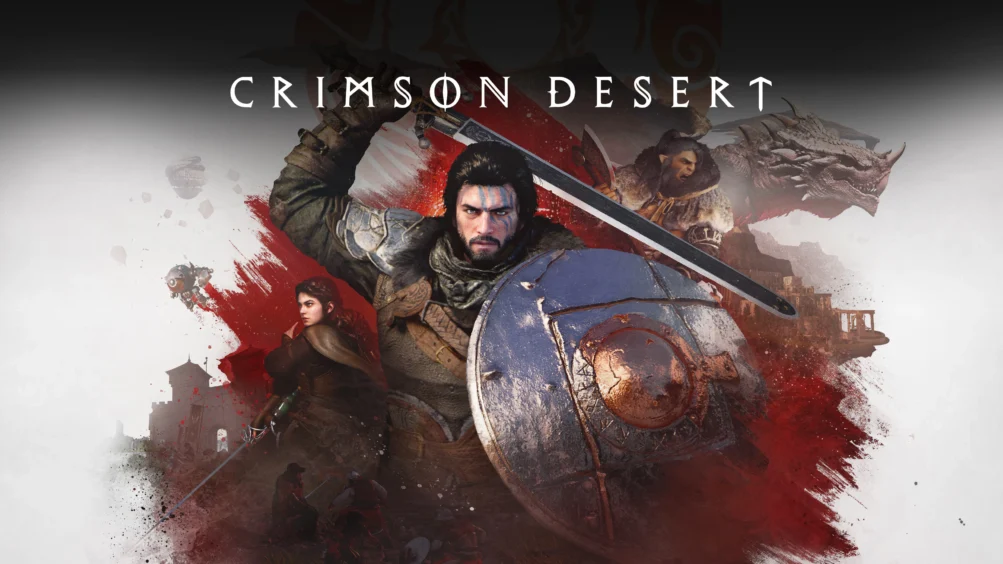
When Crimson Desert finally launched in March 2026, it was one of the most anticipated open‑world action RPGs in years. Developed by Pearl Abyss, known for the long‑running MMO Black Desert Online, expectations were sky‑high — but initial reception was far from unanimous praise.
Mixed Review Scores: Not Quite the Universal Hit Some Expected
Despite generous pre‑release hype and comparisons to blockbuster open‑world games, Crimson Desert’s critical reception landed mostly in the *mid‑to‑high 70s* on major aggregators like Metacritic, with an average around 78/100. This put it solidly in the “good but not great” category rather than the elite tier many expected after years of marketing.
Scores varied widely among outlets. Some praised the world’s size, ambition, and combat systems, while others felt the game was unfocused or overly bloated. One well‑known critic review gave it a middling 6/10, stirring fan debate about whether the game’s $69.99 price tag matched what was delivered.
However, not all reviews were lukewarm. Some outlets celebrated Crimson Desert as one of the most visually impressive and deeply engaging open worlds in recent memory — giving much higher scores, showing that impressions really did diverge.
Why Critics Were Divided
Looking beneath the scores, several common themes emerge in the mixed reception:
- Graphics and World Design: Almost universally praised. Reviewers agreed that Pywel — Crimson Desert’s vast open world — is stunning and packed with environmental detail.
- Combat and Mechanics: Many critics loved the depth of combat and willingness to let players experiment with systems, but some pointed out inconsistency and combat balance issues that made certain encounters frustrating.
- Story and Characters: A common complaint was weak narrative and uninspiring character arcs, leaving the story feeling lightweight compared with the world around it.
- Controls and UI: Clunky controls, awkward menus, and usability issues were frequently mentioned as detracting from the overall experience.
- System Overload: Reviewers noted the game tries to do a lot — perhaps too much — with overlapping systems that lack focus or polish.
These factors combined to produce a game that some critics loved and others found frustrating or uneven — hence the “good but flawed” scores across the board.
Patches & Quick Fixes: How Pearl Abyss Is Responding
Pearl Abyss has been unusually responsive in the first weeks after launch, rolling out a string of patches and updates addressing many of the issues highlighted by players and critics alike:
Day One and Early Patches
The earliest updates — shipped within days of launch — focused on combat balance changes, adding a new tutorial quest to better educate players on core systems like Abyss Gears, and smoothing out some boss fights after criticism of unfair difficulty spikes.
Quality‑of‑Life Improvements
Patches such as 1.00.02 and 1.00.03 tackled major usability complaints. A significant improvement was the addition of Private Storage, so players could stash loot and inventory items — a feature critics and players had noted was desperately missing at release.
Ongoing Updates & Recent Patch 1.01.00
Recent patch 1.01.00 added:
- Five new summonable mounts
- Reduced loading times
- Improved controls and responsiveness
- Refinement tokens and crafting quality‑of‑life functions
- Material chests scattered across the world
These updates aim not just to fix bugs but to improve the *flow* of play and reduce early friction.
Developer Transparency & Community Interaction
Pearl Abyss has also publicly acknowledged some of the more unusual missteps. After players noticed oddly surreal paintings that clearly used AI generation, the studio apologized and began replacing those assets with hand‑made art to match the game’s tone.
There was also a community backlash over the game’s initial stance on supporting certain PC hardware, with developers backtracking and pledging to work toward better compatibility — particularly around Intel Arc GPUs.
Is Crimson Desert’s Future Bright?
Steam reviews have recently climbed from *mixed* to approaching “mostly positive,” showing that patches and developer responsiveness are beginning to sway player perception. Daily concurrent players have held strong, and community sentiment is trending more positive as fixes arrive.
That said, some voices in the community express concern that rapid changes might eventually dilute the game’s original pace and feel — a tension familiar in open‑world RPGs with passionate fanbases.
Conclusion: A Divisive Game With Room to Grow
Crimson Desert launched with big ambitions and even bigger expectations, and while it didn’t universally live up to its *Game of the Year* hype, it has shown strong potential. Its review scores reflect both admiration for its world and criticism for its rough edges. But thanks to fast‑moving patches, active community engagement, and ongoing fixes to core gameplay and quality‑of‑life issues, the game’s reputation is improving.
For players willing to look past early flaws and invest time in the world of Pywel, Crimson Desert may yet become one of the standout open‑world experiences of 2026 — a slow burn that rewards patience and persistence.
If you enjoy games and gaming and want more NEWS from the Gaming World Click Here