
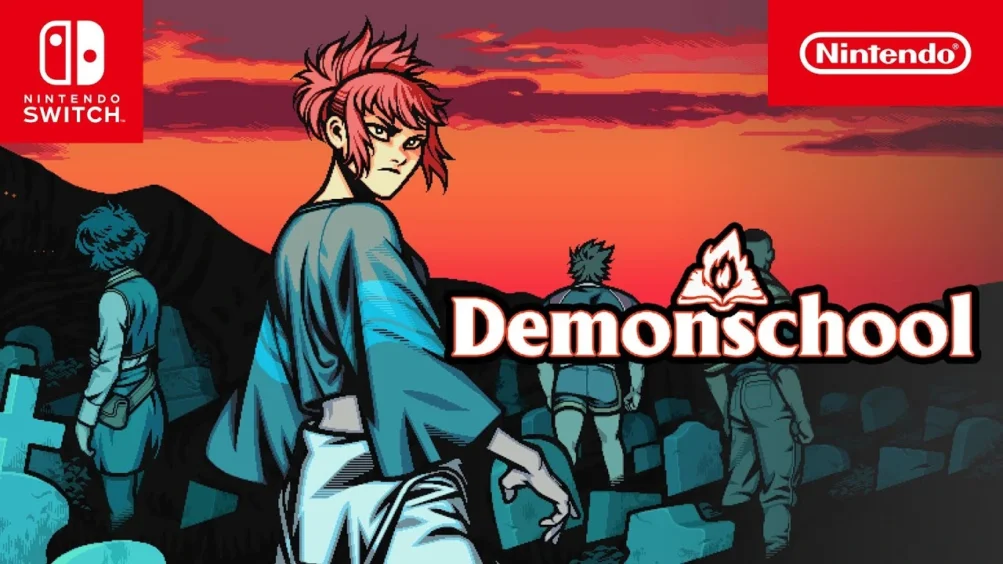
Demonschool on Switch is a thrilling tactical RPG where new students navigate cliques, dodge prison, and battle demons to stop an impending apocalypse. There’s nothing like that first day in a new school when you’re far from home and don’t know anyone. New environments to navigate, new cliques to avoid or join, studies to do well in, prison to avoid, and apocalypses to foil. That’s Demonschool in a nutshell, a tactical RPG of absurdities and madness that combines Atlus’s Persona series with a healthy dose of Buffy the Vampire Slayer, where the fate of the world rests on the shoulders of the weirdos and slackers.
Story & Characters
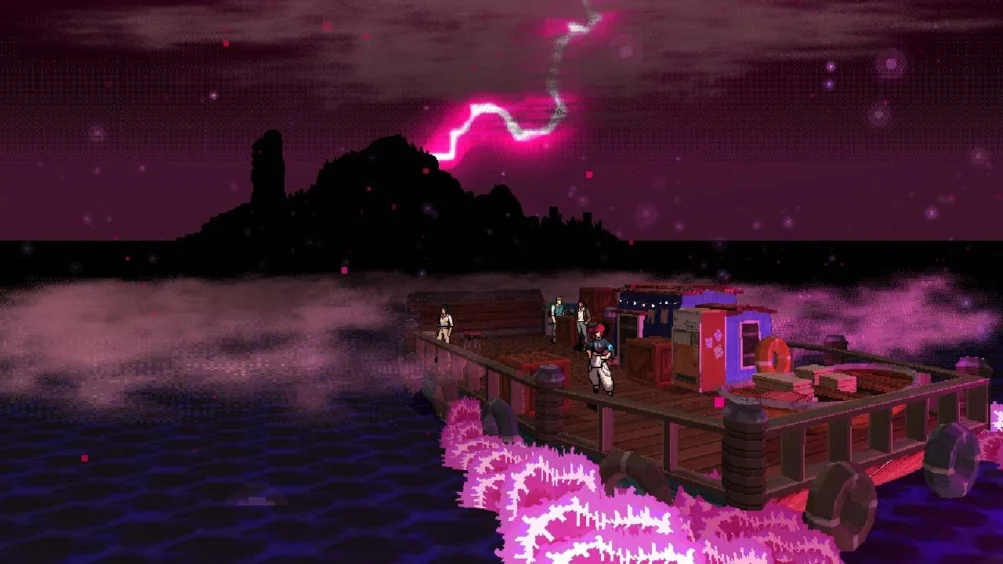
Demonschool drops you onto a mysterious island as Faye. While everyone is here to attend college, Faye has ideas of the demon-hunting kind. As a home-schooled demon hunter, Faye believes the apocalypse is coming in ten months, and this island will be the epicentre. And she’ll beat the ever-loving hell out of mobsters, ghosts and demons to make sure that doesn’t happen. All while pulling in a motley crew of students who don’t actually want to be there.
Demonschool takes its central horror story, filling it with ghouls and beasties and gore galore and whips it with an irreverent sense of absurd humour that would fight right in, in Sunnydale’s High School. Our heroes are a right motley bunch, each more a stereotype or archetype than a character proper, and yet filled with enduring personality that keeps the game moving forward at a quick and, quite frankly, charmingly hilarious pace.
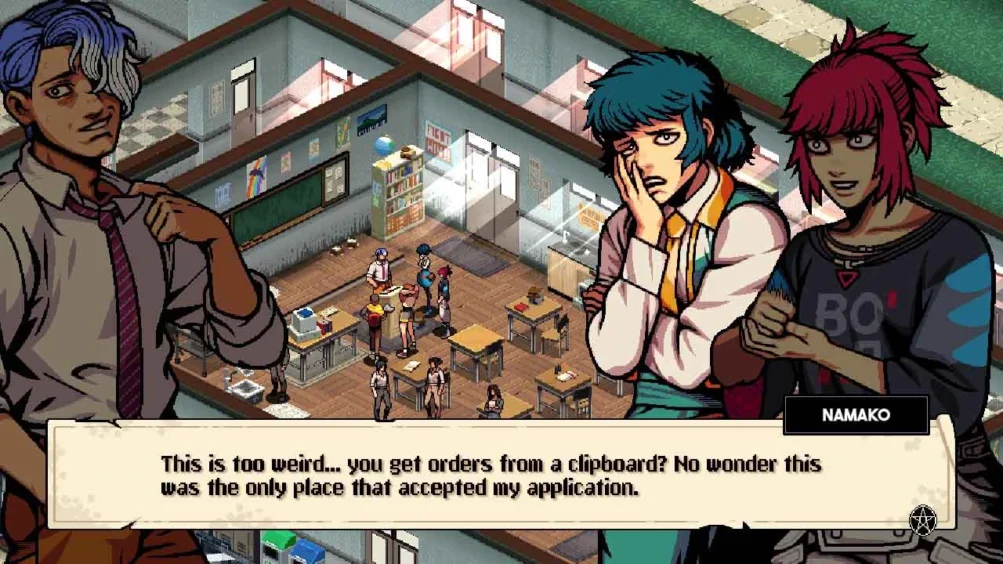
Faye is psychologically addicted to violence and wants to solve everything by kicking someone’s spine out. Knute harbours a love for obscure VHS cassettes and proudly proclaims that he’ll support everyone in combat from a distance. And Namako? Well, she’s the sceptic that Faye practically kidnaps into helping her out. She just wants all the fighting to stop, so of course, a beautiful friendship will blossom between the two.
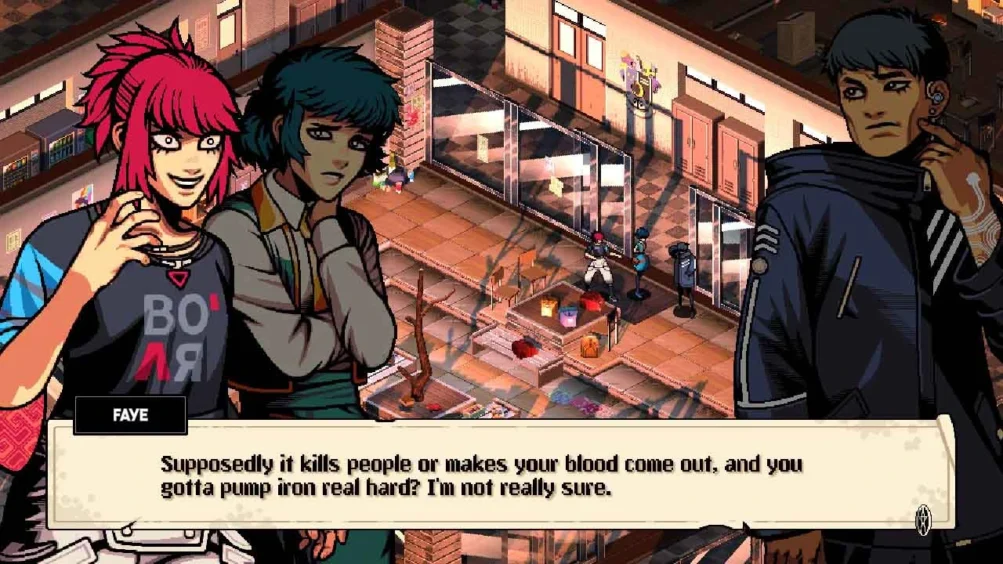
Along the course of your adventure, you’ll pick up more weirdo’s to help you out in your quest to stop the apocalypse or go to jail. And each of them has their own little stories to follow through on, which, along with spending time with them, like going for karaoke, will build up your relationships from acquaintances to battle combo besties.
It would be easy to say that these little stories are some of Demonschool’s best moments, but that would be a disservice to the writing of Demonschool as a whole. Because Demonschool’s writing shines throughout. From the main story to the throwaway lines from NPCs, everything has been written with the same quirky love as those of the main cast. And it’s the first part of Demonschool’s immense charms that make it impossible to put the game down.
Gameplay
And the rest of those charms? The gameplay, of course. Now, admittedly, Demonschool doesn’t have enough environmental exploration in it. Locations are one-screen affairs with some NPCs to talk to and sidequests to complete. Initially, I wished that there was more to do from an exploration point, but the further into the game I got, the more I realised how this helped to keep the game’s focus on story and forward momentum. Eventually, I forgot about the exploration aspect of RPGs as I found I hungered to keep pushing forward to see where the story was heading.
Tactical Combat
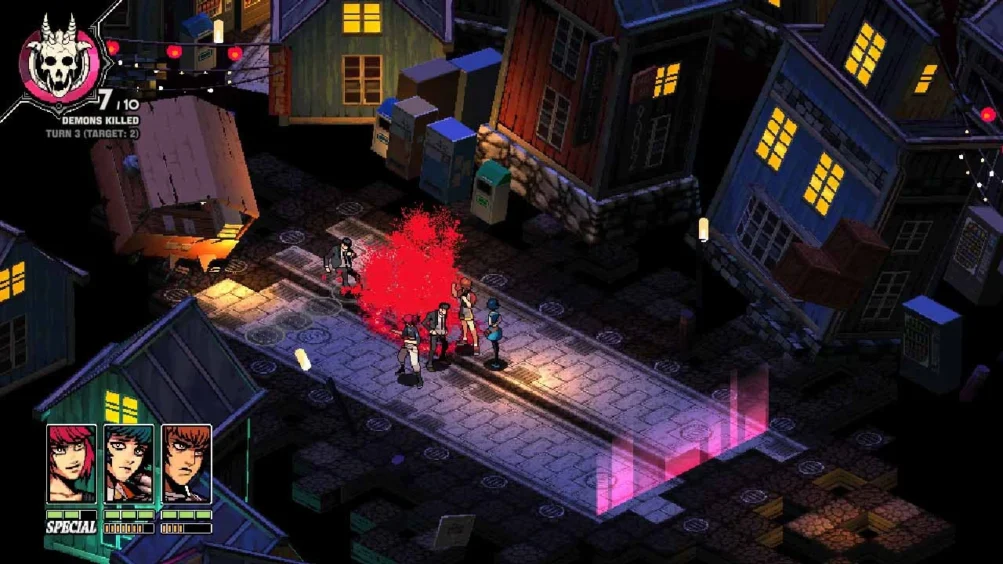
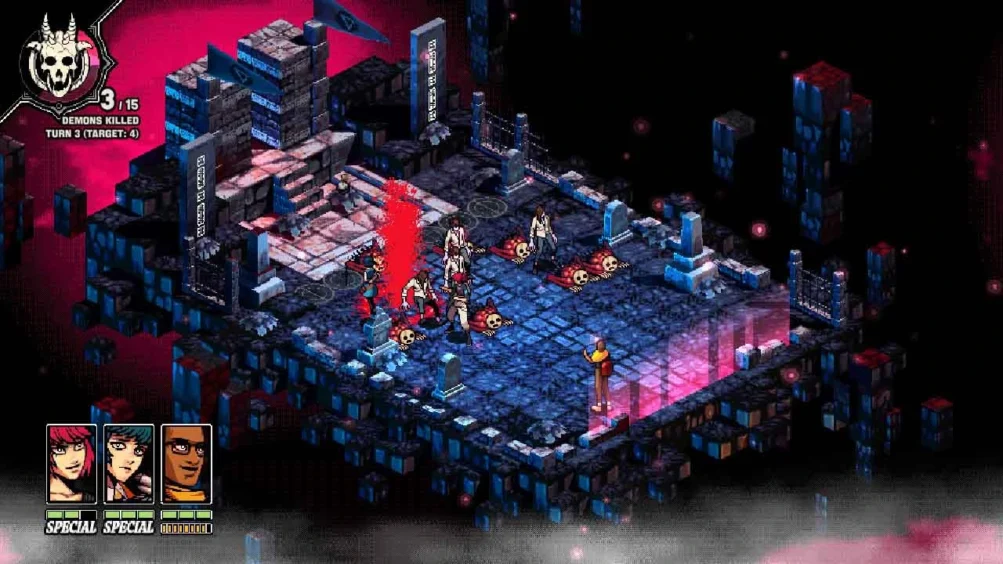
The bulk of Demonschool’s gameplay, and its second most thrilling aspect, is its tactical combat. The game’s combat takes place on an isometric grid and separates its combat into two phases: the planning phase and the action phase.
In the planning phase, you get to lay out your moves across your party of four from a combined Action Point pool. The first move of a character consumes one point, the second two and so on, which means that right from the get-go, you’re planning on how to best use each character without running out of points or leaving one in a vulnerable spot. Each character has their own abilities and methods of attack.
Faye really does kick the hell out of everything, for instance, while her special, once powered up, is an unblockable attack that all demons are weak to. Namako, on the other hand, pushes enemies around and stuns them in the process with a special that deals water damage to everything in an eight-tile radius.
Positioning is extremely important here as you can only move a set amount of tiles horizontally, vertically or diagonally. There is an extremely useful sidestep move to help line up your next attack, but a lot of your time will be spent being spatially aware of where you’re going to end up when moving or attacking. You can’t move only one tile, unless it’s using a sidestep, but rather the maximum distance that each character can go.
Using each character’s strengths to position enemies into lines for combo attacks, where you can use specials if an enemy is between two characters or deal knockback damage to a bunch of demons standing in a line, becomes a key aspect of combat. It’s highly important to get to grips with the system as you’re almost always outnumbered.
The goal to combat is simple: don’t die. Well, okay, it’s a bit more than that. Each battle can only be won by defeating a set number of enemies and then sealing the battle dimension closed. The battlefield is like a football field with your end goal, where the demons will be heading to, to break out of the battle dimension, and the enemy’s goalpost, where you have to get one character onto the Seal tile to close it.
The further into the game you get, the more complicated the combat gets as different enemy types are introduced that have their own specials, such as poison or dragoon-style AOE attacks. You can upgrade your characters with special abilities that need to be found or purchased in the world and then studied, using Class points you’ve earned from battle. There are three of these points per battle, and how many you get is determined by whether or not you’ve lost a character and finished the fight a set number of times.
Once you’re happy with your plan of attack, the moves of which can be rewound until you’re happy with them in the planning phase, you activate the action phase and watch yours and the enemy’s moves play out in a little animation of exaggerated violence that has everything that gets knocked out exploding in a geyser of blood. It’s actually quite thrilling to see your moves play out successfully, especially if it keeps you from getting hit, as each character only has three hit points.
If at any point in the battle you aren’t happy with how it’s rolling out, you can pause the game and instantly restart the fight, which is a nice little option to have rather than waiting for a total wipe of your party. I used this feature more times than I care to admit, as it took me a little too long to wrap my head around how the characters are meant to be used in unison. But once I did get used to it, I loved the hell out of it, no pun intended, as it required serious thought on my part about how best to approach each combat encounter.
Visuals
Demonschool’s visuals are a throwback to the older days of sprite-based isometric RPGs. The overall art style, from the combat animations to the environment design to the character portraits, is great and somewhat nostalgic.
Issues
If Demonschool has any issues, it would be in pacing. You’re almost guaranteed to get into a fight just about every minute or two, which, as much as I enjoyed the combat, did slow down the story flow when all I wanted was to keep that aspect of the game moving forward. Fights aren’t random, but there are a helluva lot of them.
It would be easy to compare Demonschool to Atlus’s Persona series and leave it at that. But Demonschool couldn’t be any more different to Persona if it tried and charts its own path into tactical RPG waters with a quirky script and gonzo characters that help it sail its own seas to lofty, RPG heights.
Make no mistake, Demonschool is the new kid on the block that you have to meet.
Demonschool Video Review, adapted from the written format
Read more awesome reviews >>here<<.
The game was provided to us for the express purpose of reviewing.


You must be logged in to post a comment.