
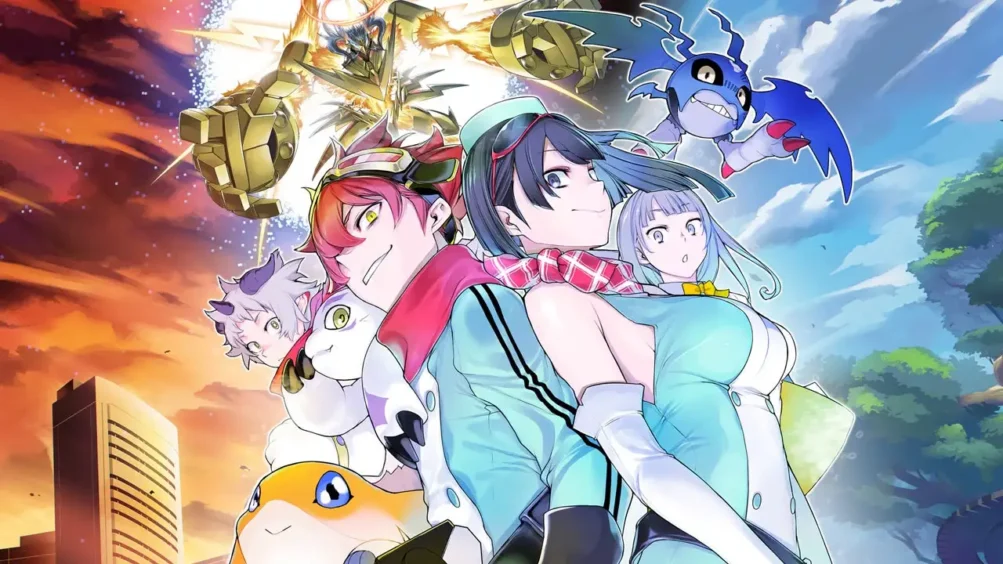
So where do I even begin? Digimon Story Time Stranger is Bandai Namco Entertainment’s third instalment in the Digimon Story series, following Hacker’s Memory, which came out way back in 2017. This also marks the return of the franchise after 2022’s Digimon Survive— its older and more mature brother that isn’t afraid to go into a more horror and supernatural narrative. But going back to the game itself, Digimon Story Time Stranger, despite it being a part of Digimon Story, doesn’t particularly follow the narrative of its predecessors.
However, it does build up on that same foundation and takes it up to the next level. We’re talking about next-level graphical fidelity, a much broader scope in terms of storytelling and world-building, improved gameplay mechanics with added functionality, and did I mention more Digimon?
An Engaging Story with a Ton of Depth
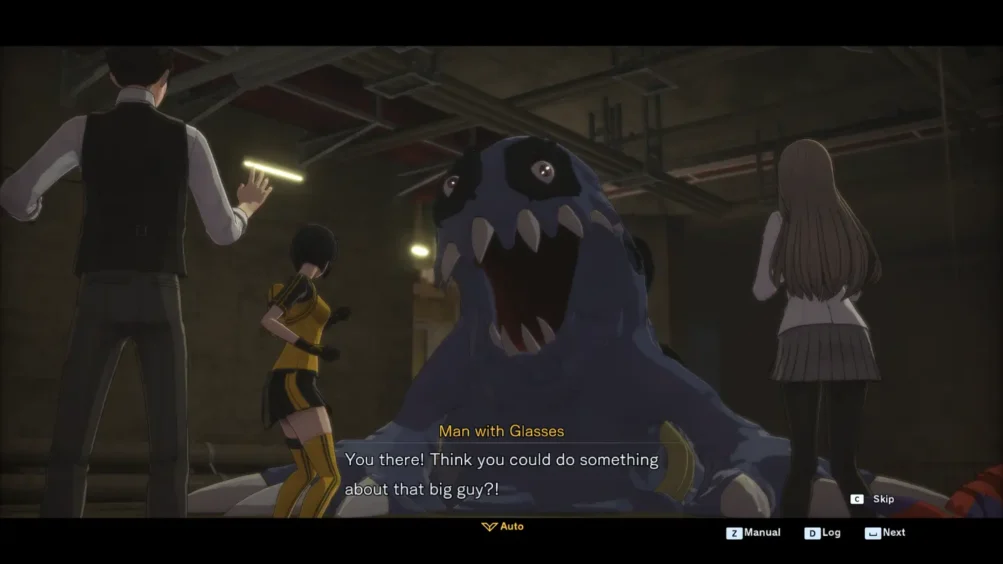
After playing through Digimon Survive, I honestly wasn’t expecting anything that would blow my mind here. Its story follows one of two main protagonists, and if you’ve played Pokémon before, this is the part where an old professor in a white lab coat will ask you if you are a boy or a girl. But all jokes aside, our silent main protagonist ends up getting tangled in a three-way war between two factions of Digimon and the humans, which led to a world-ending disaster right from the get-go. And yeah…
I’d be speechless too if I were in that situation. Now this is where the “Time Stranger” in the title comes in because right after the huge explosion, you’d expect that you’ll be in a better place by now, but instead you wake up in an unknown place, meet a weird cosplayer in a serpent-themed garb and eventually travel eight years into the past. And this unexpected event allows you to investigate the anomalies that could prevent the disaster from ever happening.
Now, while the story after that remains simple and straightforward, what really caught me off guard was how much more alive the world is, unlike how other monster-taming games tend to be. Because what really separates Time Stranger from the rest is how well integrated each and every Digimon is. At first, you just see them as roaming monsters in the sewers of Shinjuku, but in the next moment, you get sucked into a wormhole, and a new world opens up right before your eyes.
A bustling town filled with Digimon of all shapes and sizes just living their lives like any normal human would. But what really reeled me in is what it does after. It just doesn’t give you eye-candy with its beautiful landscapes and sceneries; it doubles down with its character and world-building by having a narrative that has more layers than my leftover lasagna. But I’ll spare you the details because it’s a story that’s best told firsthand.
An Addictive Gameplay Loop That’s Hard to Put Down
Much like the previous Digimon Story titles, it shares the same kind of gameplay loop and mechanics. You start by choosing a starter Digital Monster (Digimon) to fight alongside you, and unlike a certain game where you trap monsters in a red and white ball, these Digimon that roam around are then scanned for their data whenever you battle them, and eventually, they can be converted and added to your roster.
Battles are done by using your three active Digimon in a turn-based fashion and using elements that imitate a rock-paper-scissors format, where each Digimon type beats the other. Meanwhile, elemental stats and resistances further complicate the engagement by limiting or amplifying your team’s overall damage.
What’s really nice here is that it rewards the player to diversify their roster from the over 450 available at launch or adjust the team’s equipment to add certain types of skill discs that could change the tide of battle, unlike before, where a Digimon only learn certain moves by accessing multiple digivolutions that can learn the specific skill. This streamlined process reduces the amount of time you’ll spend training monsters to pursue the meatier cuts of the game’s core. Because what’s new here is an ability tree for the character itself, which provides multiple effects for your Digimon or unlocks certain limitations like higher-level Digivolutions.
Speaking of digivolution, this is basically the equivalent of accessing higher-level forms through rigorous training and battles. Each Digimon has access to multiple forms, like an Agumon that would normally digivolve into a Greymon, but when certain conditions are met, you can deviate and choose a GeoGreymon or even a Numemon, which is already a different species of Digimon. However, certain forms are also locked behind much higher stats, and this is where the Digi Farm can come in handy. You can train a Digimon to increase some specific stats like ATK, DEF, IN,T, among a few others, especially when levelling up wouldn’t be enough to achieve some required stats.
New additions to Digimon Story Time Stranger include a simple Digi-Card battle and something called Outer Dungeons, which adds another layer of gameplay. Sometimes, you’re tasked with a race; other times, your goal is to prevent a horde of Digimon from reaching the goal. And while it’s not as properly implemented, Time Stranger now also adds the ability to Digi-ride, which makes exploration somewhat cooler. Although my childhood fantasy of getting carried by Angewomon has not been fulfilled but hopefully in the next game. Please?

A Vibrant World with So Much Life
Compared to its predecessors, Digimon Story Time Stranger is a much better game in all aspects, and that’s very clear starting from its visuals. Now that its potential isn’t limited to running with older hardware like the PlayStation Vita, the world and its Digimon pop in great detail. The vibrant and colourful tones of the various areas in the Digi World really shine, especially with the diverse landscapes and themes that each of them brings to the table.
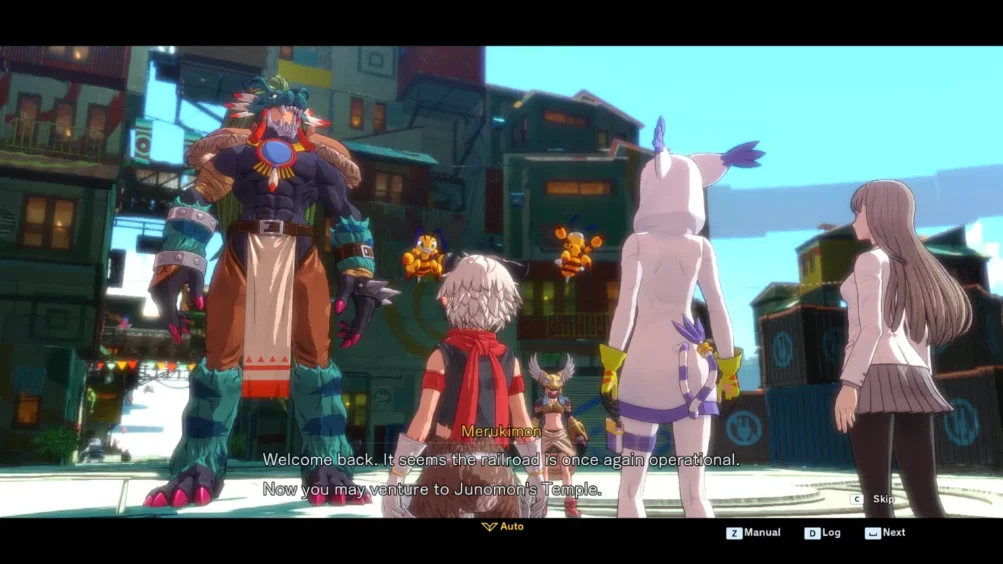
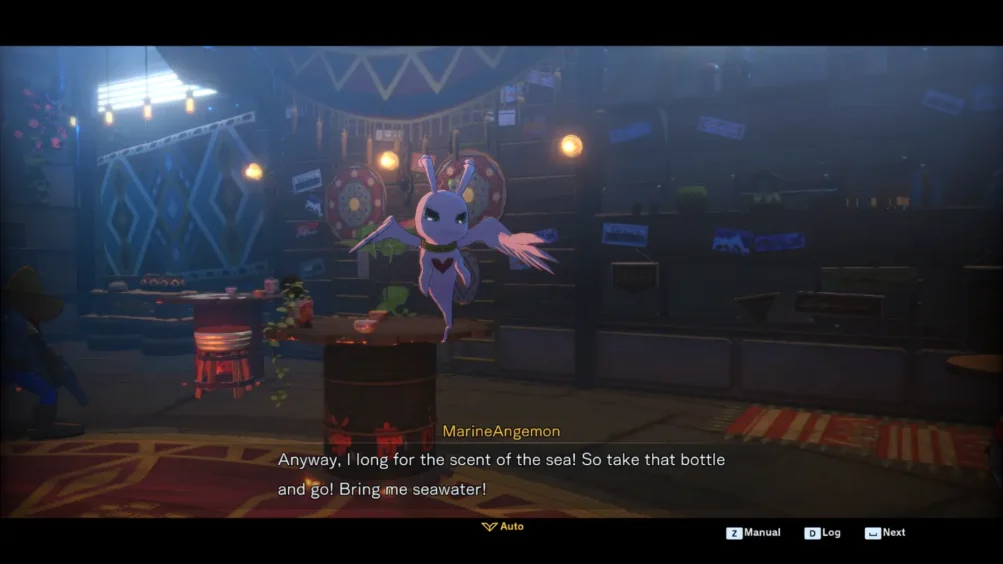
From the town governed by Merukimon, which has so much character in terms of its overall feel and the people or rather Digimon, that inhabit the busy streets, to the village near the ocean, which is easily my favourite place for having one of the more heartwarming scenes in Digimon Story Time Stranger. The only real downside here is that while its visuals are among the best the franchise has ever produced, the silent protagonist pulls you out of that immersion whenever it gets a chance to talk.
As I mentioned earlier, exploration and the Digi-ride are not properly implemented. What I mean by this is that it just fails to capture anything noteworthy. Since Digimon Story Time Stranger still follows segmented areas rather than a more open-world environment, riding a Digimon you like adds nothing more than just visual flair, which is a huge shame. It’s still nice to have, but I just wish there were more open areas instead of the complicated dungeon-like hallways and corridors to justify its addition. Quest tracking can also be quite cumbersome since it fails to recognise Fast Travel options like Birdramon and Pegasusmon as the quicker route.
Conclusion
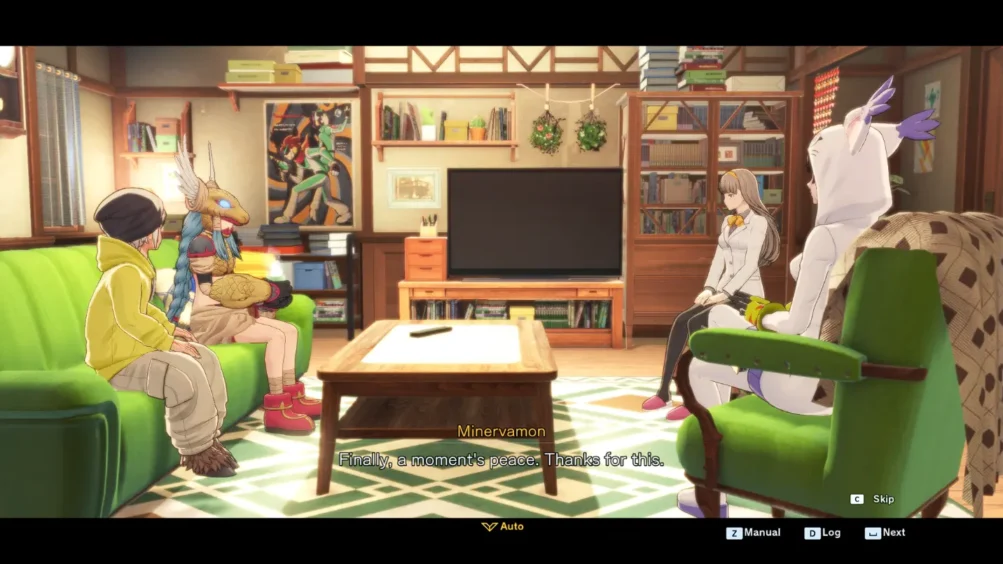
Digimon Story Time Stranger is easily the best Digimon game to date, spanning over 40 hours of content in my first playthrough. While it doesn’t actually have any hard-hitting competition within its franchise, the difference is just night and day. Not only does it provide a highly engaging and fully fleshed out story, it also doesn’t shy away from expanding its narrative to provide some nice little moments like Divermon and Shellmon’s story or how Vulcanusmon is such a huge nerd for action figures. Its gameplay elements are also quite engaging, but this is coming from someone who, as a 10-year-old, played the heck out of Digimon World 2, so take that as you will.
Digimon Story Time Stranger Trailer
Read more awesome reviews >>here<<.
Game code was provided to us for the express purpose of reviewing.



You must be logged in to post a comment.