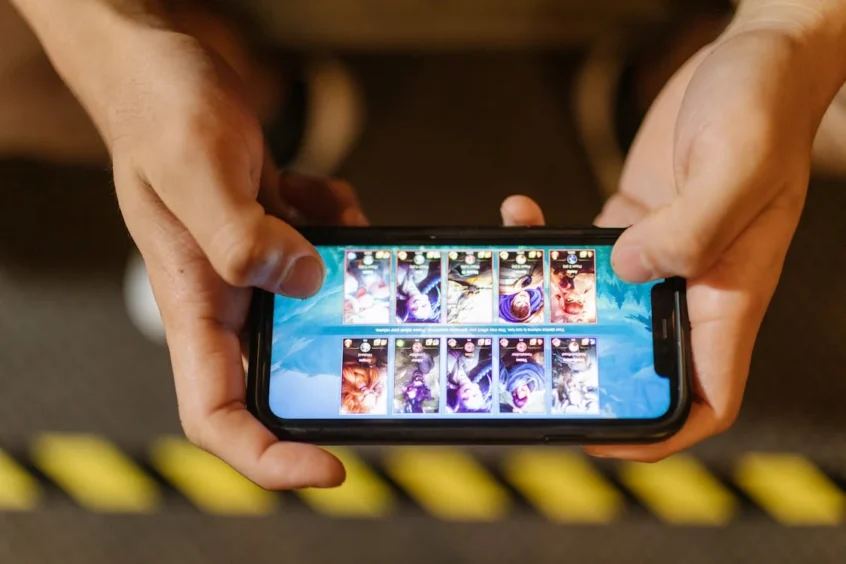
The story often begins the same way. A lifelong gamer, fluent in progress bars and cooldowns, meets a small stack of cards that promises similar rewards at a slower, more deliberate pace. Observers notice how trading card games mirror digital comforts while adding texture and breath — a cadence that invites patience, planning, and the quiet thrill of reading an opponent rather than a patch note.
In many scenes, momentum gathers around real places and familiar faces. Community hubs keep the ritual alive, where a weeknight meetup outperforms any algorithmic feed. Shops like The Gamers Lodge anchor that culture, giving players a dependable spot to trade cards, share deck lists, and welcome curious newcomers.
Pokémon TCG Through A Console Mindset
For players raised on handhelds and consoles, Pokémon TCG feels intuitively mapped. Energy attachments echo resource curves. Evolutions resemble upgrade paths. Prize cards become quest markers that pace the match. What surprises many is how actions per minute never truly disappear; they transform into decisions per turn. Clean sequencing — drawing before benching, evolving before retreating, planning a pivot line that protects tempo — turns a scattered hand into a measured combo, the cardboard cousin of a tight inputs string.
The meta conversation also looks familiar. Local tournaments evolve in small, legible steps as counters chase the previous winner. A single tech cut can haunt the next pairing. It is the same feeling as swapping a rune page and queuing into the one composition designed to punish it. The rhythm is different, but the lessons rhyme.
A League Shaped Map On The Kitchen Table
League of Legends is not a card game, yet its grammar translates neatly to paper. A deck operates like a draft of champions and items. Curve equals lane pressure. Card advantage resembles vision control, revealing lines and letting midgame plans breathe. Tempo is the sudden swing of a timely removal, the cardboard equivalent of a jungle gank that flips momentum and forces a regroup.
Designers and fans can even borrow Rift logic for casual modes. Rotate communal objectives every few turns, each one offering a power spike that demands attention. Players then reroute their plan to contest the flip, much like collapsing mid to secure a dragon. This vocabulary encourages macro thinking. Should the active player extend into the board now, or bank resources for a defined spike later? Are they trading cardboard for time, or time for cardboard? For anyone who has learned map play in the Rift, the on-table instincts already exist — the actions simply wear different names.
Habits That Speed The Crossover
- Treat the deck like a build path. Every inclusion must earn a job early, mid, and late. If a card only shines at turn ten, the early lane will struggle and force awkward lines.
- Practice turn snapshots. Before acting, describe the ideal turn in one breath — draw, bench, evolve, retreat, attack. That small script catches sloppy sequencing before it burns a prize.
The Pleasure Of Cardboard Flow
Spectators often remark that trading card games reward constraint. Digital clients deliver precision and immediate feedback; paper introduces friction. Cards cling together, a die falls off the table, the mulligan reshapes the plan — and that fray creates a human tempo no animation can imitate. When the perfect topdeck arrives, the table hears the same story land at once. Pokémon magnifies this sensation because the game prizes clean lines. Tiny optimisations in draw order sweep into a gentle waterfall of advantage, the same satisfaction as a correctly timed macro rotation.
For newcomers, a modest starter kit proves enough. A straightforward learner’s deck lowers pressure and narrows decisions, making repetition the teacher instead of stress. A handful of proxy slots invites steady tweaks and honest note-taking about which swaps changed decisions, not just win rate. The point is not instant mastery; it is building a reliable rhythm that makes every next game feel a little more intentional.
Where Digital Instincts Shine
Veteran video gamers bring transferable strengths. They understand tempo as a living creature that punishes greed and rewards patience. They count outs like they count cooldowns. They write win conditions the way they plan an objective timer. In League informed play, they name a spike turn before game one, then protect it with trades that look modest but matter. In Pokémon, they learn to mulligan without tilting, to map a retreat line two turns early, to sequence draw effects so every card joins the plan rather than bloating it.
The lesson that lingers is simple. Trading card games are not an escape from digital skill; they are an echo that makes those skills tactile. Players still chase tempo, feint, and learn matchups by heart. They still feel tilt in their fingers. The difference is the aftertaste. The stories remain without a replay file. The victory is not only the win but the moment when a plan clicks into place as if the deck understood the intent. That is why so many gamers trade pixels for paper at least once a week — not to leave one world for another, but to let both improve each other, turn by turn.
If you enjoy games and gaming and want more NEWS from the Gaming World Click Here