

The Zircon 660 Pro Wireless from Genesis aims to give you the best of all worlds: lightweight, modern sensor performance, and flexible connectivity — wired, 2.4 GHz low‑latency wireless, or Bluetooth. For under or around mid-budget range, it manages to deliver a compelling all‑rounder for casual and competitive players alike. If you want a mouse that works at home, on the go, or plugged into a PC, this might do what you need — though it’s not perfect, and the compromises are worth knowing before you commit.
What it is — the essentials
The Genesis Zircon 660 Pro Wireless is a right‑handed gaming mouse offering up to 26,000 DPI thanks to a high‑end optical sensor (Pixart PAW3395). It supports three connection modes: wired USB, 2.4 GHz “RapidSpeed” wireless (low‑latency, wired‑like “feel”), and Bluetooth — making it very flexible. The mouse is also light, listed at around 57 g, so it’s not a heavy hand‑cramp inducer if you’re used to lighter gear. It comes with 6 programmable buttons, PTFE glides for smooth movement, and a built-in rechargeable battery (400 mAh) that reportedly delivers up to 80 hours of continuous use on a single charge.
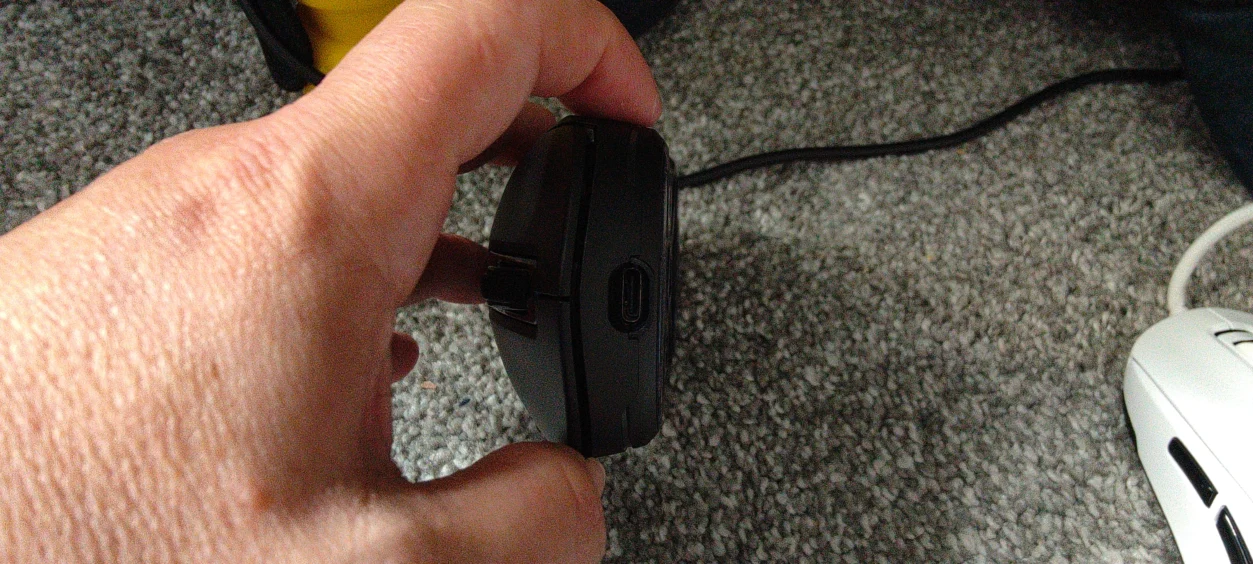
Design, build & comfort
Physically, the Genesis Zircon 660 Pro Wireless opts for a simple, ergonomic shape that aims to strike a balance between claw‑grip and palm-grip comfort. The shell has a slightly extended rear and gentle contours, which should work for medium to larger hands and for sessions that run several hours. The materials (ABS shell, PTFE glides) and general build feel decent for the price — nothing premium‑boutique, but solid enough for everyday gaming or work. The low weight helps reduce wrist fatigue, and the light, flexible paracord‑style cable (for wired or charging use) doesn’t noticeably drag when plugged in.
Sensor, tracking & performance
The heart of this mouse is the PAW3395 optical sensor — one of the more modern sensors used in budget‑to‑mid gaming mice. It delivers precision tracking, supports high speeds (up to ~650 inches/sec), and handles acceleration up to 50 G. In practice, that means both slow, precise movements and fast flicks are handled reliably, which is crucial for shooters, action games, or anything requiring quick RTS‑type movements.
The mouse also offers a polling rate of 1000 Hz and supports adjustable DPI from 50 up to 26,000 — more than enough flexibility for both low‑sensitivity, precision‑oriented play and high‑sensitivity rapid movements. There’s a “Motion Sync” feature built into the driver package, which Genesis claims improves the timing and smoothness of motion reporting — worth enabling if you care about smooth cursor movement and minimal latency.
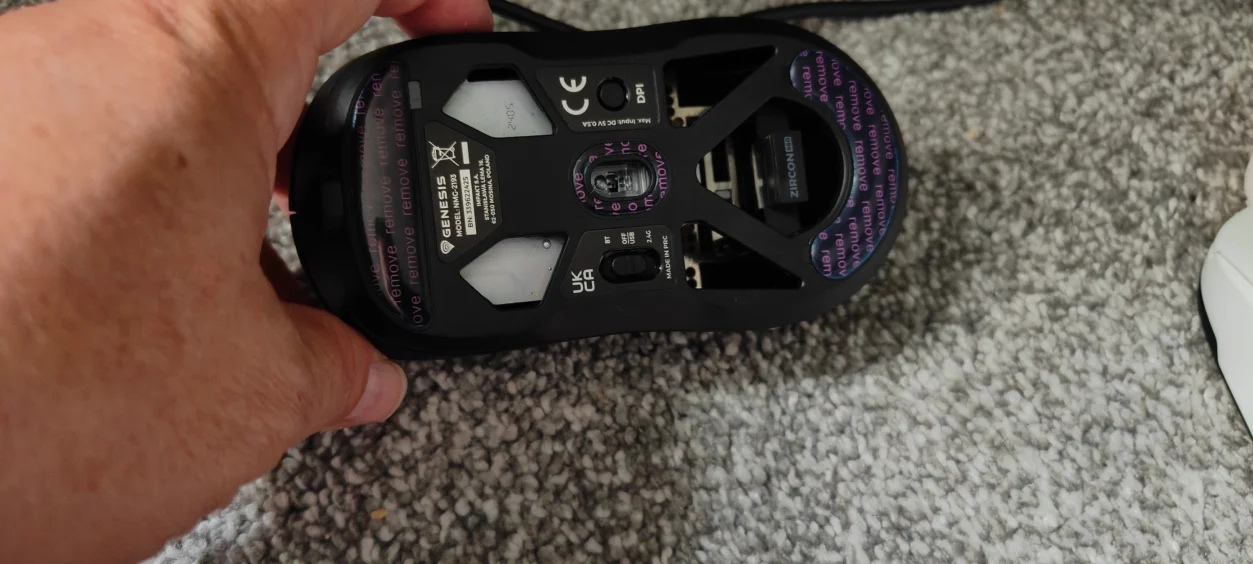
Connectivity & battery life
Where the Genesis Zircon 660 Pro Wireless really stands out among budget mice is its triple‑mode connectivity. Whether you’re sitting at your desk (wired/2.4 GHz), on a sofa with a laptop (Bluetooth), or travelling, you can switch connection modes easily. The “RapidSpeed” 2.4 GHz wireless claims low latency and near‑wired precision, which is impressive at this price point. Battery life is solid: a 400 mAh battery gives up to 80 h per charge, which covers many long gaming sessions or workdays — and if you’re running low, you can plug in the included paracord‑style cable and keep playing while charging. For many users, that flexibility beats owning separate mice for wired and wireless use.
Software & customization
Like many gaming mice, Genesis Zircon 660 Pro Wireless comes with dedicated Genesis software. Through it you can reprogram all six buttons, set DPI stages, adjust lighting, and manage macro profiles. It also offers adjustments for sensor behaviour (enable/disable jitter, tweak angle‑snapping, adjust LOD), giving you a fair degree of control. The slider and scroll‑wheel feel is reported as fine, and overall, the experience is comparable to what you’d expect from a mid‑tier gaming mouse, especially when you consider the price.

Who this mouse is for — and who should look elsewhere
If you want a versatile, relatively light, budget‑friendly gaming mouse that can do wired, wireless, and Bluetooth — and do so without major compromises — the Genesis Zircon 660 Pro Wireless is a very sensible pick. It’s great for mixed usage: gaming, browsing, work, and travel. For shooters, competitive games or action titles where speed and flexibility matter, the responsive sensor + 1000 Hz polling + low‑latency wireless gives a good balance of performance and convenience.
However — if you demand top‑tier ergonomics for small hands, or you want ultralight sub‑55 g weight, or you’re chasing the absolute lowest latency possible (e.g. for elite‑level competitive shooters) — there are lighter or more premium mice out there that may serve you better. Also, if you strongly prefer wired-only for absolute minimal latency or maximum battery‑free reliability, this wireless‑centric mouse might not be ideal.

Verdict
The Genesis Zircon 660 Pro Wireless is a strong all‑rounder. It may not be a boutique flagship, but for its price range it delivers excellent value: a modern sensor, triple‑mode connectivity, 26,000 DPI flexibility, and a light-enough build for most gamers. If you want a single mouse for gaming, work and travel — or want wireless convenience without sacrificing responsiveness — it’s one of the better budget‑to‑mid options around. Highly recommended for players who care about flexibility and good value.
Genesis Zircon 660 Pro Wireless First Look Video
Good points
- Triple connectivity (USB wired / 2.4 GHz wireless / Bluetooth)
- Strong Pixart PAW3395 optical sensor
- Lightweight at ~57 g
- Up to 80 h battery life + rechargeable battery with paracord cable
- 6 programmable buttons, adjustable DPI/profile support
Bad points
- 57 g is light but not “ultralight”
- Shape/ergonomics may not be ideal for small hands or fingertip grip players — comfort depends a bit on hand size and grip style.
- Wireless performance is good, but it might still not match the absolute lowest‑latency wired mice
Read more awesome reviews >>here<<.
The product was provided to us for the express purpose of reviewing.
The review was written by me and edited by my partner.




You must be logged in to post a comment.