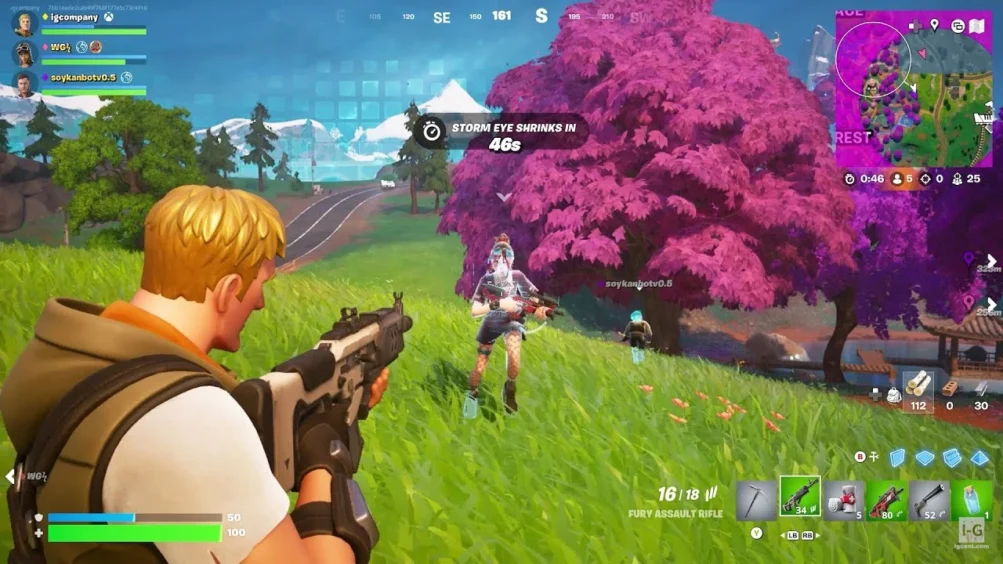
Live-service games are the beating heart of the modern gaming industry. From Fortnite and Destiny 2 to Call of Duty: Warzone and Genshin Impact, the idea of a constantly evolving experience has become the dominant model. Players expect ongoing content, seasonal events, and social engagement — and publishers see it as the holy grail of recurring revenue. But beneath the surface, cracks are forming. The live-service model may be reaching its breaking point, threatening to collapse under the weight of its own success.
The Endless Cycle of Content
At its best, the live-service model keeps games fresh and engaging. Players return for new storylines, cosmetics, and crossovers. Communities thrive on shared hype, and developers maintain long-term relevance. Yet, this constant content treadmill is unsustainable for many studios. Every “season” requires new ideas, new assets, and new marketing pushes. What used to be a yearly cycle is now monthly — even weekly — pressure to deliver something new.
Developers across the industry are speaking out about content fatigue. Creativity is being replaced by speed, and innovation often takes a back seat to production schedules. The result? Games that feel bloated, repetitive, and soulless — where updates exist more to hit engagement metrics than to enrich the experience.
Player Burnout Is Real
Ironically, the live-service approach risks exhausting the very audience it depends on. With every major title fighting for attention through limited-time events and fear-of-missing-out (FOMO) mechanics, players are burning out. Instead of excitement, new seasons can feel like obligations. Miss a few weeks, and suddenly you’re behind, locked out of rewards, or struggling to catch up.
Games like Apex Legends and Overwatch 2 have faced backlash for overwhelming players with grind-heavy systems and time-limited exclusives. What was meant to foster loyalty can instead breed resentment — especially when players feel manipulated by aggressive monetization or endless progression loops.
The Human Cost Behind the Screens
Behind every “live” game is a team under constant pressure. Developers at major studios have described the live-service grind as a never-ending crunch. When a game never ends, neither does development. There’s always another patch, event, or expansion waiting in the queue. QA teams and designers are often stretched thin, while creative leads battle burnout from working on the same project for years with no closure in sight.
This pressure cooker environment can stifle innovation. Instead of dreaming up new IPs or experimenting with mechanics, teams are stuck maintaining existing systems — polishing, fixing, and updating endlessly. For an industry built on creativity, that’s a worrying trade-off.
When Monetisation Crosses the Line
At the center of many live-service woes lies monetization. While ongoing support requires funding, the temptation to squeeze players for every cent can easily cross ethical lines. Battle passes, loot boxes, limited-time bundles, and overpriced cosmetics have become commonplace. Even worse, some games design their progression systems around frustration — subtly nudging players toward spending money to skip the grind.
This “engagement by exhaustion” model undermines trust. Players are more informed than ever and quick to call out exploitative tactics. Games that push too hard, like Diablo Immortal at launch, have faced enormous backlash. The lesson is clear: longevity means nothing if players feel taken advantage of.
The Discoverability Dilemma
In 2025, there are simply too many live-service games. According to Bloomberg, over 120 titles released this year scored 80+ on Metacritic — yet many struggled to find audiences. The market is saturated, attention is fragmented, and only a handful of giants can maintain long-term dominance.
Smaller studios trying to chase the live-service dream often face financial disaster. Without massive player bases, marketing budgets, and consistent post-launch support, these projects can collapse within months. Many promising games — from Babylon’s Fall to Rumbleverse — were shuttered less than a year after release.
The harsh truth: not every game needs to be a platform. Sometimes, a tightly crafted single-player experience can leave a bigger impact than a stretched-thin live-service ecosystem.
AI, Automation, and the Temptation to Overproduce
As studios look for ways to keep up with player demand, AI is increasingly being used to generate assets, quests, and dialogue. While this can reduce costs and accelerate updates, it also risks homogenizing creativity. Automated systems can fill the world with endless content — but not necessarily meaningful content.
If developers rely too heavily on generative AI, live-service games could become algorithmic factories, churning out filler to keep engagement metrics alive. The challenge is finding balance: using AI to empower creators, not replace them.
Can the Cycle Be Fixed?
The live-service model isn’t inherently broken — it just needs recalibration. Some studios are finding smarter, healthier ways to manage it:
- Seasonal Breaks: Allowing downtime between major updates to prevent burnout and maintain anticipation.
- Transparent Monetization: Clear, fair pricing and no hidden pay-to-win mechanics.
- Community-Driven Updates: Letting players vote on upcoming content or balance changes fosters trust and engagement.
- Smaller, Meaningful Events: Quality over quantity keeps excitement high without overwhelming players.
The Future: Sustainability Over Saturation
As the industry matures, success won’t be defined by who can release the most content, but by who can maintain sustainable creativity. The best live-service games will evolve not just technologically, but ethically — respecting both players and developers.
Studios that understand pacing, community engagement, and mental health will set the new gold standard. The rest will struggle to survive in a market that’s no longer impressed by sheer volume alone.
Because in the end, the future of gaming doesn’t belong to those who can make the most noise — it belongs to those who know when to let both players and creators breathe.
Want to see how live-service games can succeed when handled right? Check out our companion feature, Games as Platforms 2025: How AI, Community & Live-Service Models Are Shaping Gaming.
If you enjoy games and gaming and want more NEWS from the Gaming World Click Here