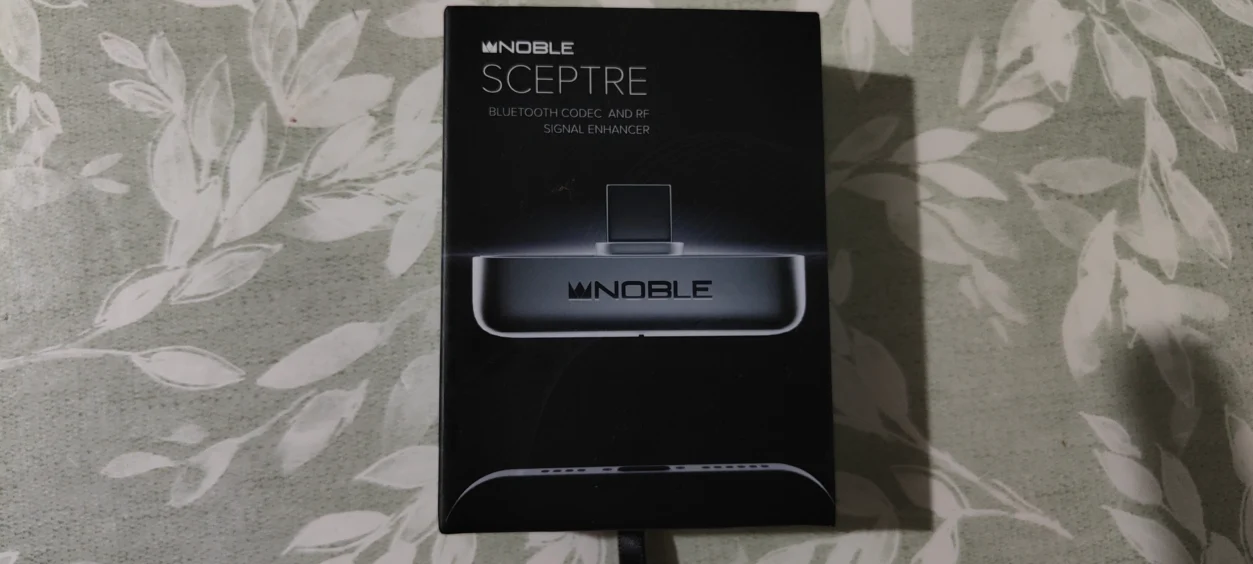
Bluetooth audio has always been the compromise friend we never really trust. Sure, it’s convenient — but most of the time, your headphones are only performing at 60% of what they can actually do. Enter the Noble Sceptre, a small USB-C Bluetooth transmitter that promises to unlock high-resolution codecs, reduce latency, and give your headphones the chance to finally breathe. I’ve been running it on PC and mobile for over a week, listening to my usual mix of trance, dance, and classic pop on Deezer and Spotify, and playing games like Crimson Desert, Dead Space Remake, and Resident Evil Requiem. Let’s just say… it’s been an eye — or ear — opener.
PC Audio – Making Your Headphones Actually Matter
On my PC, plugging in the Sceptre was dead simple. Windows immediately recognized it, and a quick initial setup through the Noble app unlocked LDAC and aptX Adaptive. Suddenly, my headphones weren’t just passively listening anymore — they were alive. Music streaming through Spotify had more depth, the highs sparkled, the mids were punchy, and bass finally hit without mud. Even classic pop tracks I’ve heard a thousand times felt fresh again. Who knew Whitney Houston could have that much clarity?
Gamers, pay attention. This is where the Sceptre starts to justify its tiny price tag. In Crimson Desert, environmental sounds suddenly felt layered — horse hooves clopped with definition, wind whistled realistically through Pywel’s canyons, and enemy noises weren’t just muffled background clutter. Dead Space Remake tested its horror cred; distant groans, mechanical clanks, and terrifying ambience had more spatial presence. No more guessing if the Necromorph is creeping behind you — it feels like they’re in the room. Resident Evil Requiem continued this trend, with tense cutscenes and action sequences now sounding sharper and more immersive. Explosions hit harder, footsteps were clearer, and environmental sounds popped just enough to make me jump a few times (yes, still scared of zombie dogs).
Latency is always the question with wireless, and yes, the Sceptre isn’t zero-delay. But with its aptX Adaptive “game mode,” input lag is minimal. I could aim, shoot, and hear audio feedback almost instantly. And the USB-C passthrough? A godsend. No more frantic panicking about my laptop dying mid-boss fight while I’m deep in Crimson Desert’s world.
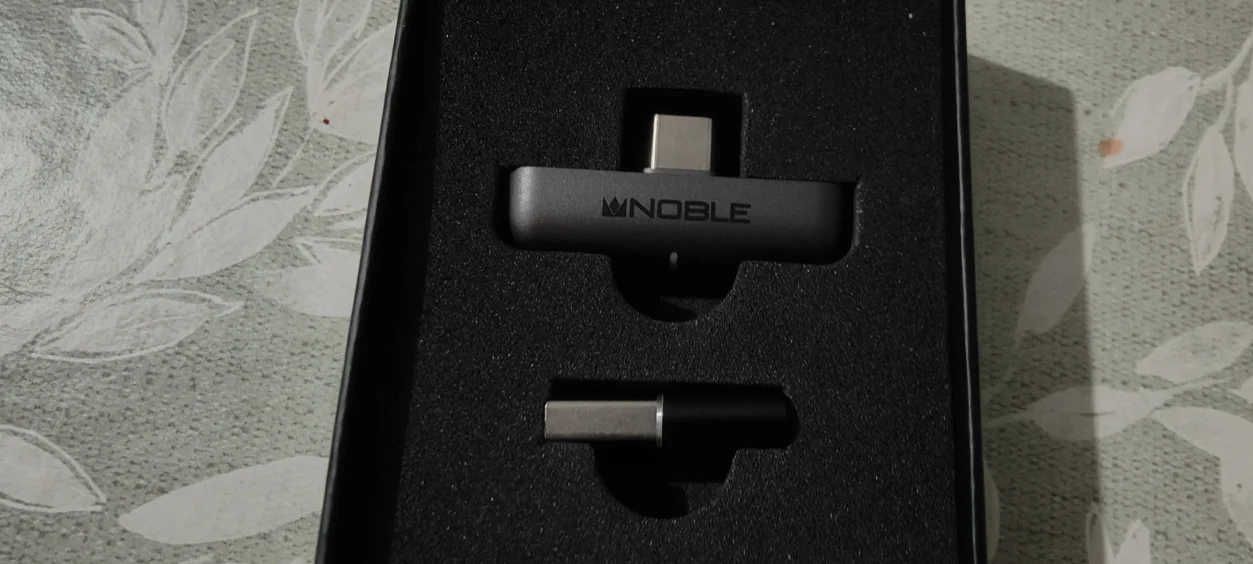
Mobile Audio – Unlocking Your Headphones’ Potential
On my phone, the Sceptre felt like a revelation. Phones notoriously limit Bluetooth codecs — iPhones lock to AAC, and even some Androids don’t let headphones hit their full potential. With the Sceptre, my headphones suddenly sang. Trance tracks had energy, dance tracks had space and punch, and classic pop revealed details I’d never noticed. Deezer and Spotify finally sounded the way the producers intended. Vocals were clear, synths and instruments were layered naturally, and the soundstage actually felt open rather than squashed. I could even notice subtle background effects I’d missed before — a little hi-hat in a trance track or a cymbal roll in a pop classic.
It’s portable too. I plugged it into my phone during a commute and left it connected, no fuss. With passthrough charging, I didn’t have to worry about draining my phone battery while streaming for hours. On flights, I could finally enjoy immersive audio without dealing with the limitations of the plane’s built-in headphone jack or standard Bluetooth. For anyone who travels or listens on the go, this little dongle is a revelation.
Setup & App Experience
Initial setup requires the Noble app, but it’s straightforward. Pairing is quick, codec selection is clear, and once it’s set up, the Sceptre reconnects automatically. Multipoint pairing isn’t supported, so you can’t switch devices on the fly, but honestly, once you plug it in and pick your preferred codec, you rarely need to mess with it again. The app also gives you peace of mind that you’re getting the right settings, which is nice when your phone usually decides “SBC is enough for you, thank you very much.”
Design, Durability, and Practicality
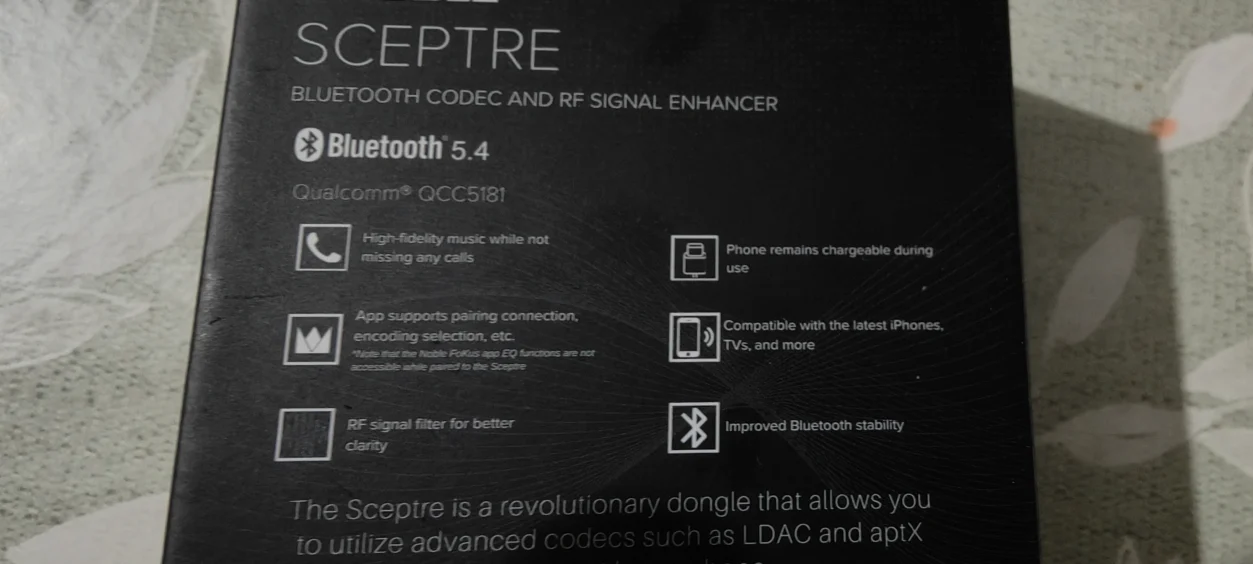
The Sceptre is compact, almost forgettable in size, but feels solid. It’s not cheap plastic; there’s a tactile quality that reassures you it’ll survive tossing in a bag or plugging into multiple devices. Its small footprint means it doesn’t get in the way, even on crowded USB-C hubs or laptop ports. The passthrough charging is a practical touch, especially if you’re like me and constantly running your phone or tablet low while gaming or streaming music.
Testing Across Games and Music
- Crimson Desert: Horses, wind, ambient sounds, and combat effects were richer and more layered.
- Dead Space Remake: Horror atmospherics became immersive, distant noises were clearer, jump scares hit harder.
- Resident Evil Requiem: Action sequences felt sharper, cutscenes were more cinematic, gunfire and footsteps had precision.
- Music (Deezer/Spotify): Trance tracks had energy, dance tracks felt spacious, classic pop tracks revealed subtle details and natural vocals.
Verdict
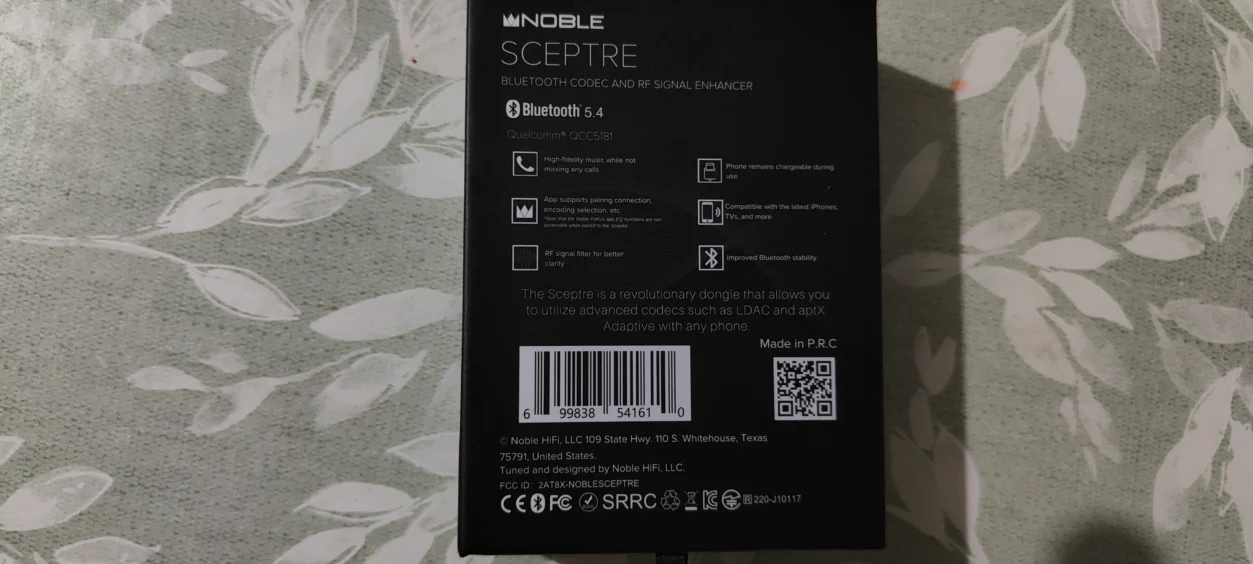
The Noble Sceptre is a rare device that actually delivers what it promises. On PC, it upgrades weak built-in Bluetooth to a stable, high-quality connection. On mobile, it finally lets headphones reach their potential — your music will finally sound like it’s supposed to, and gaming audio becomes immersive and precise. It’s small, portable, reasonably priced, and practical. Casual listeners might not notice the difference, but if you care about gaming, music, or both, this is worth every penny. Plus, it’s small enough to make you feel smug carrying around something that punches way above its weight.
Noble Sceptre Video
Pros & Cons
- Pros:
- Unlocks LDAC & aptX Adaptive even on restricted devices
- Noticeable clarity and stability boost over standard adapters
- USB-C passthrough charging
- Works across PC, tablets, and mobile
- Immersive improvement in both games and music.
Cons:
- Requires app for setup
- No multipoint pairing
- Codecs improve quality but aren’t true lossless.
Read more awesome reviews >>here<<.
The product was provided to us for the express purpose of reviewing.
The review was written by me and edited by my partner.