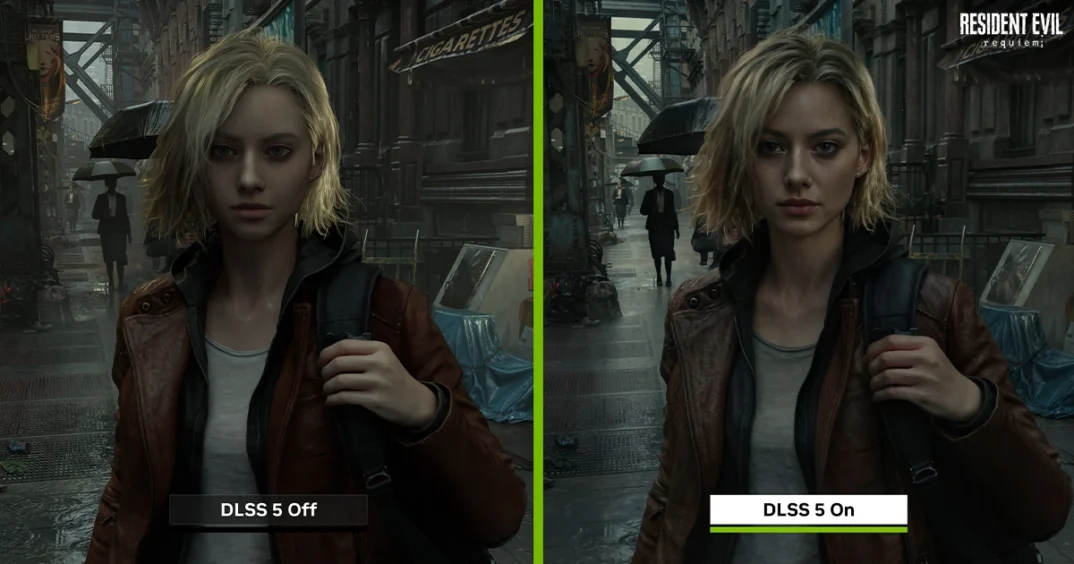
NVIDIA has officially pulled the curtain back on DLSS 5, and honestly… this isn’t just another upgrade — it’s a complete shift in how games are rendered.
Announced at GTC 2026, DLSS 5 introduces real-time neural rendering, meaning AI is no longer just enhancing frames — it’s actively rebuilding and transforming them in real time.
Sounds insane, right? Yeah… but the reaction hasn’t exactly been glowing.
Watch the Official DLSS 5 Announcement
Check out the official reveal from NVIDIA below:
Watch DLSS 5 Announcement on YouTube
What DLSS 5 Actually Does
Up until now, DLSS has gone through a clear evolution:
- DLSS 2 ? Upscaling
- DLSS 3/4 ? Frame generation
- DLSS 5 ? AI-generated rendering
With DLSS 5, AI understands scene elements like:
- Lighting
- Materials
- Skin and facial detail
- Hair and fabric
Then it reconstructs or enhances them on the fly — aiming for near “Hollywood-level” visuals.
In simple terms:
You’re no longer just seeing what the game renders… you’re seeing what AI thinks it should look like.
A Massive Shift: Neural Rendering
This is where things get wild.
DLSS 5 uses generative AI to analyse a frame and rebuild it with improved realism — effectively blending traditional rendering with AI-generated visuals.
It’s such a big leap that even NVIDIA is comparing it to a “GPT moment” for graphics.
But that shift? That’s exactly why people are freaking out.
The Backlash — Why Gamers Are Angry
1. “AI Slop” Is Everywhere
The most common criticism? DLSS 5 looks like an overprocessed AI filter.
Gamers are comparing it to:
- Instagram filters
- Snapchat smoothing
- “AI slop”
Many feel it replaces real game visuals with artificial ones, rather than improving them.
2. Characters Look… Off
One of the biggest issues is character rendering.
Reports highlight:
- Faces becoming generic
- Loss of identity
- Uncanny, AI-generated looks
Some demos showed characters looking completely different — almost like modded versions of themselves.
3. It Breaks Artistic Intent
This is the big one.
Developers and artists are concerned DLSS 5:
- Overrides art direction
- Standardises visual styles
- Removes uniqueness from games
Some devs are even calling it a future where “every game looks the same”.
4. You’re Not Seeing the Real Game Anymore
This isn’t just a tech upgrade — it’s a philosophical shift.
With DLSS 5:
- The engine renders one thing
- The AI outputs another
That raises a serious question:
Are you still playing the developer’s vision… or NVIDIA’s AI version of it?
5. Hardware Demands Are Brutal
Early demos reportedly required extreme hardware setups, including high-end GPUs.
This suggests DLSS 5 will heavily target the RTX 50-series, meaning yet another expensive upgrade cycle for PC gamers.
Not Everyone Hates It
To be fair, there are positives:
- Insane lighting improvements
- More realistic materials and environments
- Potential performance gains via AI rendering
Some developers have praised how it can bring scenes to life.
And importantly, NVIDIA says it’s optional and fully controllable by developers.
Confirmed & Rumoured Games Using DLSS 5
- Starfield
- Hogwarts Legacy
- Resident Evil Requiem
- Assassin’s Creed Shadows
More are expected as we approach the Fall 2026 launch window.
The Bigger Picture — Why This Matters
This isn’t just about DLSS anymore.
This is about where gaming is heading:
- AI-generated visuals replacing handcrafted ones
- Less reliance on raw GPU power
- A shift toward “interpreted” graphics
DLSS 5 could genuinely redefine gaming…
But it could also be the moment where players start asking:
“Is this still the game… or just AI dressing it up?”
Final Thoughts
DLSS 5 is groundbreaking — no question.
But right now, the situation is clear:
- NVIDIA sees it as the future
- Gamers see it as a potential loss of identity in games
Whether this becomes the next big leap… or the most controversial tech in gaming history…
That’s going to depend on how it actually feels when we get it in our hands.
And right now?
The community isn’t convinced.
Want more news from the Tech world for Gaming Peripherals to Hardware Click Here