

I’ve spent more time thinking about Octopath Traveler 0 than I actually expected to. Not because it left me stunned or disappointed, but because it kept sitting somewhere in the middle. It’s a game I enjoyed playing, a game I kept coming back to, and yet one that never fully let me sink into its world, to some degree.
That’s a strange position for an RPG to be in, especially one that clearly has so much care put into it. You can feel the effort in certain areas straight away. In others, it feels like something was left on the artists design wall among other walls.
What you end up with is a game that does a lot right, but also constantly reminds you that it could have done more.

Visuals and Art Direction – Genuinely Impressive
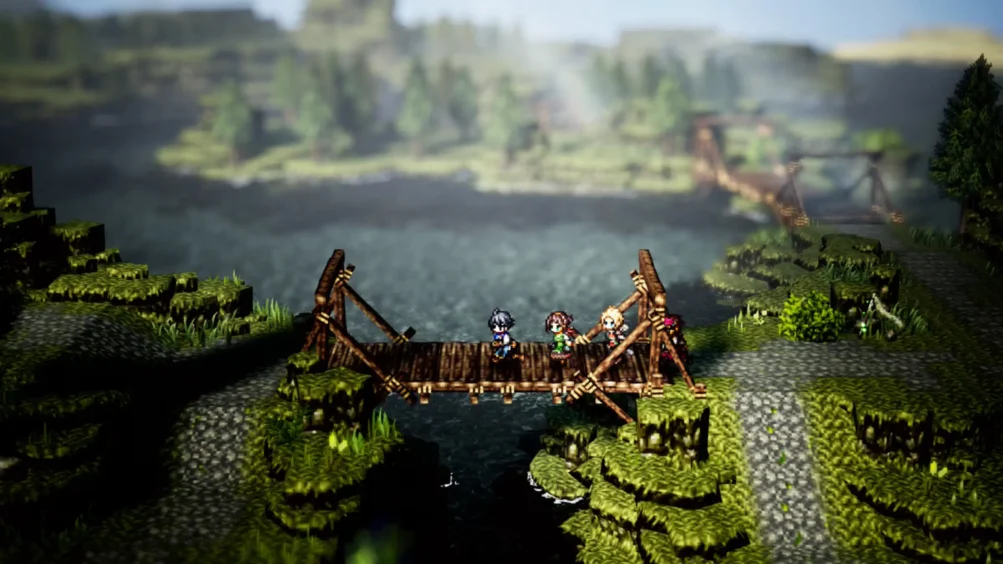
The HD-2D style continues to be one of Square Enix’s strongest ideas, and Octopath Traveler 0 might be the best example of it so far. The lighting alone does an incredible amount of work. Sunlight through trees, glowing towns at night, and the way spells light up the battlefield all add a real sense of depth.
I regularly found myself slowing down just to look around. That doesn’t happen often anymore, and it says a lot about how confident the visual direction is.
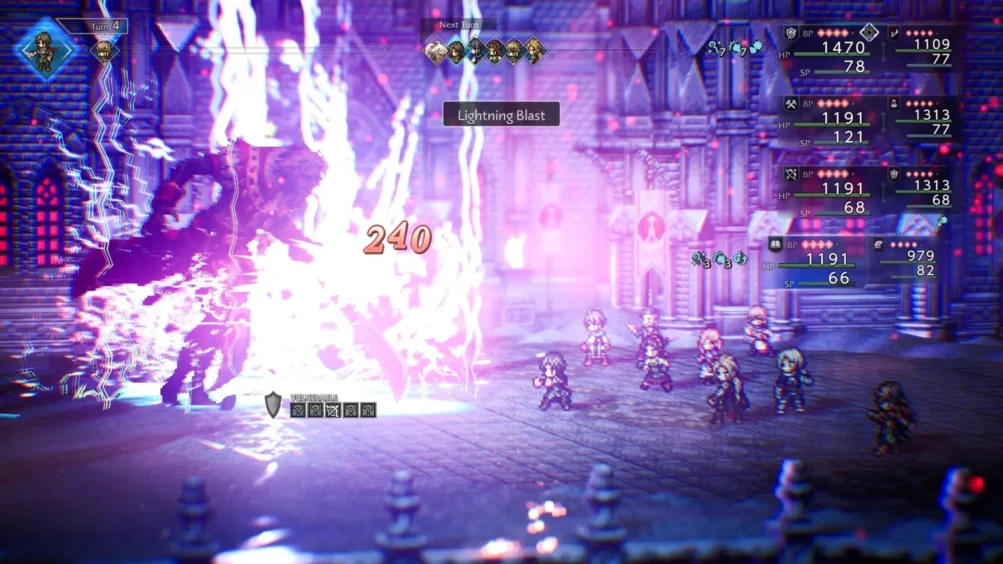
Combat effects are especially well handled. Attacks feel impactful without turning the screen into a mess of particles, and animations have enough weight behind them to make each action feel deliberate.
But once you stop admiring the bigger picture and start noticing the details, things begin to feel a little off.
Interior spaces are the clearest example. Beds have no blankets. No pillows. Characters lie down fully clothed on what looks like a bare wooden frame. It’s oddly distracting. These are small things, but they repeat often enough that they start to stand out.
The result is a world that looks alive from a distance, but feels more artificial up close. It doesn’t ruin the experience, but it does chip away at it.
Inconsistent Voice Acting Breaks the Flow
The decision to only voice certain parts of the story was something I struggled with throughout the game.
Main story moments are voiced. Side scenes usually aren’t. Sometimes a single conversation jumps between voiced dialogue and silent text, and those transitions aren’t subtle. They’re noticeable, and once you clock it, it keeps happening.
Personally, I think this was a mistake. Not because the voice acting is bad — it isn’t — but because it’s inconsistent. I’d honestly rather have no voice acting at all than this halfway approach.
When characters speak, you expect them to keep speaking. When they suddenly stop, it pulls you straight out of the moment. That’s especially true during emotional scenes, where tone and delivery matter just as much as the words themselves.
It’s one of those choices that probably made sense during development, but from a player’s point of view, it just feels unfinished.
Combat Is What Keeps You Playing
If there’s one area where Octopath Traveler 0 consistently delivers, it’s combat.
The turn-based system is easy to understand, but it never feels shallow. The Break and Boost mechanics push you to think ahead, pay attention to enemy weaknesses, and plan turns carefully. You’re rarely just going through the motions.
Even regular encounters ask something of you, and bosses definitely do. You can’t rely on raw numbers alone. Preparation matters. Party setup matters. Timing matters.
What stood out to me most, though, was the difficulty.
This is a game that will occasionally tell you “no”. There were points where I hit a wall and simply couldn’t push through. Enemies hit harder than expected, and mistakes were punished quickly.
Instead of forcing it, I stepped away, levelled elsewhere, adjusted my setup, and came back later. When I finally won those fights, it felt earned. That sense of earned progress is something I really appreciate, and it’s not something every modern RPG is willing to offer.
That said, difficulty spikes can feel abrupt. The game doesn’t always signal danger clearly, so sometimes you only realise you’re underprepared after getting wiped out.

Story Ideas That Don’t Always Land
The story sits in an awkward space for me.
There are good ideas here. Themes around ambition, loss, and consequence run throughout the main narrative, and there are moments where it genuinely works. I was interested enough to keep going, which is important.
But delivery lets it down.
Between the partial voice acting and the lack of environmental storytelling, some emotional beats don’t hit as hard as they should. I understood what the game wanted me to feel, but I didn’t always feel it.
I never disliked the story, but I also never fully connected with it. It became something I followed rather than something I felt invested in.
A World That Feels Close to Being Alive
This is where all the smaller issues come together.
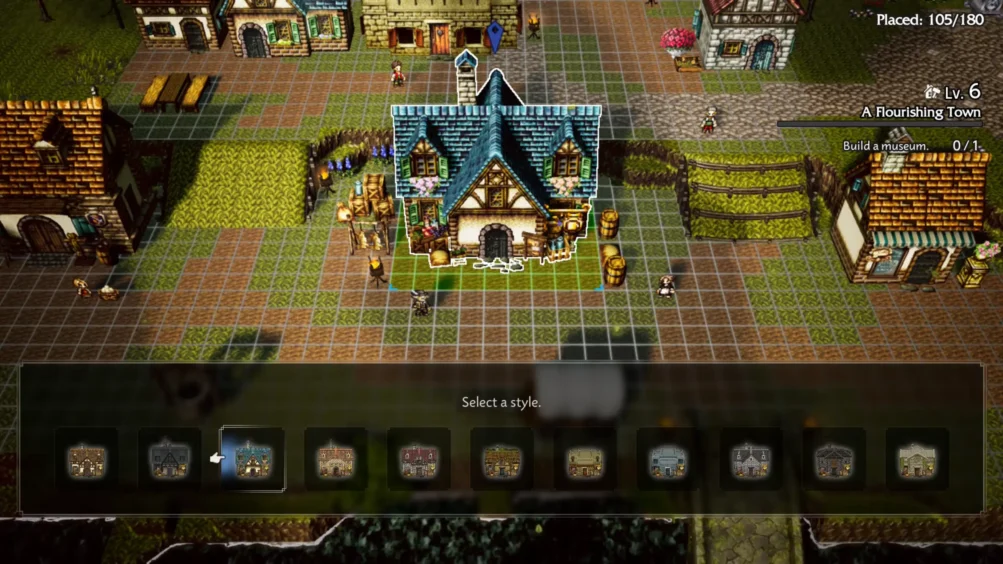
Octopath Traveler 0 feels like it’s just one step away from being truly immersive. The art direction suggests depth. The systems support long-term play. But small missing details stop the world from feeling fully lived in.
It’s not one big flaw. It’s a collection of little ones.
And over time, those little things add up.
Final Thoughts
By the end of my time with Octopath Traveler 0, my opinion was fairly clear.
Octopath Traveler 0 very good RPG. The combat is strong, the visuals are consistently impressive, and the difficulty makes progress feel meaningful. It’s also a game that never quite lets you forget its limitations.
I enjoyed playing it, and I don’t regret the time I spent with it. But immersion-breaking details and uneven presentation stopped it from becoming something I truly loved.
This is a game I admire more than I connect with — and that’s both its strength and its frustration.
Octopath Traveller 2 Live Action Trailer
Read more awesome reviews >>here<<.
The game was provided to us for the express purpose of reviewing.
The review was written by me and edited by my partner.



You must be logged in to post a comment.