
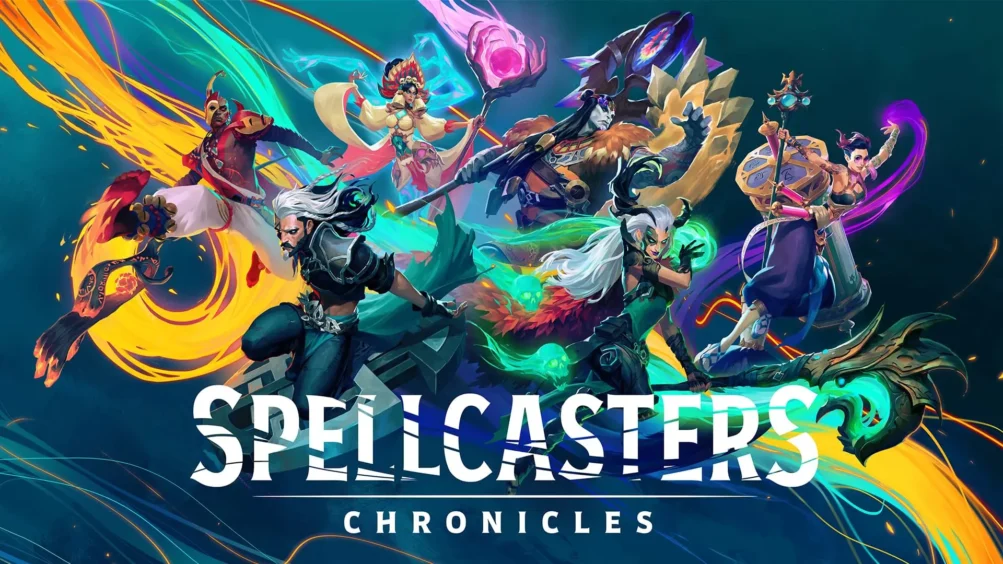
Quantic Dream is entering the MOBA space was never going to be neutral. This is a studio historically known for authored consequences and controlled narrative arcs, now producing a 3v3 arena title in Spellcaster Chronicles coming to early access on Steam February 24th 2026. The premise is mechanically coherent, if philosophically unusual: reduce hero complexity, lower onboarding friction, and re-centre the genre around macro management rather than duelling virtuosity.
These Spells Should Have Stayed Chronicled
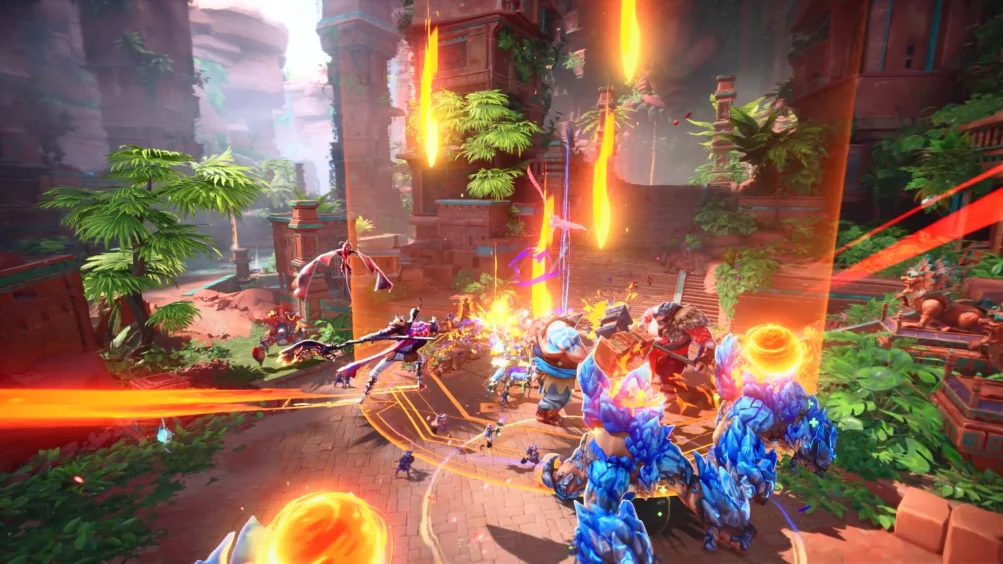
Most MOBAs position the player as both participant and threat. Even support roles retain moments of interruption, fights turned by timing or mechanical precision. Spellcaster Chronicles transfers much of that decisive violence to AI summons. There are no automated creep waves. If pressure is advancing down a lane, it is because a player generated it. If a structure falls, it is because player-managed units did the structural work.
Overall Gameplay
Outplaying the opposing Fire Elementalist mid-air rarely determines a match. Maintaining the resource economy required to deploy a summon that cannot be cleared in time is far more consequential. Structural damage dealt directly by players is heavily dampened. Kills between mages feel situational rather than transformational. Matches are spent escorting, reinforcing, and dismantling summoned units. The player becomes less a frontline combatant and more a controller of combat throughput, responsible for lane logistics rather than lane dominance.
That macro emphasis is internally consistent. The loop is clear: generate pressure, protect pressure, escalate to Titans once the damage threshold fills. The 25-minute limit reinforces tempo. Well-timed Titan deployment can produce visible structural swings. Yet the decisive moment often belongs to the entity you created, not the action you performed. When a Titan advances on a Lifestone, resolution tends to involve counter-summoning rather than tactical outplay. The conflict resolves as arithmetic.
Character identity narrows accordingly. While each mage retains a distinct basic attack, ultimate, and passive traits, the shared deck system governs most functional tools. The accessibility logic is transparent: learn a summon once, take it everywhere. The outcome is homogenisation. When a Mystic Scribe and an Iron Sorcerer draw from the same pool of lane pressure, selection begins to feel statistical rather than strategic.
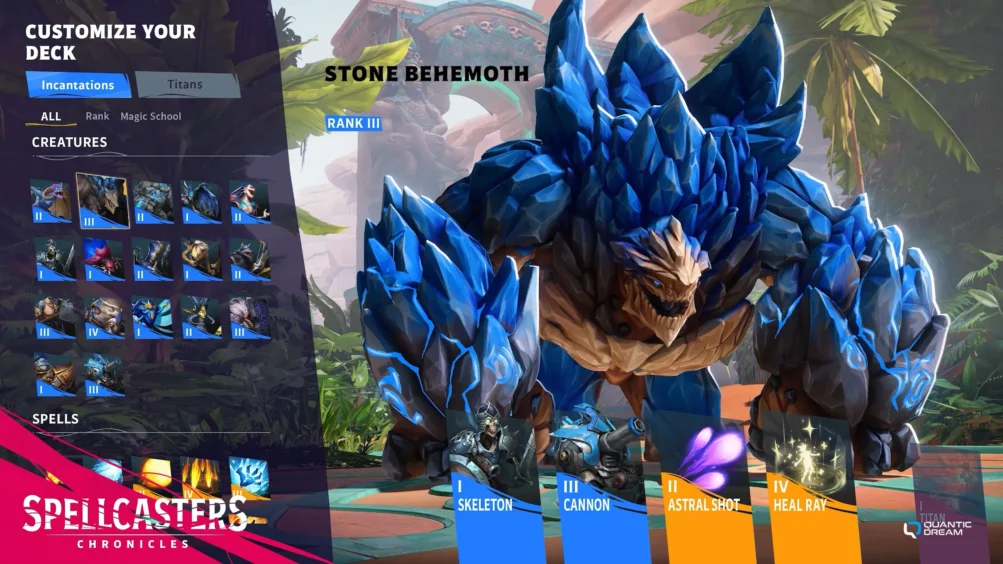
In a genre traditionally sustained by match-up literacy and counter-pick friction, this flattens the mastery curve. The onboarding approach reinforces that flattening. There is no tutorial, no practice sandbox, only Quickplay. The design assumes genre fluency or insists that fluency be acquired under live conditions.
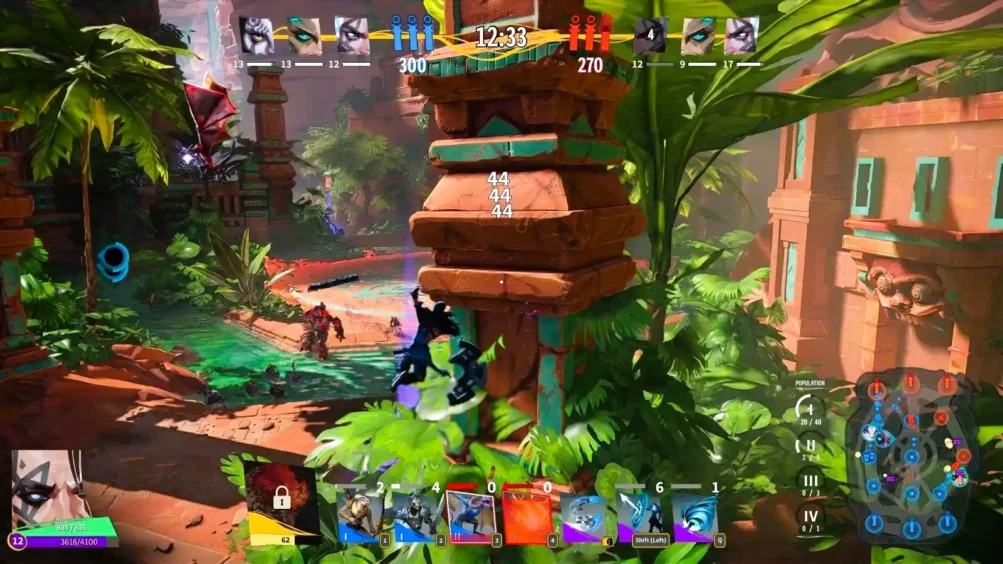
Friction surfaces elsewhere. Levelling requires manual input that locks the character in place while upgrades are allocated. In a fully three-dimensional arena built on mobility and disengagement, forced immobility contradicts the core movement philosophy. It interrupts spatial awareness in order to service progression.
Visual and Sound Finesse
Presentation is stronger. The art direction is cohesive and painterly, maintaining legibility even during dense spell exchanges. The soundtrack is quietly effective, ethereal strings grounded by lower instrumentation, rising in tension without excess. Aesthetically, the experience feels assured. Mechanically, impact remains subdued. Ultimate attacks are visually expansive yet light in physical feedback. Health bars decrease predictably, but few abilities alter momentum in ways that feel tactile. Against high-health summons and Titans, exchanges feel accumulative rather than decisive.
Technical stability complicates matters further. Repeated hard freezes in versus matches destabilise the competitive frame. There is no reconnect and no backfill. In a six-player format, a crash does not inconvenience one person; it dissolves the integrity of the match for all involved. Strategic depth becomes abstract if completion cannot be relied upon. Communication tools are similarly sparse. Text chat is absent, signalling minimal. The likely motivation is toxicity mitigation. The consequence is reduced coordination in a format built around synchronised pressure. Premade groups will extract more coherence from the design than solo players relying on inference.
Final Thoughts
Spellcaster Chronicles occupies a distinct, narrow space within its genre. It does not prioritise carry moments or mechanical dominance. It does not attempt to graft narrative decision-making onto competitive structure. It appears most aligned with players who prefer macro orchestration to direct confrontation, and who are comfortable with victory emerging from managed systems rather than personal duels.
The experiment, manual wave generation, shared tool pools, AI-dependent structural damage, is conceptually consistent.
That consistency may read as discipline to some, as distance to others. By muting individual impact, Spellcaster Chronicles reduces volatility. Whether that is refinement or reduction will depend on what one seeks from an arena title. Presently, Spellcaster Chronicles feels deliberate in its restraint, confident in its presentation, and uncertain in how much agency it is willing to concede for the sake of clarity. It has trimmed the genre’s excess. What remains is structurally coherent, occasionally compelling, and still negotiating how visible the player should be within their own victory.
Spellcaster Chronicles Trailer
Read more awesome previews >>here<<.
The game was provided to us for the express purpose of reviewing.


You must be logged in to post a comment.