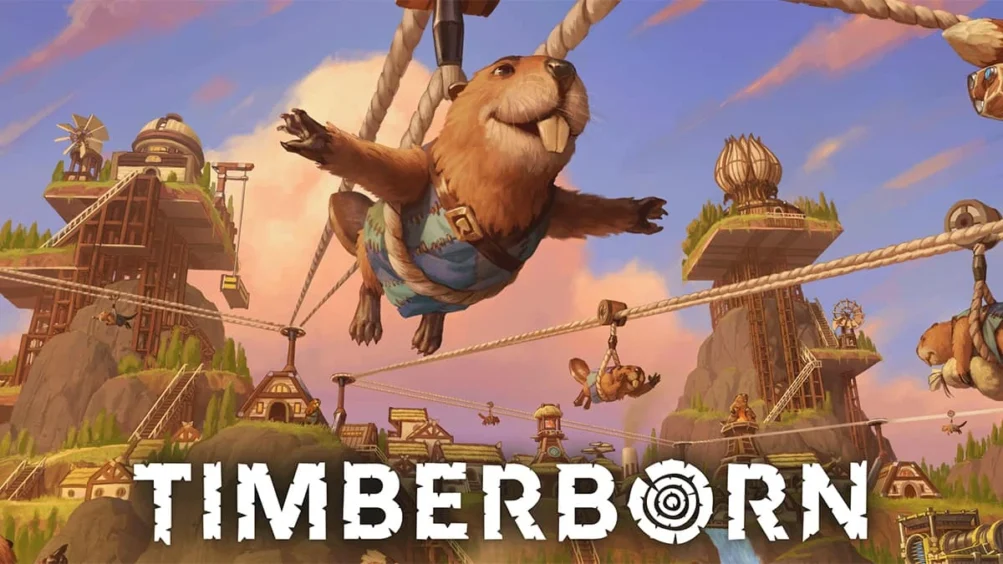
Oh, dam, strap yourselves in for this one because it will contain a few beaver puns. Over the years, I have played my fair share of City-building games. These types of games have been around for decades, but every now and then, one comes along that feels genuinely different.
That’s where Timberborn shines, on the surface, you might think that it’s a generic city builder with a quirky twist, that twist of course being that you are Beavers instead of humans. Though when you start to dig beneath that charming exterior, you’ll uncover a surprisingly deep and demanding survival city builder that revolves around one critical resource: water! That’s why it’s ironic that you’re playing as Beavers, seeing as they are the true engineers of the waterways.
Gameplay and Core Mechanics
Timberborn is set in a post-human world where nature has reclaimed the planet. It places you in control of a colony of highly intelligent beavers with the goal of building a thriving settlement that can withstand the harsh cycles of wet seasons and devastating droughts. This cycle gets harder the longer you play.
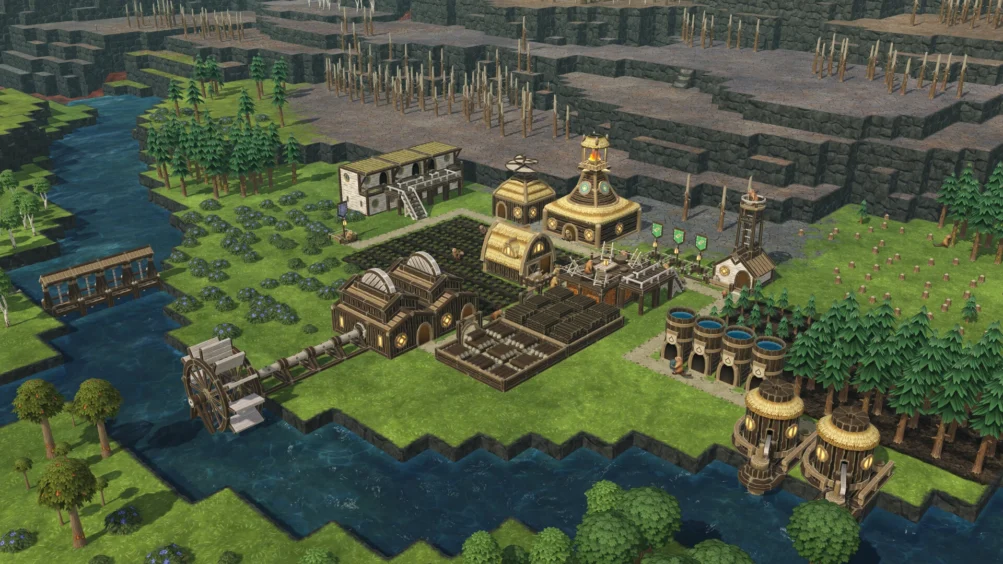
While many city builders focus on expansion, economy, or population happiness, Timberborn takes a more distinct approach by making you do environmental management, with one main resource in particular, water. You will have to do what beavers do best and build dams to control the water to make sure you can thrive in those devastating droughts; it is the central pillar of gameplay.
The Importance of Water: Survival Challenges
Talk about being thrown into the deep end. From the very beginning, it is made abundantly clear that water is life. You will need to take advantage of the wet seasons to grow crops and collect water for your beavers, and make sure you’re working efficiently to make the most of the time you have before the drought hits.
When this happens, those same rivers that have become a key element to your colony’s survival begin to dry up completely, turning fertile land into barren dust. If you haven’t prepared properly, this can cause huge problems for the colony.
If you haven’t stored enough water, secured irrigation, or built dams to control the flow of water while in the drought, your colony can go from thriving to full-on collapse in a split second, and what you had spent hours building can all be gone in the blink of an eye. This constant push-and-pull between abundance and scarcity creates a gameplay loop that is both tense and highly rewarding when done right.
Hands-On Environmental Management
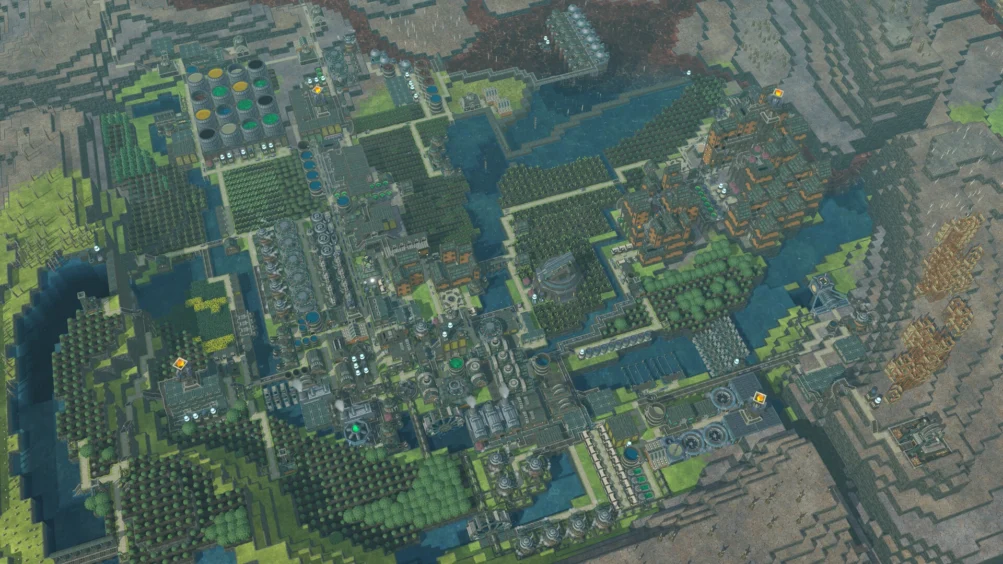
I believe that what makes this system so compelling is how hands-on it feels. It’s not just about placing buildings and watching your population grow; every wet season feels like a time crunch to reshape the environment, build dams, and prepare for the oncoming drought.
You can spend hours trying to work out the perfect water flow so that you can take advantage of it for your colony’s survival. You will be able to slow the water’s flow, creating reservoirs to store excess, and design irrigation systems to keep farmland alive during dry spells. It will take a lot of trial and error to perfect these mechanics, but once you manage to get your head around it through experimentation and carefully constructed networks, it feels like being a true water bender and the ultimate beaver.
Vertical Building and Space Management
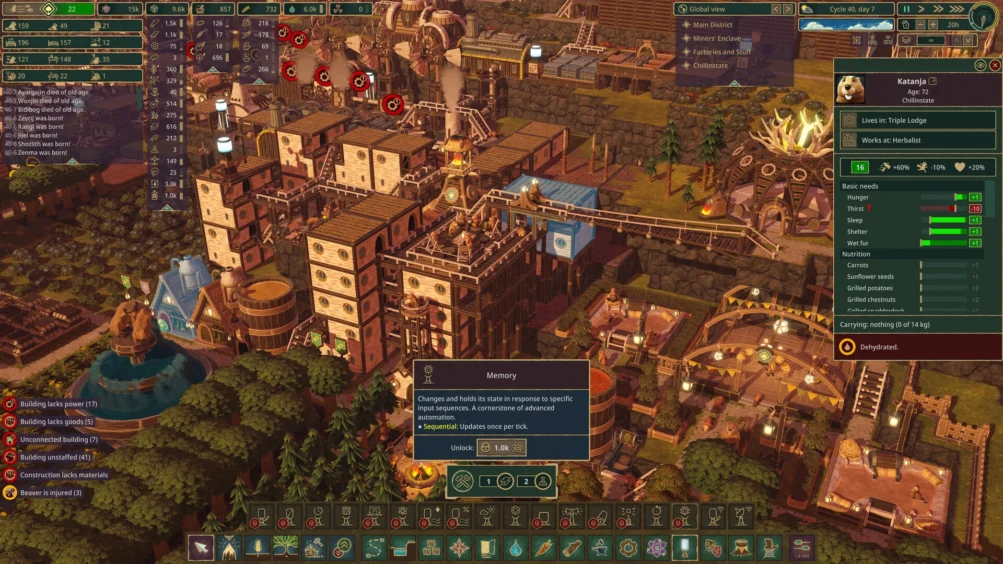
When I found out that Timberborn has a vertical building system, unlike many traditional city builders, I knew that I’d be able to achieve feats of greatness when it came to space management for my colony. This allows and often requires you to build upwards, using platforms, stairs, and multi-level structures to maximise limited space and create intricate production chains stacked on top of each other.
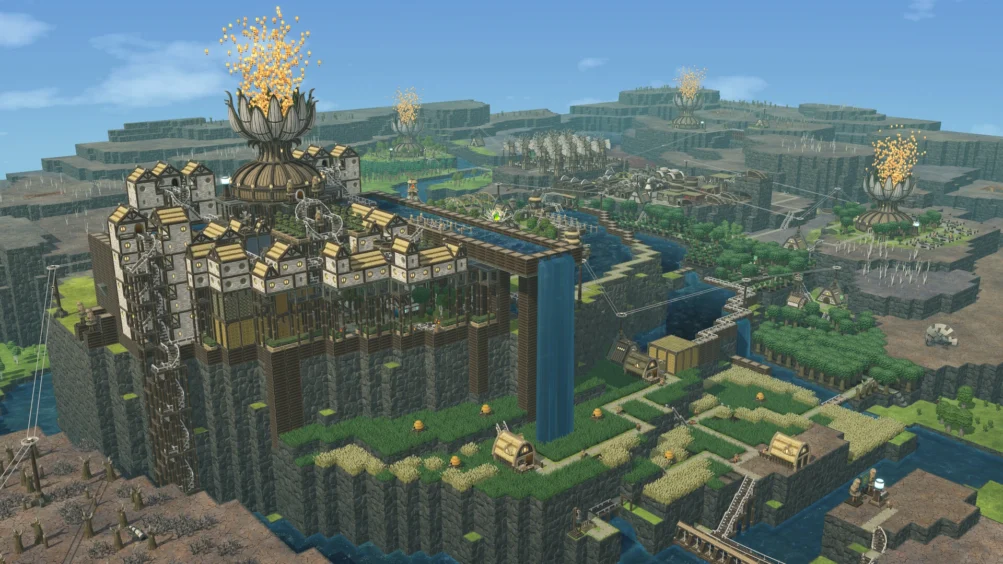
I love that you can stack warehouses and storage on top of one another rather than waste tons of space making several warehouses next to each other. It adds a puzzle-like element when utilising your city’s design. Certain areas on the map will need you to think about layering and connectivity for paths and water flow to each key location.
Advanced Industries and Colony Complexity
Try not to get too attached to your colony because as it grows, so does the complexity of your production systems and maintenance to ensure their comfort and survival. It goes from simple water pumping and crop farming to advanced industries like lumber processing, food production, and mechanical power. These systems are crucial in maintaining a delicate ecosystem so that each resource feeds into another. If any area has a shortage, it quickly ripples through the entire settlement, putting your ability to adapt and rethink your strategy to the test for the continued success of the colony.
Factions and Replayability
There are two factions that you can play with in Timberborn: the Folktails and the Iron Teeth. Each comes with its own philosophy and playstyle. The Folktails focus on living in harmony with nature and sustainable practices, whereas the Iron Teeth lean into industrialisation, using advanced technology and automation. At the start of the game, you can only play as the Folktails until you unlock the Iron Teeth. Faction choice significantly impacts your strategy and approach, adding variety and vast replayability.
Challenges and Learning Curve
It’s not all wood chippings and dams in Timberborn. It comes with challenges, including a steep difficulty curve. Early mistakes like underestimating water storage or overextending food supply can have long-lasting consequences. Droughts are brutal, and if you’re not prepared, a single drought can wipe out hours of progress in just two in-game days. Additionally, the user interface can feel clunky when managing larger settlements, making late-game management less intuitive. Despite this, these challenges encourage careful planning, adaptability, and learning from failure.
Visuals and Sound Design
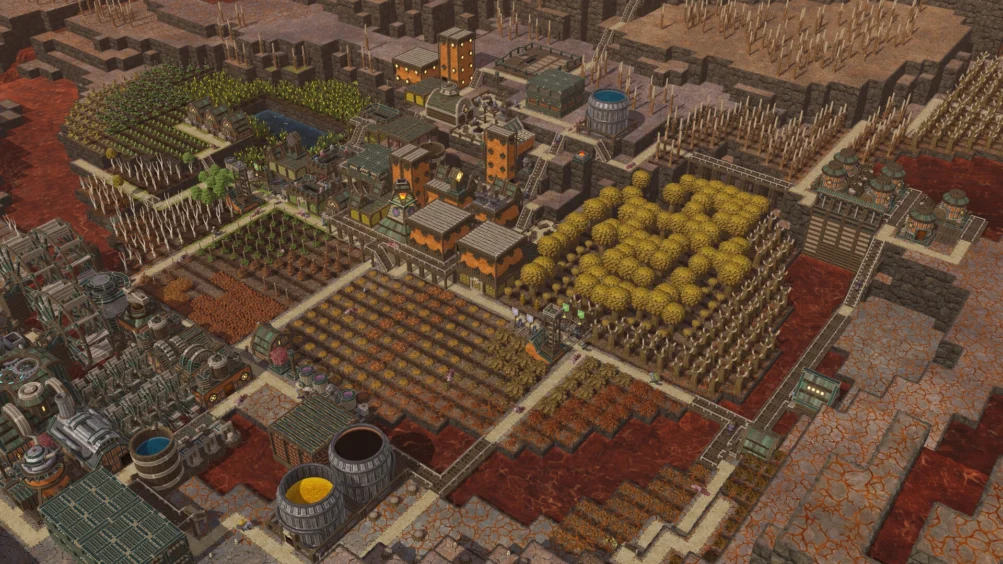
I love how Timberborn looks visually. It strikes a wonderful balance between charm and clarity. Stylised beavers are full of personality, bustling around your settlement, while environments are clean and easy to read. Structures like paper presses and dams are original and appealing. Watching my colony evolve from a handful of beavers to a sprawling multi-tiered montopolis is deeply satisfying. The calm ambient soundtrack complements the visuals, creating a relaxing atmosphere that blends serenity with gameplay stress.
Why Timberborn Stands Out
What sets Timberborn apart from other city builders is how cohesive its systems feel. Everything ties back to water management, fitting the beaver theme perfectly. From agriculture to power generation to city layout, it’s built around a clear central idea, executed exceptionally well. It challenges players to think not just like city planners but like environmental engineers, constantly adapting to natural cycles. Successful colonies feel earned, making the game both rewarding and engaging.
Conclusion
In conclusion, Timberborn is a unique and engaging take on the city-building formula. Its charming presentation draws you in, while deep mechanics hook you completely. It reimagines the city-building genre with compelling water management challenges. While it has rough edges and a steep learning curve for beginners, the experience is both memorable and rewarding. Timberborn is one of the best city builders I’ve played, earning a 9 out of 10.
Timberborn Trailer
Read more awesome reviews >>here<<.
The game was provided to us for the express purpose of reviewing.