
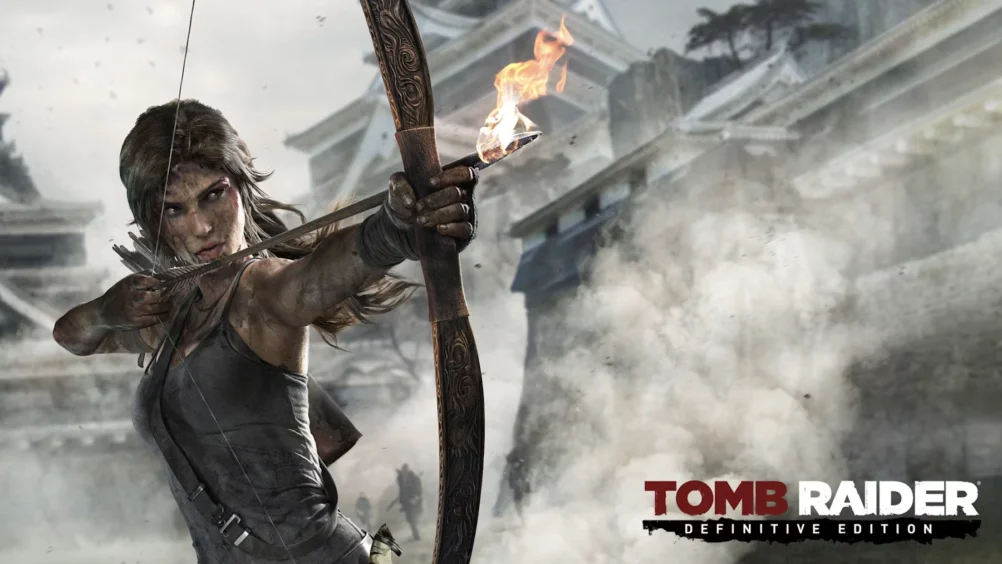
That’s what I’d say the shadow drop of Tomb Raider Definitive Edition for Switch was. One, after the recent remaster releases of Tomb Raider 1 – 6 by Aspyr, I was really hoping, expecting, for the Anniversary Edition Trilogy to be next up on the remaster block. Crystal Dynamics’ excellent 2013 reboot of the franchise was not on my Bingo card. And two, I’d just been toying with the idea of replaying the reboot trilogy again, starting, of course, with 2013’s Definitive Edition. So lucky me that not only did I get to replay the game, but I also got to do it on the go.
The Reboot Trilogy
Crystal Dynamics reboot of one of gaming’s most beloved icons spawned a trilogy of its own. Tomb Raider (2013) was followed up by Rise of the Tomb Raider (2016) and Shadow of the Tomb Raider (2018). 2014 saw an enhanced edition of Tomb Raider rolling out to the next generation of consoles, featuring a bunch of visual improvements and the addition of, at the time, impressive TressFX hair technology that moved away from traditional polygon modelled and card-based hair to a strand-based system that looked and interacted with the character models more realistically. That version of the game, coupled with any extras, was the Definitive Edition that most of us have played by now.
Gameplay on Switch
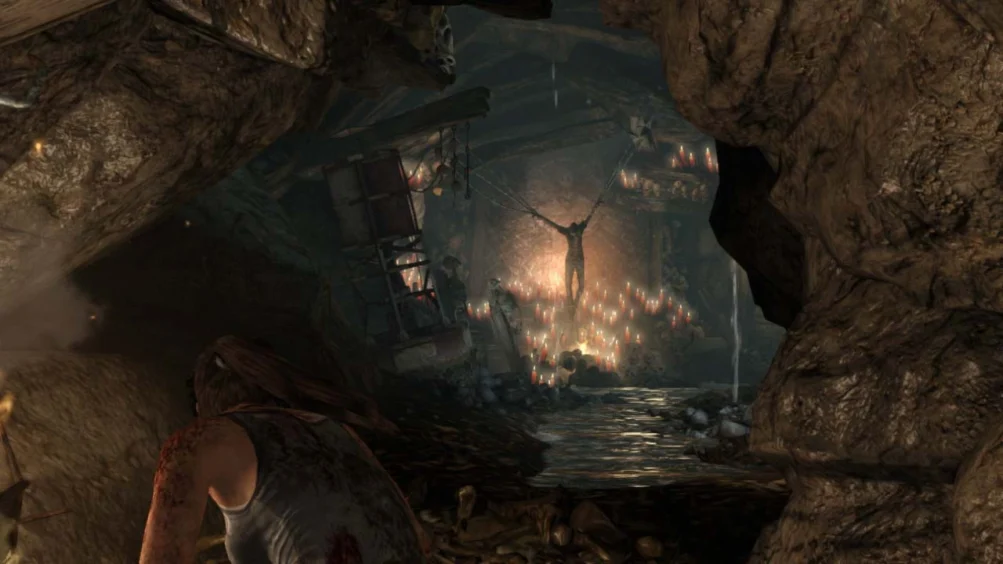
Now I loved Tomb Raider when I first played it back in 2013 on PS3. And I loved it when I played the Definitive Edition on PS4 in 2014. And, guess what? I loved it when I played it, now again on Switch. In theory, this should be a port of the Definitive Edition, containing all the bells and whistles that you would expect. But in practice, well, that’s a tad more complicated. The reason is that this port of the game is a hybrid between the original 2013 release and its later 2014 Definitive Edition, one that straddles a fine line between the two.
I’m not going to get too deep into the gameplay itself, as this game is old enough for most of us to know how it plays. Suffice to say that, gameplay-wise, the game has been brought across to Switch fully and faithfully. That same mix of bombastic action and platforming, coupled with light survival and RPG mechanics, that thrilled on release still thrills now. Crystal Dynamics’ tale of putting Lara through the grinder and a trial by fire still hits like a truck. More importantly, it’s still just as addictive as ever and manages to play, for the most part, just as well on Nintendo’s hybrid console. Hell, even the multiplayer mode has made it across.
The Downsides
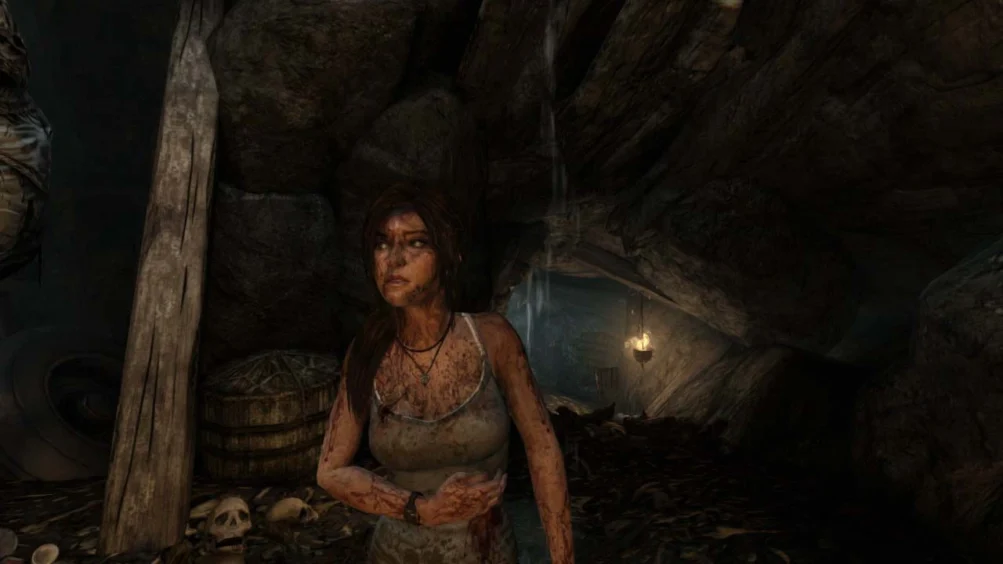
It also means that the game’s negative aspects are still there. For me, personally, that was the lack of complex tombs. In this first of Lara’s outings, Tombs are an optional side objective and usually one-room affairs composed of light puzzles and platforming to figure out. Completing them rewards you with an extra skill point to upgrade Lara’s survival skills and, occasionally, a weapon part for upgrades. The lack of traditional, complex Tomb Raider Tombs is definitely felt, but doesn’t stop the game from being an excellent reboot.
Switch Port Performance
At this point in time, we should be used to games that have been ported to Switch from more powerful platforms, containing visual cutbacks. In that respect, this is the Definitive Edition of the game for the Switch family of consoles. At least until someone decides that the Switch 2 version could do with a serious upgrade.
Visual & Technical Compromises
First, and most important, is the frame rate. The Switch 1 version aims for a respectable 30fps update and, almost, manages to nail it consistently. There are drops at times when exploring the environments, but the largest frame drops that are noticeable happen during the game’s firefights. When it’s an all guns blazing affair, you can feel the lag in aiming, which makes those much-needed head shots harder to get.
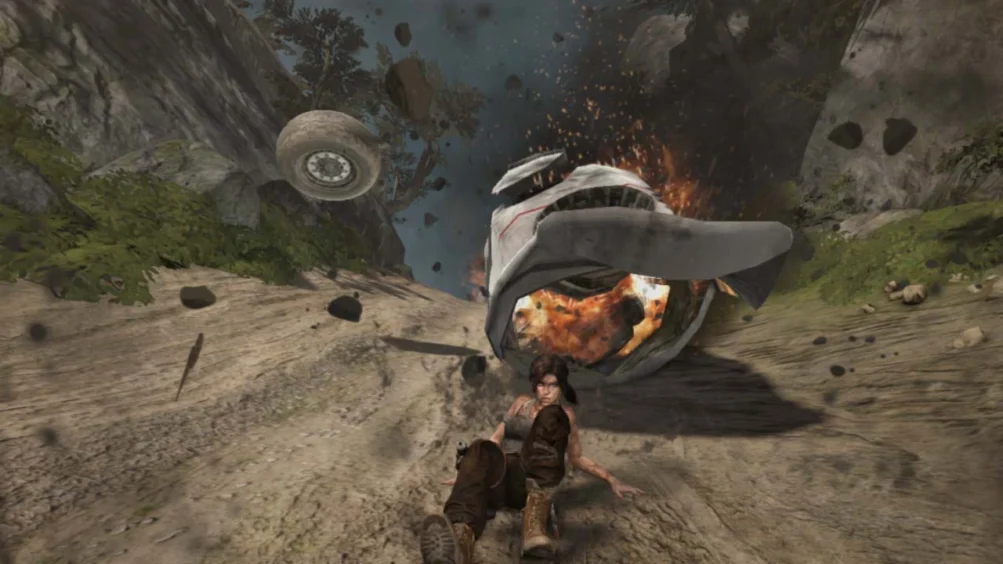
It’s a lot more noticeable from about the game’s halfway point, which is around the Shanty Town section of the game, while the beginning of the game hits 30fps more consistently. The more complicated the scenery and what’s happening onscreen, the more frame drops you’re going to experience. To the developer’s credit, though, it never hits a point where it’s really obvious or unplayable.
The Switch version makes use of higher resolution textures and, along with the resolution, keeps the game looking quite lovely on its smaller screen. I’d go so far as to say quite beautiful most of the time, in fact. The detailed environment textures and, especially, the dirt and damage textures that sell Lara’s hellish personal trip have made the trip across wonderfully.
Cutbacks & Removed Features
Hair Rendering
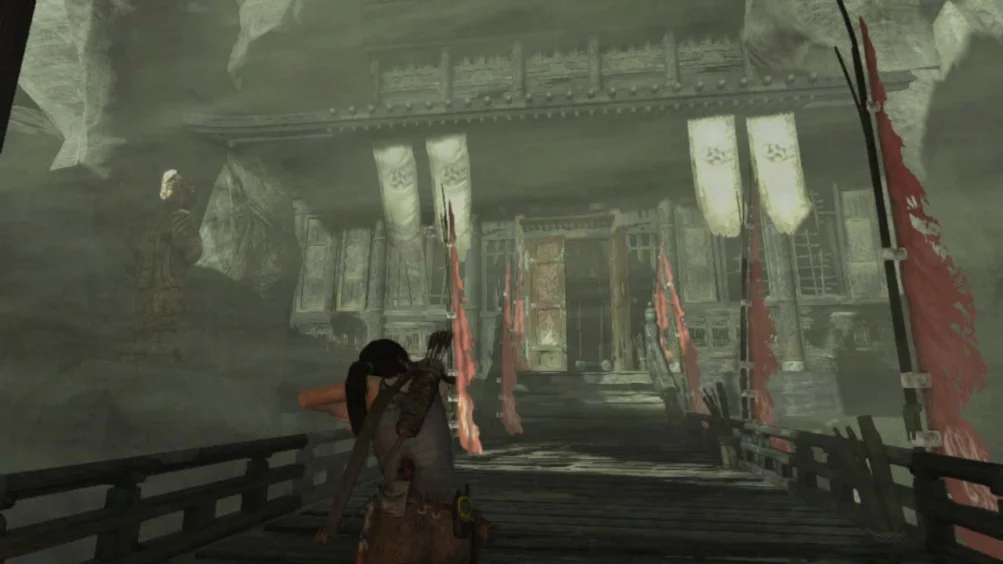
The first noticeable loss is to the game’s strand-based hair system. It’s gone, replaced with the original PS3 versions’ traditional polygon hair. Does it destroy the visual flair? Not at all, but I’ve come to really like the more natural flow the individual strands attain. That said, Lara’s character model still looks fantastic and is wonderfully animated.
Vegetation & Shadows
More noticeable is the stripping back of the game’s vegetation. Grass and bushes have been trimmed back across the environment. Once again, it doesn’t break either the game’s beauty or its atmosphere, but is certainly noticeable, especially if you’ve spent a lot of time in the other versions of the game. Shadows have also been trimmed back across the game as a whole. The important shadows, the ones that help to sell a scene artistically, are still around, but you’ll notice where they’ve been stripped out if you go looking for them.
Object Dithering
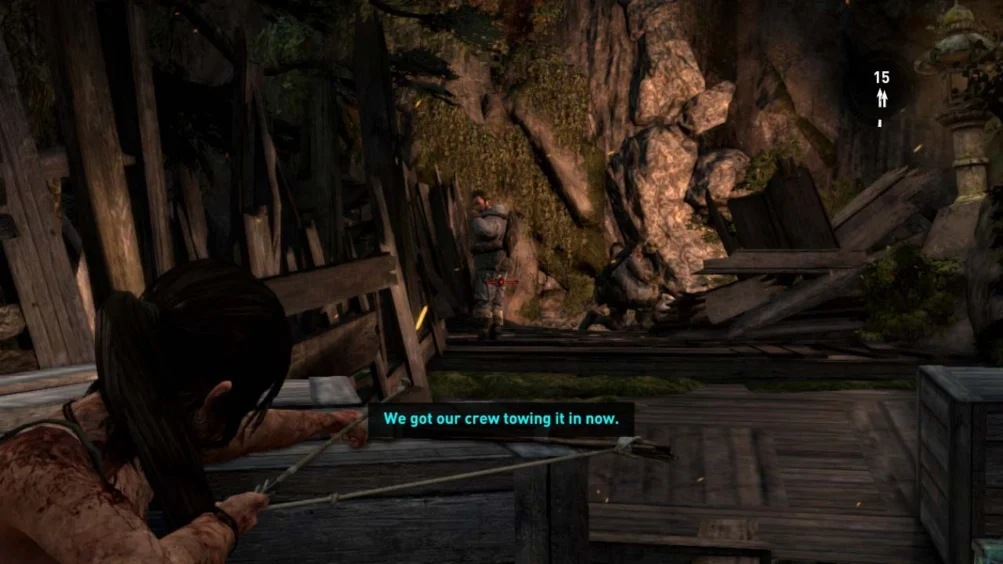
And new to this version of the game is object dithering. This works together with the game’s LOD system, which has objects further from you in the environment fade into view with a crosshatched rendering technique and then fade out in the same manner as you get further from the object. The more complicated an area’s design is, the more prominent the dithering becomes. In the game’s early sections, it’s noticeable on distant foliage and, most of the time, quite unnoticeable unless you’re really looking for it.
The Shanty Town area, for instance, is a prime example of how aggressive the dithering becomes when the scene is so geometrically complex, as the fade-in becomes heavily noticeable with objects fading into greater detail when you’re much closer to them. There were areas where bits of the geometry didn’t even fade in until I was walking across them.
Object Decimation
And, finally, there has been some object decimation as well, with some 3D assets having a lower polygon count than the other versions of the game. While it’s more noticeable in some assets than others, such as some trees and rocks, it’s one of those changes that you really have to go out of your way to notice.
A Hybrid Edition
As I stated earlier, this was a bit of a hybrid release of the game. All of these cutbacks that were taken to bring Tomb Raider Definitive Edition to the Switch place the port as a cross between the original PS3 and Xbox 360 versions of the game and the later PS4 and Xbox One editions.
While it’s a shame that these cuts had to happen, they haven’t managed to diminish my enthusiasm for the game in any way. Do I wish all the visual bells and whistles had made the port across? Sure. But I still had a wonderful time playing Lara’s new origin story on the go. Crystal Dynamics’ reboot of the legend that is Tomb Raider is a fantastic experience wherever you decide to play it.
Read more awesome reviews >>here<<.
The game was provided to us for the express purpose of reviewing.
The review was written by me and edited by my partner.


You must be logged in to post a comment.