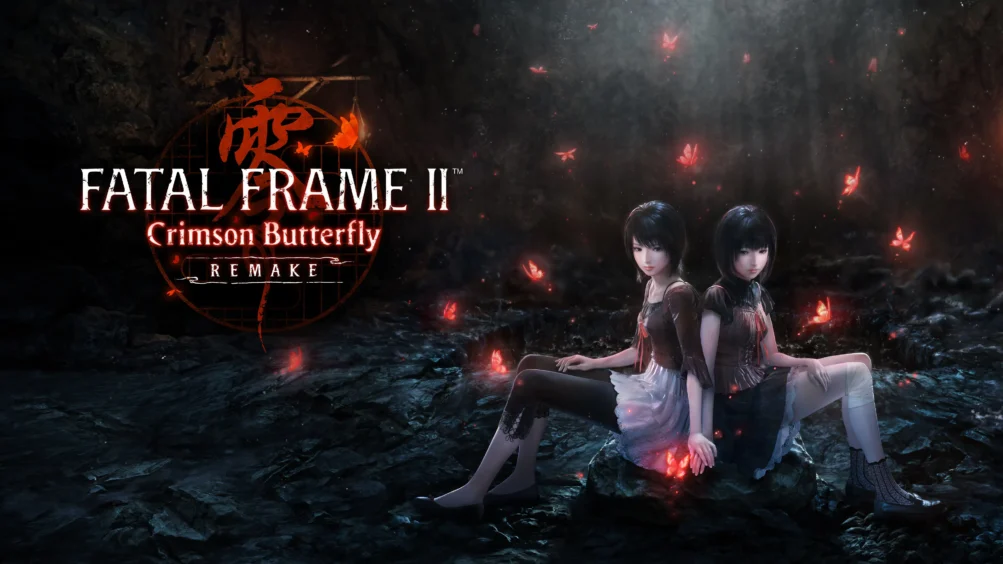
Before Fatal Frame II Crimson Butterfly, back in 2001, Koei Tecmo – just Tecmo then – decided that they wanted to make the scariest horror game possible. Inspired by Silent Hill and Japanese horror movies, the results of that ambition were the Fatal Frame series, or Project Zero for those in the EU. And with Fatal Frame, they damn near succeeded.
Set during the 1980’s, the series revolves around a series of cursed and haunted locations and those poor, unfortunate souls unlucky enough to stumble across them. Those who enter those locations are destined to be cursed themselves, or worse, to become sacrifices for whatever dark forces hold sway there.
Atmosphere & Horror Design
The Fatal Frames series greatest strength has always been its ability to instil a disquieting sense of dread, an atmosphere of palpable terror through its superb visual and auditory design. Utilising fixed camera techniques, superb set design and a constant assault of creepy noises and music, the games have continued to imbue an atmosphere of escalating terror that could make your hair stand on end. And its all been backed up by great stories.
Now Team Ninja have remade what is widely considered to be the best, and scariest, of the Fatal Frame games: Fatal Frame II Crimson Butterfly.
Story Overview
Fatal Frame II Crimson Butterfly is the chilling story of twins Mayu and Mio whose journey to relive a piece of their childhood in a forest finds them getting trapped in the lost village of Minakami. With the path behind them having disappeared, they have no choice but to make their way through the decrepit and deserted village to find a way out. But Minakami village, which mysteriously disappeared years ago, has no intention of letting them go.
Remake Approach
Team Ninja’s remake of this seminal title is a lot like the Resident Evil 2 remake. It’s both a nearly faithful recreation of the original game, while also been a re-imagining of many of it’s aspects that expands upon the original game both in story and gameplay mechanics. It’s the sort of remake that tricks you into remembering the original looking and playing exactly like this, while been different enough to be considered it’s own thing.
Expanded Content & Narrative Depth
Our heroines story remains intact, but is now bolstered by new content in the form of side-stories that further expand upon Minakami’s history and the lives of the people who once lived there. For the most part, they organically fit into the story, unlocking through diligent exploration and also, almost always been solved in the same way. Minakami’s dark history is told through creepy cut-scenes, distorted audio logs that sound like they’re been played through a possessed cassette player and a lot of notes and journals that feel important to the story. New to Fatal Frame II Crimson Butterfly is a new ending but only the stoutest of players will probably see this (not counting YouTube spoilers that is).
Visuals & Audio Design
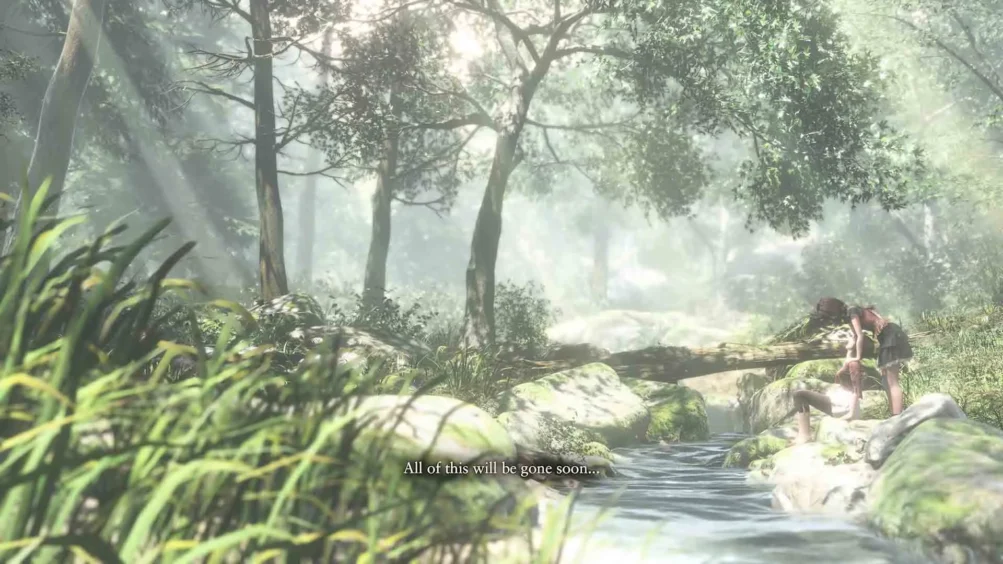
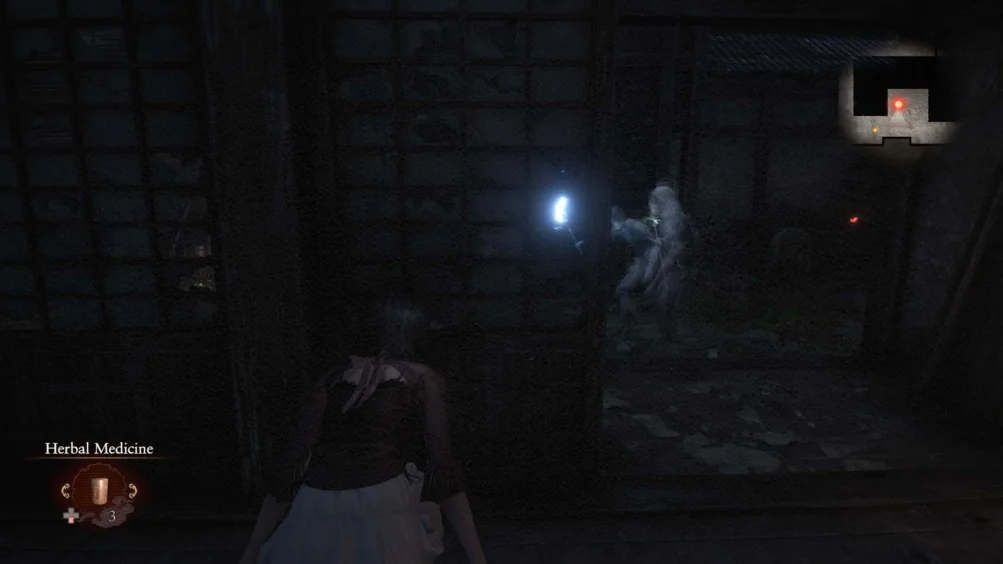
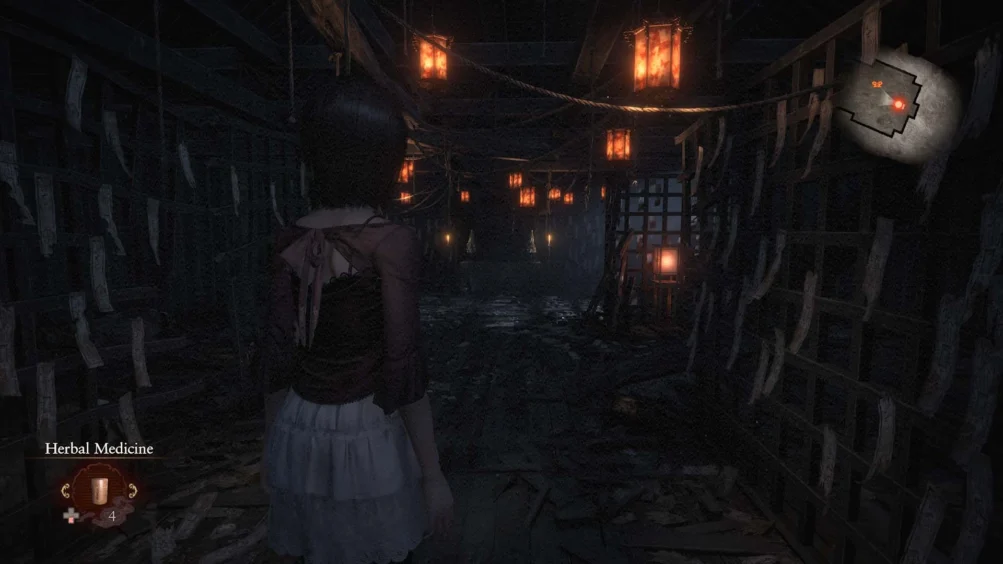
Minakami has been gorgeously remade for Fatal Frame II Crimson Butterfly, significantly fleshing out the location while keeping the art design that rendered it so terrible in the original game. It’s a beautiful, if unsettlingly decrepit location where doors creak open far too loudly and quick flashes of shadow highlight a trauma from the past. It’s bolstered by that same, stunning audio that really ratchets up the tension as sibilant whispers grind away in empty locations and a stunning soundtrack renders the never-ending night a thing of hostility. A lot of what makes Fatal Frame 2 so damn genuinely oppressive is the sound design and I don’t think it would work as well as it does without it.
Layered over the superb visuals is a faux film grain effect, meant to also invoke the good old days of VHS and 70mm filmstock but it’s less effective in this remake than it was in the original games. It’s actually a problem I’ve found with most modern games using this filter in that the result never looks quite right and more like the games renderer not resolving the image properly. You do get used to it, but it would have been nice to have the option to toggle it off.
Gameplay Changes
Team Ninjas take on this classic tale of spooks and sacrifice is a bit of a double-edged sword, though, in what this remake brings to the table versus how those changes affect the game design.
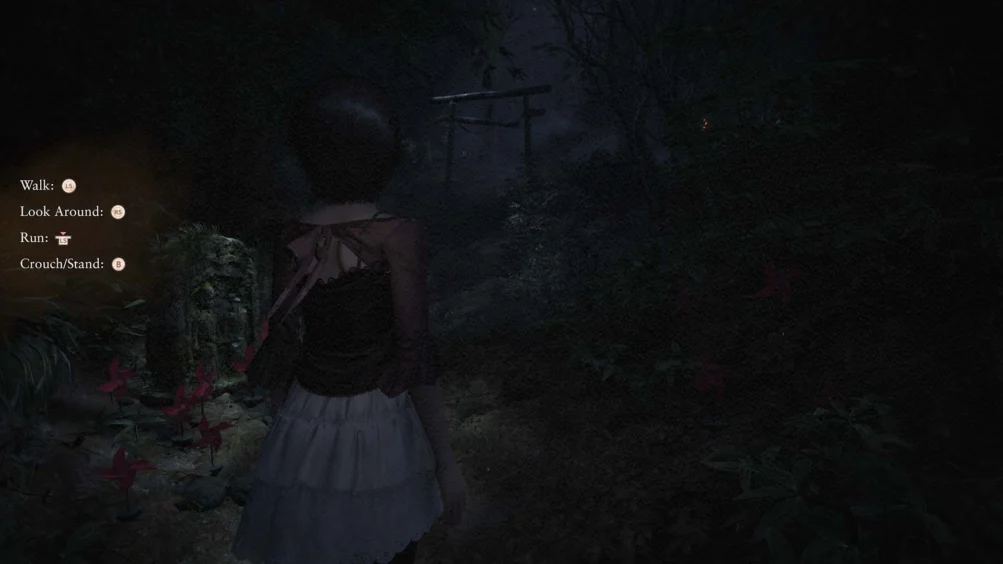
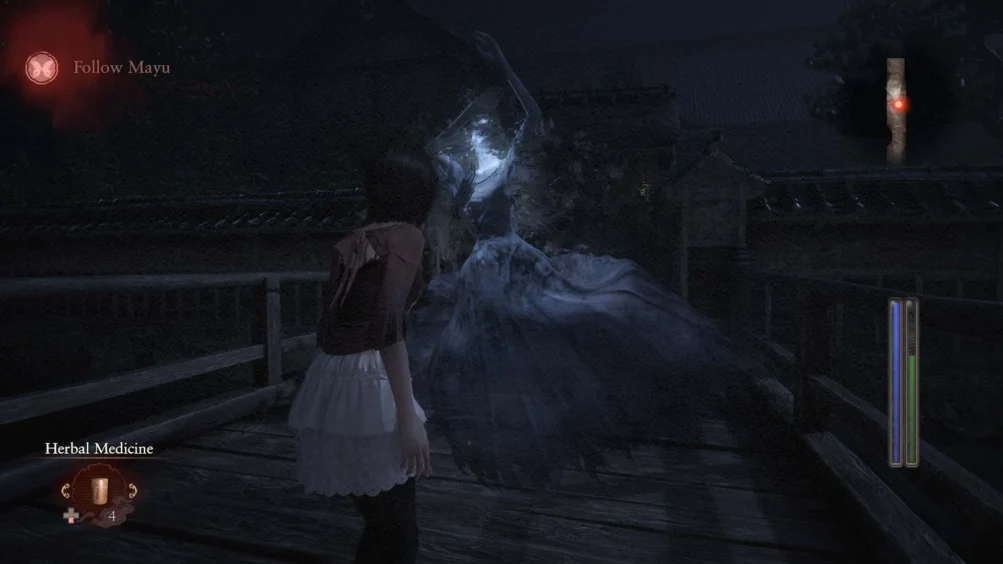
The fixed camera angles of the original now give way to a full 3rd person camera system that lets you see and explore Minakami in greater detail than ever before. It’s useful not just for finding objects in the environment or navigating the surroundings while paying attention to the increased environmental detail, but also easier for those moments when stealth, hiding and running from the various spooks and spectres in your path is a must. It’s a modern update that makes Fatal Frame II Crimson Butterfly easier to play, but conversely loses some of the dread from never knowing what’s just around the next screen transition.
Ghost layouts seem to have been altered a little as well as you can now find some of them roaming the streets, looking for their prey or jumpscaring you when opening doors or picking up items. In general there seems to be a somewhat higher focus on action, even though it’s still on the slow, methodical side. Outside of those fights that must be fought, there is a an emphasis placed on either running or avoiding combat unless you’re of the school that feels that every ghoul needs to be exorcised.
Combat & Camera Obscura
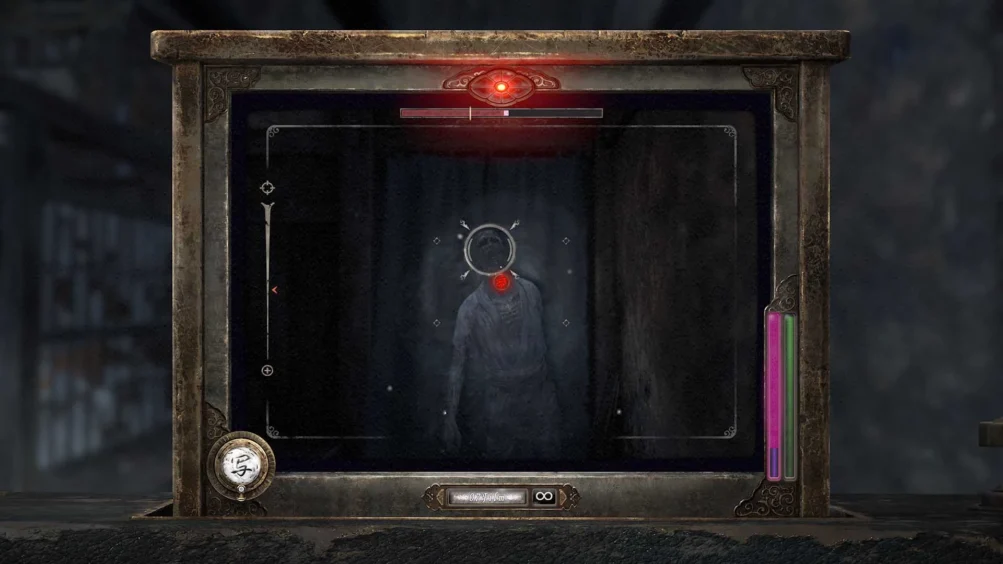
Of course you’re not entirely helpless here as Mio can defend herself with the series feature weapon: the Camera Obscura. The Camera Obscura for those that don’t know, is a camera that can allow you to see and take pictures of apparitions. More than that, it can also hurt and exorcise specters. The trick is to line-up shots correctly so that your view and focus allow you to do the most damage possible to a ghost.
There is a risk reward system at play here with the use of a Fatal Frame shot, which is when you take a picture right as the ghost attacks. This doubles up the damage while also acting as a parry, leaving the ghost open for a quick follow-up shot.
Combat becomes more tactical as there are other factors to look at. There are multiple types of film to use, each of which has their own pros and cons, such as doing more damage while taking longer to reload. And, apart from the cameras default film which is infinite, you can only carry a certain amount of the other types. There’s enough liberally dotted around the environment but there’s also another con to that which I’ll get to later.
Adding on to the cameras functionality are different Filters which also have their own benefits in damage dealing and special abilities. One, for instance, allows you to see moments from the past replayed out. The Camera and its filters are also upgradeable if you can find the orbs to do so. You can upgrade auto tracking, damage dealt and reload speed among other effects and new to this version, as far as I remember, is a Zoom function.
New Mechanics & Issues
New to this edition as well, and I’m not sure it was a good addition, is a Willpower bar. Essentially this is a stamina bar that governs running in combat, evades and the cameras special attacks. Use up too much Willpower or get it drained by ghosts and Mio gets knocked down with the only way to get back up been to snap a shot of the ghost as they’re crawling all over you. No to too little Willpower also slows you down, stops you from evading and lets you limp around like you’ve just been kicked repeatedly in the chest.
Ghosts have been overhauled as well. Now they can teleport around, have attack patterns and can drain you of Willpower with jumpscare attacks. Ghosts can also, randomly, become aggravated which lets them restore a huge chunk of health while dealing increased damage and taking less damage.
Combat Balance Problems
Combat is where this Fatal Frame II Crimson Butterfly is at it’s weakest. First off, the difficulty has been upped enormously on the spooks even before you take into account their health regeneration along with the bulk of the games fights taking place in small, locked room with barely enough room to dodge in let alone fight. The ghosts are absolute damage sponges with even a basic fight taking close to five minutes or more to complete because, even with camera upgrades, you do so little damage to them. All that extra film laying around quickly disappears when even the most basic spectral visitor can take upwards of ten shots to defeat.
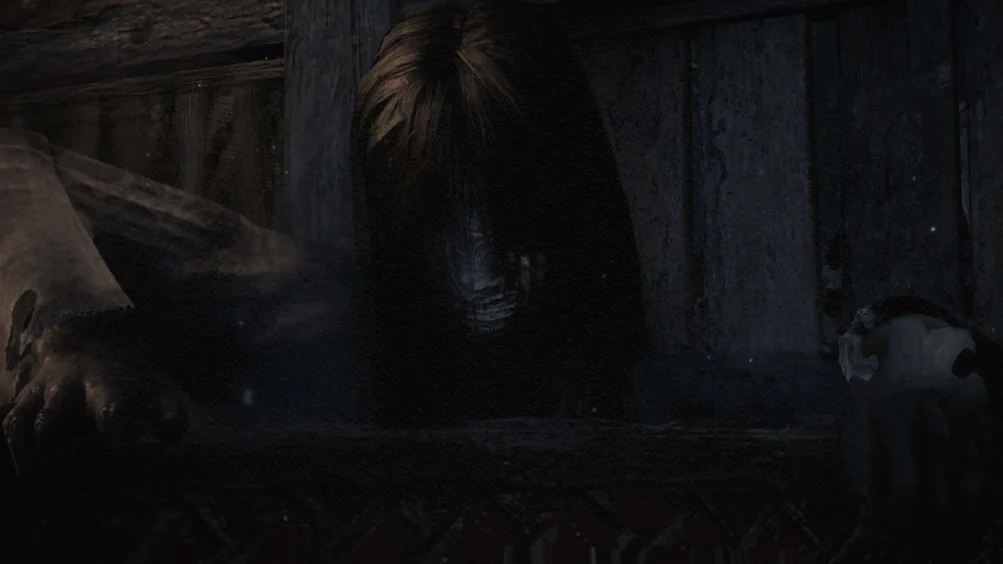
And Mio moves incredibly slowly period, both in and out of fights giving you small windows to evade attacks or to put some distance between yourself and the ghosties. More often than not you’re stumbling around drunkenly while trying to avoid damage from somethings that’s just popped up behind you before it can knock you down and straddle you while sucking the life out of you.
Fights end up becoming long, drawn out affairs of trying to manage your willpower while playing a game of dodge and attack before trying to reposition yourself for the next round. It’s probably Fatal Frame II Crimson Butterfly most gamiest aspect and, quite frankly, adds nothing to the games scares. If anything it’s a distraction from them as, before long, I found myself more aggravated than scared as later fights simply dragged into tedium. Whatever tension the atmosphere generates is soundly stumped out here in these slow, ardous, pattern based encounters.
You can swop between difficulties at anytime but even dropping Fatal Frame II Crimson Butterfly into Story Mode didn’t seem to make much of a difference to the combat difficulty. This is one area of Fatal Frame II Crimson Butterfly that could really do with some much needed re-balancing.
Performance
Outside of some pop-in here and there, I can’t say I noticed any performance issues in terms of frame-rate with Fatal Frame II Crimson Butterfly.
Final Thoughts
It’s always a risky manouver taking a beloved classic that many would say is perfect and updating it for a modern audience with modern mechanics. And while Fatal Frame II Crimson Butterfly Remake doesn’t always hit everything spot on, it’s more effective than not most of the time.
For my money, Fatal Frame II Crimson Butterfly isn’t as terrifying as the original was, not least because many of the changes this remake does takes away from what generated all of that horror in the first place, but also because after nine games – four of which are remakes/remasters – the formula is well known. While the combat could certainly do with serious re-balancing for sure, the visuals and art design are gorgeous and the audio work still terrifying.
Fatal Frame II Crimson Butterfly story, the additions to the Fatal Frame universe, are incredibly engaging. If you love survival horror titles, then both this and it’s original incarnation, should be on your playlist.
Fatal Frame II Crimson Butterfly Trailer
Read more awesome reviews >>here<<.
The game was provided to us for the express purpose of reviewing.