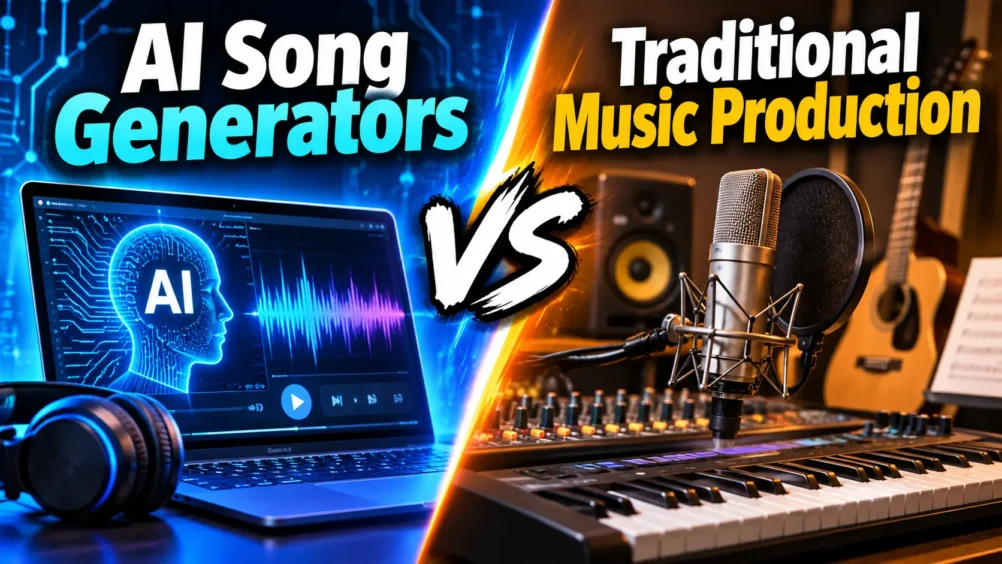
Creating music has always required a mix of creativity, skill, time, and technical knowledge. For many years, traditional music production was the standard path for turning an idea into a finished song. Artists needed songwriters, producers, vocalists, recording equipment, mixing engineers, and often a professional studio to complete a track.
Today, AI song generators are changing that workflow. Instead of starting with instruments, recording sessions, or complex production software, creators can now enter a text prompt, lyrics, genre, mood, or musical idea and generate a complete song in minutes. Tools like https://www.musicseed.ai/vocal-remover can also support editing workflows such as vocal removal and stem preparation. This shift has created a major question for musicians, content creators, and brands: should they use AI song generators or stick with traditional music production?
The answer is not simply one or the other. AI song generators and traditional music production serve different needs. AI is fast, affordable, and accessible, while traditional production still offers deeper creative control, human emotion, and professional polish. Understanding the difference helps creators choose the right workflow for their goals.
What AI Song Generators Do Differently
AI song generators use machine learning models to create music based on user input. A creator can describe a style, mood, genre, tempo, instrument choice, vocal tone, or lyrical theme, and the tool generates a song from that information.
For example, a user might request an upbeat pop song with female vocals, bright synths, and a catchy chorus. The AI can turn that prompt into a complete track with melody, rhythm, vocals, and arrangement. Some tools also allow users to generate instrumental music, background tracks, demos, vocal hooks, or genre-based songs.
The biggest difference is speed. Traditional music production can take days, weeks, or even months, depending on the project. AI song generators can produce a usable draft within minutes, making them especially useful for creators who need quick ideas, social media music, demos, or background audio.
AI also lowers the technical barrier. Users do not need to know music theory, arrangement, sound design, or mixing to start creating. This makes AI song generators attractive to beginners, marketers, YouTubers, TikTok creators, indie game developers, and anyone who needs music but does not have a full production team.
How Traditional Music Production Works
Traditional music production usually begins with a human creative idea. This may be a melody, lyric, chord progression, beat, or concept. From there, musicians and producers build the song through songwriting, arrangement, recording, editing, mixing, and mastering.
This process can involve multiple people. A songwriter may write the lyrics, a producer may shape the sound, session musicians may record instruments, and a vocalist may perform the melody. After recording, engineers refine the track through mixing and mastering so it sounds balanced and professional.
Traditional production gives creators much more control over the final result. Every chord, vocal phrase, drum pattern, and sound texture can be adjusted manually. If the song needs emotional nuance, a specific vocal delivery, or a unique artistic identity, human production is still extremely valuable.
However, this process also requires time, budget, and skill. Studio sessions can be expensive. Hiring musicians or engineers increases the cost. Even home producers need software, plugins, instruments, and technical knowledge to create high-quality tracks consistently.
Speed Comparison: AI Song Generators vs Traditional Production
Speed is one of the clearest advantages of AI song generators. A creator can generate several song ideas in a short session, compare different styles, and choose the best direction. This is useful when testing content ideas, writing demos, or creating music for fast-moving platforms.
Traditional music production is slower because every step requires human decisions. Writing lyrics, composing melodies, recording vocals, editing takes, and mixing audio all take time. For professional releases, this slower pace can be a strength because it allows for detailed creative refinement.
AI song generators are especially useful in the early stages of a project. They help creators move from a blank page to a working concept quickly. A songwriter can use AI to explore chorus ideas, a YouTuber can test background music options, and a brand can draft multiple campaign sounds before choosing a direction.
Traditional production is better when the goal is a final song with a strong artistic identity. If a track needs a custom vocal performance, unusual arrangement, live instruments, or precise emotional control, a human-led process usually produces better results.
Cost Comparison: Affordable AI vs Professional Production
Cost is another major difference between AI song generators and traditional music production. AI tools are generally much more affordable because they reduce the need for studios, musicians, producers, and engineers at the early creation stage.
For independent creators, this matters a lot. A small YouTube channel, podcast, startup, or content creator may not have the budget to hire a composer for every project. AI song generators give these users a practical way to create original music without large upfront costs.
Traditional production can still be worth the investment, especially for artists releasing commercial singles, albums, or branded campaigns. A professional team can bring creative taste, performance quality, and technical polish that AI may not fully match.
The best choice depends on the purpose of the music. If the goal is to create quick background music, rough demos, or social content, AI is often more cost-effective. If the goal is a serious artist release or high-end commercial track, traditional production may justify the higher cost.
Who Should Use AI Song Generators
AI song generators are especially useful for creators who need music quickly and do not have advanced production skills. This includes YouTubers, TikTok creators, podcasters, streamers, marketers, educators, indie game developers, and small businesses.
A YouTube creator can use AI to generate intros, outros, background music, or custom songs for video themes. A TikTok creator can create short hooks or catchy loops that fit quick visual edits. A podcaster can make simple theme music without hiring a composer.
AI is also useful for songwriters and producers who need inspiration. Instead of replacing their creativity, AI can help them test ideas faster. They can generate a rough song, study the melody, rewrite the lyrics, and use the output as a starting point.
Beginners benefit the most from AI because it removes many technical barriers. Someone with no music theory knowledge can still create a pop song, rap track, lo-fi beat, or cinematic background track by describing what they want.
Who Still Needs Traditional Music Production
Traditional music production is still the better choice for artists who care deeply about originality, performance, and long-term artistic identity. If the goal is to build a recognizable sound, human creativity remains essential.
Professional singers, bands, producers, and composers often need more control than AI can provide. They may want specific chord changes, live guitar tones, custom drum grooves, emotional vocal takes, or complex arrangements that match their personal style.
Traditional production is also important for high-stakes commercial projects. Film scores, major brand campaigns, album releases, and sync licensing projects often require precise direction, legal clarity, and production quality that benefits from professional human involvement.
In short, AI is excellent for speed and accessibility, but traditional production is stronger when emotional depth, originality, and full control matter most.
Limitations of AI Song Generators
AI song generators are not perfect. One common limitation is consistency. A generated song may have a catchy chorus but a weak verse, or it may sound good at first but feel repetitive after several listens.
Another limitation is lyrical quality. AI can generate lyrics quickly, but the words may sound too general, too predictable, or emotionally flat. For strong songwriting, human editing is often necessary.
Vocal performance can also be a challenge. AI vocals may sound clear, but they may not always capture the subtle emotion, breath, timing, or personality of a real singer. This matters especially in genres where vocal identity is central.
Licensing is another important issue. Different AI platforms have different rules for commercial use, ownership, and distribution. Creators should always check the terms before publishing AI-generated songs on streaming platforms, advertisements, or monetized videos.
Limitations of Traditional Music Production
Traditional music production also has limitations. The biggest ones are cost, time, and accessibility. Not every creator can afford professional musicians, studio time, or experienced engineers.
The process can also be slow. A simple song may require multiple writing sessions, recordings, revisions, and mix versions before it is complete. For creators producing frequent content, this can be too demanding.
Traditional production also requires technical knowledge. Even with home studio tools, beginners must learn recording, editing, mixing, arrangement, plugins, and audio export settings. This learning curve can stop many people from creating music at all.
For fast-moving digital content, traditional production may be more than what the project needs. A short social video, podcast intro, or background loop may not require a full custom production process.
Best Workflow: Combining AI and Traditional Production
The strongest workflow is often not AI song generators versus traditional music production, but AI song generators plus traditional production. Each method can support the other.
Creators can use AI to generate early ideas, test genres, create draft melodies, or explore different moods. Once they find a strong direction, they can refine the track manually with a DAW, rewrite lyrics, record real vocals, or improve the arrangement.
This hybrid workflow saves time without removing human creativity. AI handles the fast ideation stage, while humans handle taste, emotion, editing, and polish.
For example, a songwriter might use AI to create three demo versions of a chorus. Then they choose the best one, rewrite the lyrics, adjust the melody, and record their own vocal. A video creator might generate background music with AI, then trim and mix it to fit the pacing of their video.
This approach gives creators both speed and control. It is especially useful for independent artists, content creators, and small teams who want better results without building every track from zero.
Conclusion
AI song generators and traditional music production are not enemies. They are two different ways to create music, each with clear strengths and weaknesses. AI makes music creation faster, cheaper, and easier for beginners, content creators, and small teams. Traditional production offers deeper control, stronger emotion, and more professional refinement.
The future of music creation will likely be hybrid. Creators will use AI to generate ideas, test styles, and build early drafts, then use human judgment and production skills to refine the best results.
For creators who need speed and flexibility, AI song generators are a powerful tool. For artists who need originality and emotional precision, traditional production remains essential.
The smartest approach is to understand what each method does best. Use AI when you need quick inspiration, multiple versions, or accessible music creation. Use traditional production when you need full creative control, expressive performance, and a polished final track. Together, they can make music production faster, more flexible, and more creative than ever.