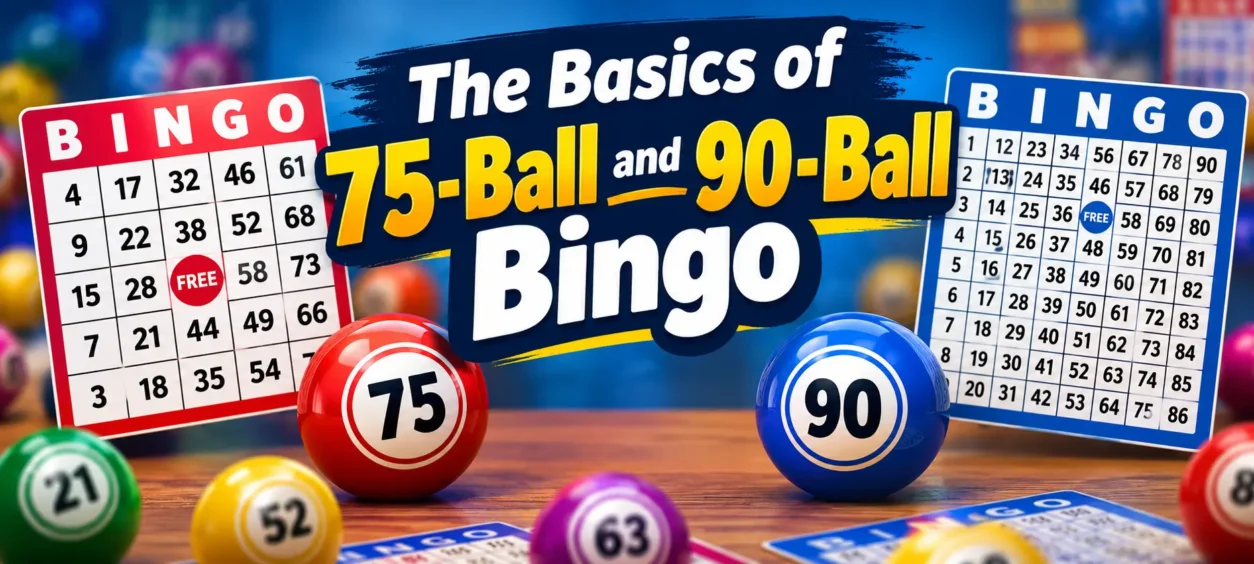
Bingo has remained popular for decades because it offers a simple format that you can learn quickly while still providing plenty of variety. Whether you play online or visit a bingo hall, you will often come across two main versions: 75-ball and 90-ball bingo. While both games rely on matching numbers as they are called, the cards, winning patterns and pace differ in ways that can shape your experience. Understanding these differences can help you choose the format that suits you best.
How 75-Ball Bingo Works
75-ball bingo originated in North America and uses a card made up of five columns and five rows. Each column corresponds to a letter in the word B-I-N-G-O, with numbers arranged beneath each letter. The centre square acts as a free space, which means it automatically counts towards any pattern you need to complete.
Unlike some other versions of bingo, you do not always need to fill an entire card to win. The game operator may choose specific patterns, such as a straight line, a cross, a diamond or even more complex shapes. As numbers appear, you mark the matching spaces on your card and watch your chosen pattern take shape. This approach adds variety because different games can require different winning combinations.
Understanding 90-Ball Bingo Cards
90-ball bingo is the most common format in the UK. Instead of a square card, you receive a ticket with three rows and nine columns. Each row contains five numbers and four blank spaces, creating a total of 15 numbers per ticket.
The game normally offers three opportunities to win. The first prize goes to the player who completes one horizontal line. The second goes to a player who completes two lines. The final and usually largest prize goes to the first player who marks all 15 numbers on the ticket, often known as a full house.
This structure makes the game easy to follow. If you play as part of a group, you can often see the excitement build as more players move closer to completing a line or a full house.
Choosing the Right Version for You
Your preference may depend on the style of game you enjoy. If you like variety and changing objectives, 75-ball bingo can feel more dynamic because each round may require a different pattern. If you prefer a straightforward format with clear stages, 90-ball games often provide a more familiar experience.
Consider how you like to play. Someone who enjoys tracking shapes and patterns may gravitate towards 75-ball games, while a player who values a steady pace might prefer the progression of one line, two lines and full house in 90-ball bingo.
Playing Responsibly and Enjoying the Experience
Whichever version you choose, treat bingo as a form of entertainment rather than a way to make money. Setting a budget before you start can help you enjoy the game without spending more than you planned. Many players decide in advance how much they are comfortable spending during a session and stick to that amount.
It also helps to take breaks and focus on the social side of the game. Whether you join friends at a local venue or take part in an online session, the enjoyment often comes from the shared experience and anticipation of the next number being called. By keeping your expectations realistic and playing within your means, you can make the most of what both 75-ball and 90-ball bingo have to offer.