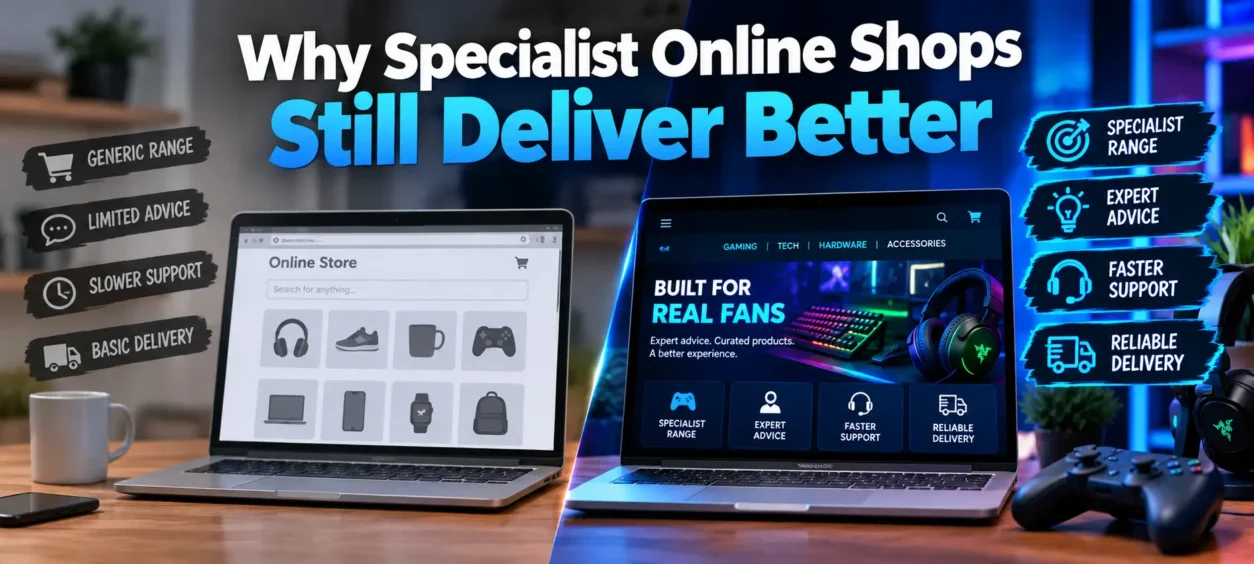
The parcel turned up two days late, the tracking page showed three different depots, and the box was crushed just enough that half the tins had popped open. Anyone who orders niche products knows this scene. A customer trying to buy nicotine pouches online Europe from a marketplace sees dozens of listings, but when something goes wrong, everything suddenly feels very distant. Snusbox and similar specialists build their entire model around avoiding that experience.
Marketplaces hide messy fulfilment reality
On a big marketplace, delivery looks simple on the surface. A product page promises a time window, a courier logo, and maybe a “fulfilled by” badge. Behind that, though, the seller may be shipping from a crowded third-party warehouse, using whichever carrier is cheapest that week. The marketplace sets broad rules; the individual merchant improvises around them.
This is where niche online shops quietly outplay the giants. When buyers want to buy nicotine pouches online Europe, the important questions are very specific: which flavours can legally ship to which countries, how stock is stored before dispatch, and how returns are handled if customs opens a parcel. Marketplaces generally treat most small items as the same category, while specialist retailers fine-tune every step for a narrow range of goods.
There is also the issue of accountability. If a parcel from a marketplace seller goes astray between two hubs, the buyer often ends up bouncing between courier chatbots and marketplace forms. A focused retailer typically runs fewer carrier integrations and has a clear internal map of where every parcel is meant to be at any given point. That shortens the time between “something looks off” and “here is a concrete update”.
How niche retailers structure delivery networks
Specialist shops serving enthusiasts rarely think in terms of the cheapest possible shipping. They think about predictability and control. For customers who regularly buy nicotine pouches online Europe, that often means a carefully selected set of carriers, chosen for how they handle small parcels, temperature swings, and cross-border handovers, rather than for headline transit promises.
When buyers compare ranges and shipping approaches, they will often move between brand sites, forums and one of the specialist retailers that consistently carries the flavours or strengths they are looking for. In these comparisons, delivery is evaluated as part of the overall experience, not as a separate, optional feature.
Another subtle advantage is how these retailers build warehouse layouts. Instead of storing thousands of unrelated products, they design flows around a few core categories. Picking routes are shorter, packing stations are set up for the same packaging types, and staff recognise product variations at a glance. That reduces silent sources of delay, such as mis-picks and repacks, which rarely show up on a tracking page but often add a day here or there.
Cross border detail work marketplaces rarely match
Cross-border shipping inside the EU is where the gap widens further. Marketplace sellers often rely on generic templates for customs data and tax handling, applied automatically to everything from phone cases to food items. A niche retailer that ships nicotine pouches across several EU countries will usually build its own matrix of product codes, language requirements for labels, and carrier preferences by route, based on practical experience rather than default settings.
One less obvious tactic some smaller shops use is routing certain high-friction destinations through a single, trusted hub warehouse on the edge of a customs zone. Parcels from multiple origin points are consolidated there, relabelled with country-specific information, and injected into local carrier networks that staff know well. This does not show up on the customer’s tracking page, which simply lists a couple of hubs, but it significantly reduces the chance of parcels being held up for clarification.
Specialist retailers also tend to maintain direct relationships with local courier representatives in key markets, rather than relying solely on automated portals. When a parcel seems to stall, an internal logistics manager can ask someone they know to check what is happening at a specific depot. For enthusiasts who buy nicotine pouches online Europe and expect a familiar level of reliability each time, that kind of quiet, behind-the-scenes intervention is often the difference between a forgettable delivery and a frustrating one.
In the end, marketplaces win on sheer breadth of choice, but breadth does not automatically translate into smooth logistics. Niche online shops win by narrowing their focus until they understand every recurrent pattern in packing, routing and customs, turning delivery from a vague promise into a repeatable craft. For anyone who cares about how things arrive as much as when, that difference is worth noticing and discussing.
If you enjoy games and gaming and want more NEWS from the Gaming World Click Here