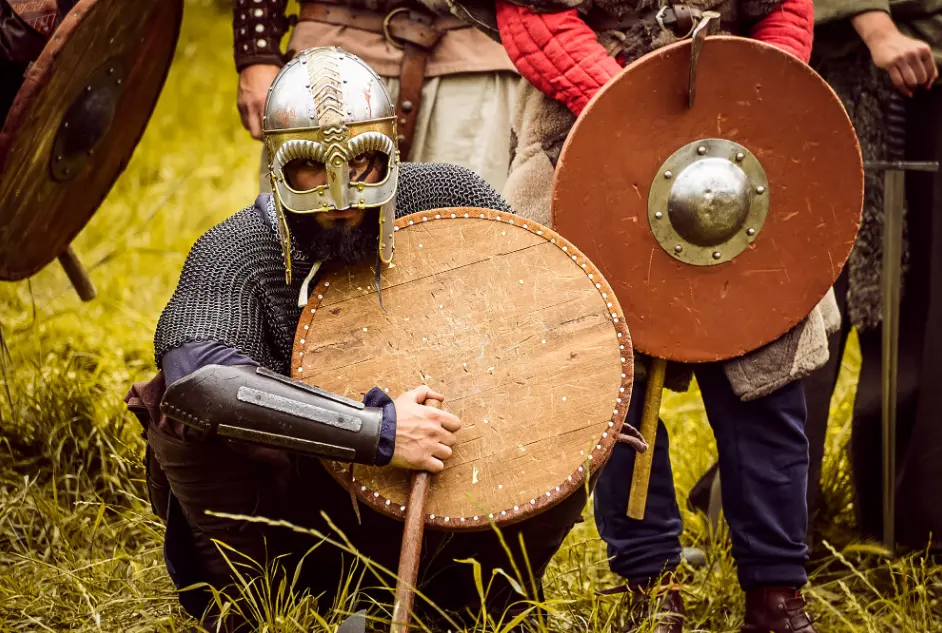
Just twenty years ago, the set of an epic film looked like a battlefield not only for the characters but also for the stunt performers. Heavy, static steel disrupted filming schedules, and full LARP armor from the role-playing community’s workshops seemed like something from another, amateur world.
Today, the opposite is true. Role-playing technology now dictates how uniforms should look and function in large productions. This transition didn’t happen overnight or by accident. The industry is tired of wasting time and money on outfits that look great on camera but don’t let actors move properly.
The Problem of Heavy Steel on Set
Traditional metal armor requires precise fitting for each stunt performer and weighs tens of kilograms. In the heat, an actor wearing such gear quickly tires and takes to be reshot more often than usual.
Every change of fighter in the scene meant a new fitting and lost precious filming time. Filming battle scenes turned into a logistical nightmare: one broken belt and the entire day was down.
How the Role-Playing Community Solved This Problem Early in Cinema
LARPers faced a similar problem much earlier: at festivals, people wear armor for eight to ten hours straight, without breaks for makeup or rest. Over years of experimentation, the community switched to fiberglass-reinforced polyurethane. This material is lighter than steel but can withstand impacts just as well.
Costume designers at major studios gradually adopted this approach for the battle scenes in “The Lord of the Rings” and “House of the Dragon”. This helped their films look as realistic as possible, and it helped actors feel as comfortable as possible during filming.
What the Film Industry Learned from LARP Masters
The transition to new materials wasn’t a one-man decision — it was a team effort between producers, stunt performers, and prop masters. Each studio formulated its own list of requirements, but ultimately, they all came to similar conclusions.
Before switching to the polyurethane outfit, productions reviewed several suit requirements:
- reduce the overall weight of the set;
- speed up the costume change process;
- preserve the detail of the carvings;
- simplify on-set repairs;
- ensure freedom of body movement;
- produce identical replicas in large quantities.
These requirements are almost identical, word for word, to those formulated by role-playing festival organizers for years. It’s not surprising that the technology migrated from the hobby to big-time cinema almost unchanged.
Where Can You Find This Technology Now?
LARPSHOPKEEPER works with this exact type of polyurethane armor whether you need a single piece or a complete set. Each set is created through digital modeling, hand-sculpting, and layering of resin into a silicone mold.
This process allows production of multiple identical copies from a single mold — exactly what film studios need for extras and players who want to assemble an entire squad in a unified style. Moreover, the company offers not only individual pieces but also complete sets. You can visit the LARPSHOPKEEPER website and explore the available models right now.
Hollywood has come to the same conclusions the role-playing community reached years earlier: comfort and durability are more important than a striking but static appearance. Polyurethane solves both problems at once — it’s lightweight, strong, and easy to replicate.
LARPSHOPKEEPER offers precisely these types of kits, tested not only on film sets but also in real-life LARP arenas. The company combines experience from major productions with the role-playing community’s expertise. Every customer receives an outfit that looks equally stunning on camera and withstands hours of combat.