
Phil Galfond faced a difficult pricing choice while preparing Run It Once Poker in 2019. His team wanted rewards that players could see and enjoy during a session. Making those rewards substantial meant raising the underlying rake above competitors in some games.
Galfond described that decision in his January 2019 Rake and Rewards launch post. The original Splash the Pot system returned 51% of collected rake through extra money added to selected pots. The reward sounded generous, but understanding the price still required looking at the fees that funded it.
This is a historical example. That international site stopped gameplay in 2022, and its rewards changed after the launch post. The useful lesson survives: compare the charge and the reward together before deciding which poker room offers better value for your usual games.
Compare the bill after the reward
A large rakeback percentage can feel comforting after a frustrating session. It suggests that at least some money is coming back. Yet a percentage cannot establish which room costs less without knowing the amount to which it applies.
Take two fictional rooms offering an identical amount of play. Room A charges $120 in attributable fees and returns 40% as cash, leaving $72 in net fees. Room B charges $90 and returns 25%, leaving $67.50. The smaller percentage leaves the player paying $4.50 less.
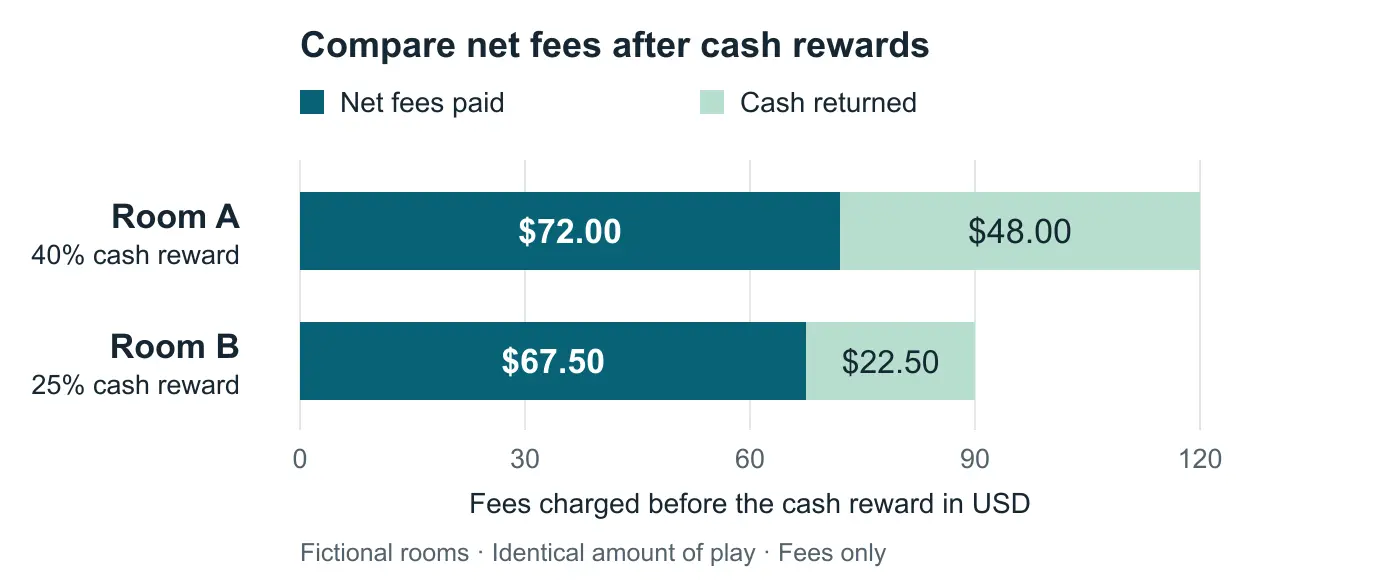
Fictional rooms with an identical amount of play. The comparison covers fees and cash rewards only.
That example does not predict winnings or establish whether either game is beatable. It isolates one decision: a bigger advertised rebate does not automatically produce a smaller bill.
Use your normal stakes and schedule
Write down the games, stakes and hours you already prefer before comparing offers. Cash-game players need the rake percentage and cap for the relevant table size. Tournament players need the fee within each entry. A schedule for different stakes can give a misleading impression of what your sessions will cost.
Keep your ordinary activity level fixed. If a loyalty tier requires extra sessions you would not otherwise play, leave it out of your estimate. A quieter week should not turn a comfortable hobby into a deadline.
Check how the room attributes rake to an individual account, too. The amount removed from a table is not necessarily the amount credited to every seated player for rewards. Use the operator’s rules when comparing that calculation.
Check what you can actually collect
Separate cash from tickets, points and possible leaderboard prizes. A tournament ticket you would never use should not be treated as money already returned to your account. Before including a reward, check:
- Which games and fees qualify, and what deductions reduce the calculation.
- Whether you must opt in or use a particular registration route.
- When rewards expire and whether you must claim them manually.
- Whether a welcome bonus replaces or reduces another reward.
Use a room review to organise those checks, then confirm the current rules with the operator. If BetOnline is on your shortlist, PokerDealsHQ’s BetOnline review includes sections on game formats, traffic, rake and rewards. Those sections help identify what to compare; they do not establish your personal eligibility or promise a particular return.
Check the estimate without chasing it
A room also needs suitable games at the hours you are free. Check the normal lobby activity, software restrictions and withdrawal conditions alongside the fee estimate. Compare only options available to you under the applicable rules.
If you already play at a room, use account records to check an ordinary period. Keep deposits and withdrawals separate from table results. Record eligible fees and credited cash rewards in their own fields, with pending rewards marked separately.
That exercise can reveal whether the reward calculation matches your expectations. A short run of results cannot establish your long-term playing edge. Resist using either a lucky session or an unpleasant downswing as proof that one room is cheaper.
Galfond’s pricing decision made the relationship visible: the reward and its underlying charge belong in the same comparison. Choose a room around the games and limits that suit you. A rewards target should fit your schedule rather than set it.