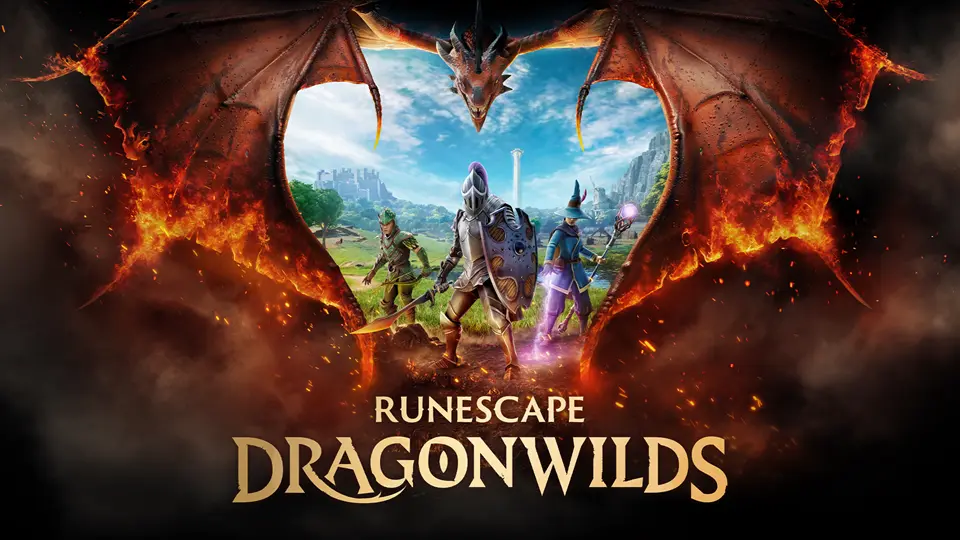
I’ve already spent time with RuneScape Dragonwilds before its full release, so coming back to it for the finished game has been an interesting experience.
My first impressions were actually quite positive. Even during my preview, there was something immediately enjoyable about gathering resources, exploring Ashenfall and slowly turning a basic collection of materials into something that resembled an actual home. The building was intuitive, the survival mechanics worked well, and there was a satisfying sense that simply exploring the world was pushing me towards the next stage of progression.
But I also had some reservations.
I wanted more.
More quests. More story. More reasons to explore beyond simply finding the next resource. More gear, more activities and, frankly, more of the things that make a game feel like an adventure rather than an extremely enjoyable construction project.
That was during my preview and Early Access experience.
Now RuneScape Dragonwilds has reached its 1.0 release, bringing with it everything Jagex has added throughout Early Access, the new Scorned Wilderness content and the conclusion of its opening Kuldra storyline. The game also made the jump to PlayStation 5, Xbox Series X|S and Nintendo Switch 2, alongside PC, with cross-play support.
So the question isn’t simply whether Dragonwilds is a good survival game anymore.
The real question is whether Jagex has turned the promising survival sandbox I previewed into the more complete RuneScape adventure I wanted to see.
RuneScape Has Gone Survival
At its heart, RuneScape: Dragonwilds is a survival crafting game.
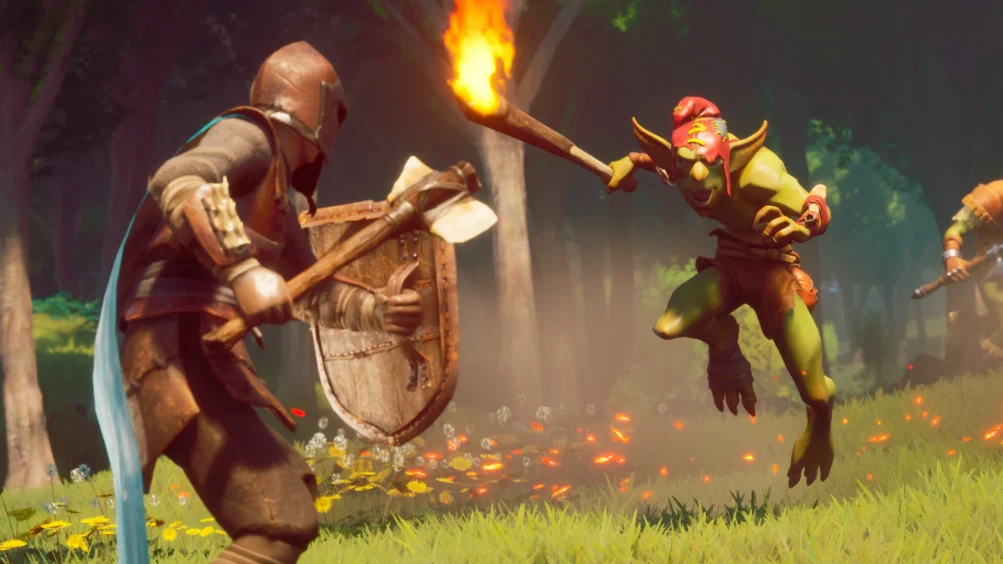
You arrive in Ashenfall, an unexplored continent within the RuneScape universe, and quickly find yourself gathering wood, stone, food and other materials while attempting to establish a base from which you can explore the surrounding world.
There is crafting, construction, combat, exploration, skill progression and, naturally, dragons.
Anyone familiar with games such as Valheim or Enshrouded will immediately understand the basic loop.
Go out.
Collect things.
Come home.
Build something.
Make better equipment.
Go somewhere more dangerous.
Get your arse kicked.
Go back home.
Upgrade.
Try again.
It is an extremely familiar formula, but Dragonwilds adds something that gives it a personality of its own: RuneScape’s progression and magic systems.
The Building Is Still One of the Best Parts
One of the things I liked most during my original preview was the building.
That hasn’t changed.
Building in Dragonwilds is simple enough to understand without needing a bloody engineering degree, while still giving you enough flexibility to create something that feels like your own.
You begin with basic structures and gradually unlock more options as your character progresses.
And this is where the survival loop works particularly well.
You don’t build simply because the game tells you to.
You build because you need somewhere to store your growing mountain of resources. Then you need crafting stations. Then better equipment. Then more storage. Then another room.
Before long, the small shelter you originally built has turned into something considerably more ambitious.
This remains one of Dragonwilds‘ most satisfying systems.
Exploration Actually Has a Purpose
My original preview experience also highlighted something I liked about Dragonwilds: exploration naturally pushes progression.
You need materials from further away, which means you need to venture into more dangerous areas. You discover new resources, encounter new enemies and eventually find yourself capable of surviving places that would have destroyed you earlier in the game.
That gradual expansion of what you can safely explore is satisfying.
Ashenfall also has enough variety to prevent the entire world from feeling like one giant forest with a few rocks thrown around for decoration.
There are distinct environments, different threats and areas that clearly feel more dangerous than others.
However, this is still an area where I think Dragonwilds could go further.
Exploration is enjoyable, but sometimes the reward is still primarily another resource required for the next upgrade rather than a genuinely memorable discovery.
And that brings me back to one of the concerns I had during the preview.
I Still Wanted More Adventure
This is probably my biggest criticism of Dragonwilds.
It has the foundations of a fantastic adventure, but there are moments where the survival systems are doing more of the heavy lifting than the adventure itself.
The game has story content and quests, and the 1.0 release adds the Scorned Wilderness questline and Kuldra, the God-Eater, as a new end-game boss.
That is a substantial improvement over the earlier experience.
But I still found myself wanting more narrative content and more reasons to become emotionally invested in the journey rather than simply wanting to unlock the next piece of equipment.
There is a great world here.
There is plenty of RuneScape lore to draw from.
There are dragons, magic, ancient secrets and a massive fantasy landscape.
I just think Jagex could push the adventure side of Dragonwilds much harder.
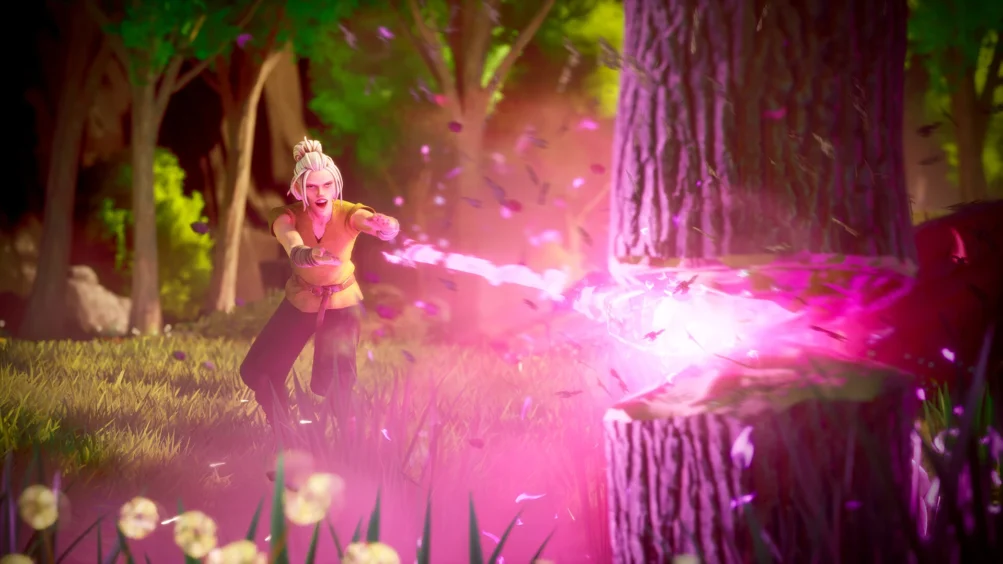
Magic Is Far More Important Than It First Appears
This is something I specifically wanted to see represented properly after my preview.
Magic isn’t simply an additional combat system.
Magic is woven into the entire progression of Dragonwilds.
The Anima-rich world allows you to unlock spells that have practical uses outside of simply killing things. You can use magic to help gather resources, interact with the environment, improve equipment and make certain survival tasks considerably easier. Jagex describes the system as allowing players to use spells both in combat and for practical activities.
That makes it feel considerably more like RuneScape.
Rune essence and the familiar concept of runes also have a place within the game’s magical progression, while spells can be used for everything from combat to gathering and movement.
And some of the abilities are wonderfully ridiculous in the best possible RuneScape fashion.
Where else are you going to find yourself using magic to do something as bizarre as conjuring a tornado of fish?
It is exactly the sort of weirdness that gives Dragonwilds personality.
Combat Still Isn’t the Star
Combat works.
That’s probably the fairest way of putting it.
There are weapons, abilities and magic to use, and progression gradually gives you access to better ways of dealing with the creatures that inhabit Ashenfall.
But compared with building, exploration and progression, combat still feels like the least developed part of the experience.
There is fun to be had, particularly when you’re fighting something considerably more powerful than yourself, but regular encounters can become repetitive.
This is especially noticeable when you’re travelling through an area you’ve already visited and are fighting the same types of enemies again.
The larger encounters and dragons are considerably more interesting, because they give you something to prepare for.
And preparation is one of Dragonwilds‘ strongest ideas.
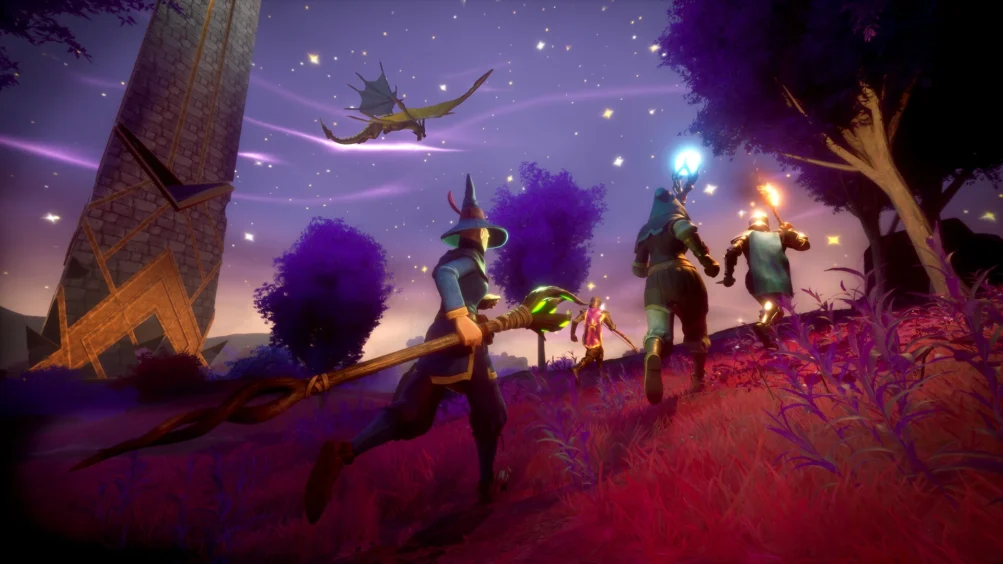
Dragons Give You Something to Fear
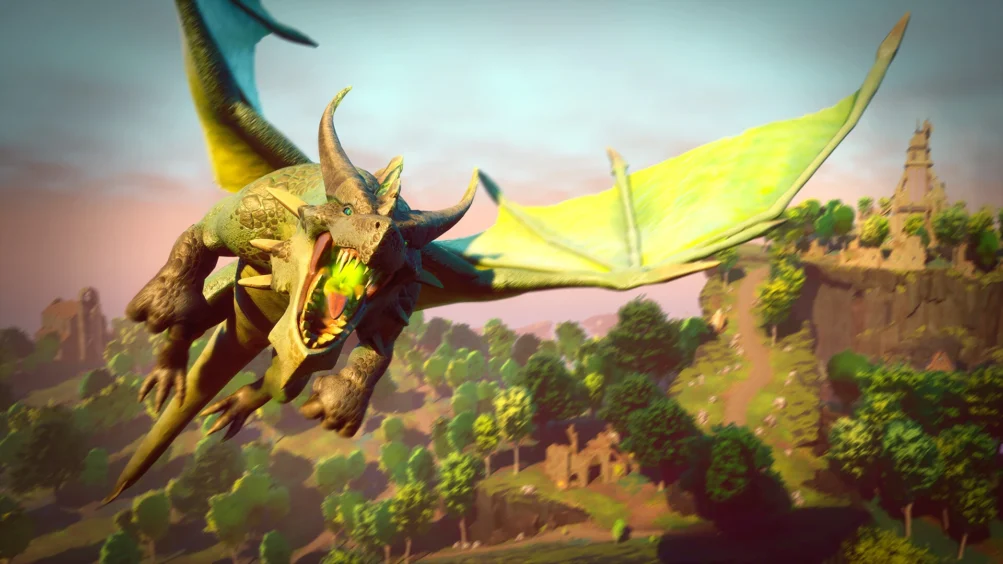
A game called Dragonwilds obviously needs dragons.
Thankfully, they aren’t simply oversized versions of the regular enemies.
The more dangerous encounters force you to think about equipment, resources, food, abilities and your overall preparation.
The later content also expands this side of the game considerably, with the 1.0 release adding Kuldra, the God-Eater as a new end-game boss. The Scorned Wilderness update also introduces new enemies and additional progression content.
These encounters help provide a much-needed sense of direction.
There is a reason to become stronger.
There is something waiting for you at the end of that progression.
Umbral Sands Was a Big Step Forward
One of the biggest additions since I first played Dragonwilds is Umbral Sands.
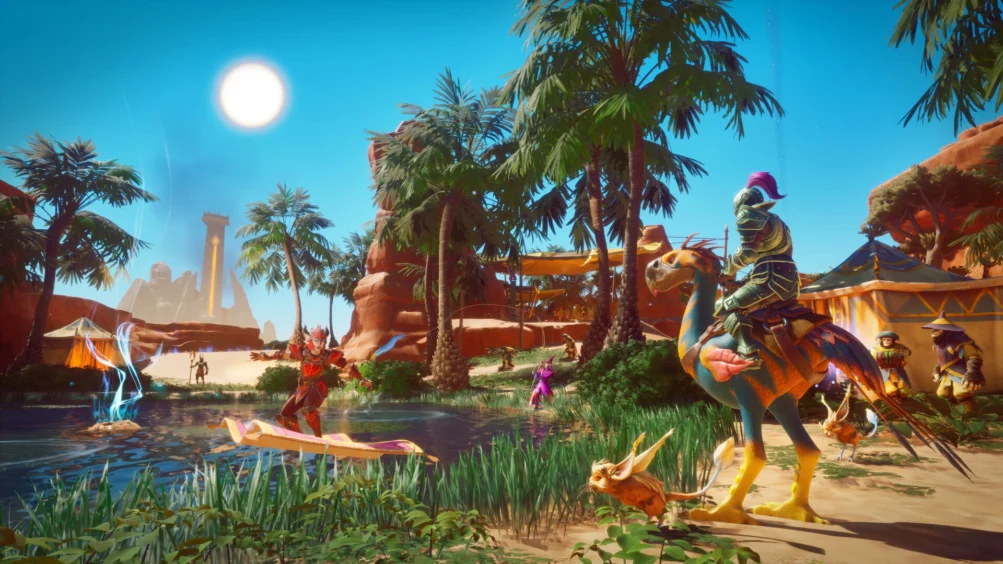
This desert region adds environmental survival mechanics, including extreme heat that forces you to think about shade, temporary shelter and when you travel. It also introduces new enemies, resources, mounts and the dragon Fuzan the Blazing Tyrant.
This is exactly the sort of thing I wanted to see more of.
It isn’t simply another area with a different colour palette.
The environment itself changes how you play.
That makes exploration feel more meaningful because you’re having to adapt rather than simply taking the same survival strategy into another biome.
New materials such as Adamant, Red Dragonhide and Yew also expand the crafting and equipment progression, while magic carpets provide a new way to travel through the desert.
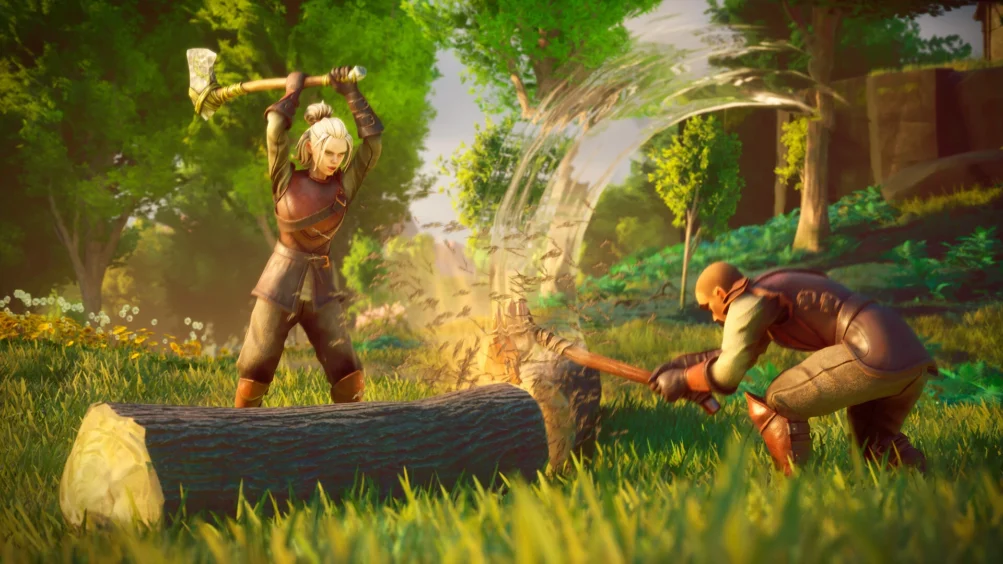
The World Has More to Offer Now
This is where the difference between my original preview and the full game becomes most obvious.
Dragonwilds has grown.
During the earlier version, I could see the potential, but I was left wanting more activities and more reasons to keep pushing through the world.
That foundation is now considerably broader.
There are more regions, more resources, more enemies, more equipment, more progression and substantially more content than there was when I first got my hands on it.
Jagex also overhauled the Agility skill during Early Access, adding courses, rewards and additional progression, showing that the studio wasn’t simply leaving the original systems untouched.
That continued development matters.
It Still Looks Simple, But That Isn’t Necessarily Bad
One thing I noted during my preview was that Dragonwilds wasn’t going to win any awards for being the most technically spectacular game ever made.
That remains true.
The visuals are relatively simple compared with some of the biggest modern RPGs, but they are perfectly adequate for the style of game Jagex is creating.
Ashenfall has personality, the environments are varied enough to remain interesting and the colourful fantasy presentation suits the RuneScape universe.
I would rather have a game with a clear visual identity than one that spends all of its power trying to make every blade of grass photorealistic.
The Grind Is Still There
And yes.
It’s still RuneScape.
There is grinding.
There is a lot of grinding.
You will gather resources repeatedly. You will return to the same areas. You will need another material just when you thought you had finally collected enough of everything else.
For RuneScape players, that will probably feel familiar.
For everyone else, it could become irritating.
The difference is that Dragonwilds gives that grind a physical purpose. You’re not simply watching a number go up. You’re using those resources to build something, craft something or reach somewhere you couldn’t previously access.
That makes the grind considerably easier to tolerate.
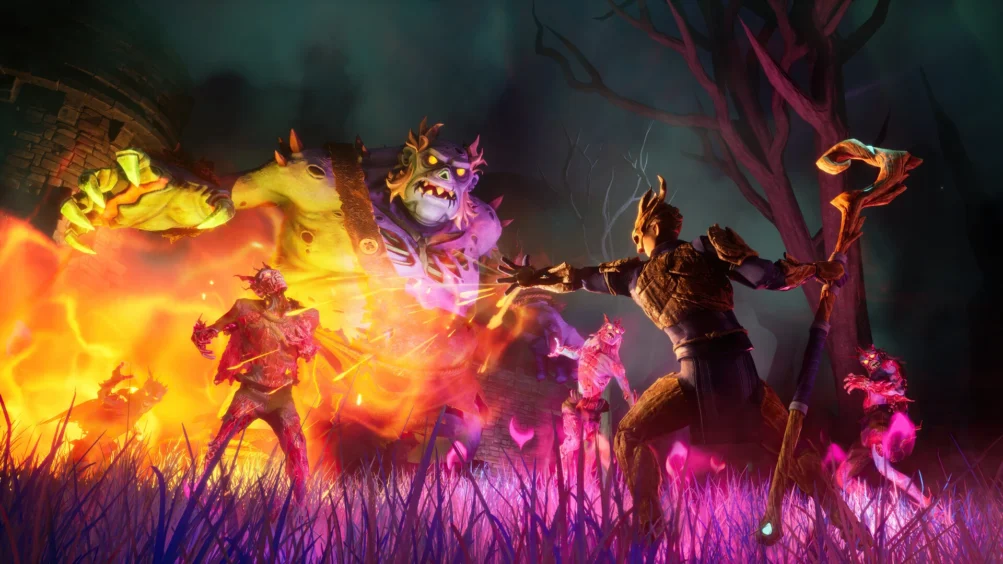
Playing With Friends
Dragonwilds can be played solo or with up to four players, and co-op is a natural fit for the game’s systems.
Having friends around changes the way you approach almost everything.
You can split up resource gathering, work together on construction, explore different areas and prepare for the larger encounters.
It also makes building considerably more entertaining.
Because nothing says friendship quite like spending hours constructing a beautiful base only for someone to decide that the roof needs another floor because they have discovered a new crafting station.
Dragonwilds is simply more fun when there is a group of people sharing the progression.
So, Has Jagex Fixed My Original Concerns?
To a large degree, yes.
My biggest issue during the preview wasn’t that Dragonwilds was bad.
It was that I could see how good it could become.
The building was already fun.
The progression worked.
Exploration was rewarding.
The world had potential.
But I wanted more adventure around those systems.
The full game has gone a long way towards addressing that.
There is substantially more content now, more places to explore, more equipment, more enemies, more magic and a much clearer end-game progression.
But I still think the next major step for Dragonwilds should be making the story and questing side of the game even more ambitious.
Because the survival mechanics are already doing their job.
Now I want Jagex to give me even more reasons to care about the journey.
Final Verdict
RuneScape Dragonwilds has come a long way from the promising survival sandbox I first previewed.
And that’s probably the most important thing I can say about it.
I liked the game when I first played it. I liked the building, I liked the progression and I liked the way exploring Ashenfall naturally pushed me towards finding new resources and improving my character.
But I wanted more.
After spending more time with the game and seeing how Jagex has developed it through Early Access and into 1.0, there is considerably more here now.
The world is bigger. There are more things to do. There is more equipment, more magic, more enemies, more areas and considerably more progression. The addition of Umbral Sands brought environmental survival into the mix, while Scorned Wilderness gives the opening storyline a proper conclusion.
What impresses me most is that it still feels like RuneScape.
Not RuneScape with a survival game bolted onto it.
RuneScape adapted into a survival game.
There is still plenty of grinding, and I still want more quests, more story and more reasons to explore simply because something interesting might be waiting around the corner rather than because I need another pile of resources.
But the foundations are bloody good.
RuneScape Dragonwilds is a genuinely enjoyable survival crafting RPG that has grown significantly from the game I first previewed, and it now feels like a proper new pillar of the RuneScape universe rather than an experiment.
And considering this is only the beginning of Dragonwilds, that’s a pretty exciting place for Jagex to be.
Rubescape DragonWilds Trailer
Read more awesome reviews >>here<<.
The game was provided to us for the express purpose of reviewing.
Written by myself then edited and formed by my partner.
Reviewed and played on PC.
Review Summary
What is RuneScape Dragonwilds?
RuneScape Dragonwilds is an open-world survival crafting RPG from Jagex that combines RuneScape’s familiar skills, progression and magic with exploration, building, crafting and combat. Players can adventure alone or with up to three other players across Ashenfall.
What makes RuneScape Dragonwilds different?
Dragonwilds takes the progression and skill-based systems associated with RuneScape and places them inside a survival crafting game. Gathering resources, building bases, crafting equipment and exploring the world are all tied into character progression, while magic can be used for both combat and practical survival tasks.
Has Dragonwilds improved since Early Access?
Yes. The game has expanded considerably since the original Early Access release, adding new regions, quests, enemies, equipment, skills, magic, bosses and survival mechanics. The 1.0 launch adds the Scorned Wilderness content and Kuldra, while previous updates such as Umbral Sands substantially expanded the world.
Is the building good?
Yes. Building remains one of Dragonwilds’ strongest features. It is intuitive, satisfying and closely connected to the game’s wider progression and survival systems.
Is RuneScape Dragonwilds grindy?
Yes. Resource gathering and progression can require considerable time, but those resources have a clear purpose because they are used to construct bases, craft equipment, unlock progression and reach more dangerous areas.
Is the magic system good?
Yes. Magic is one of Dragonwilds’ more interesting systems because it is not restricted to combat. Spells can also be used for gathering, movement, crafting and other practical activities, giving magic a much bigger role in the survival experience.
Is RuneScape Dragonwilds worth playing?
RuneScape Dragonwilds is worth playing for fans of survival crafting games, RuneScape and co-op adventures. It has grown considerably since its Early Access debut and now offers a much more complete experience, although combat repetition, resource grinding and a continued desire for deeper questing prevent it from being perfect.
What score does RuneScape Dragonwilds get?
8/10