
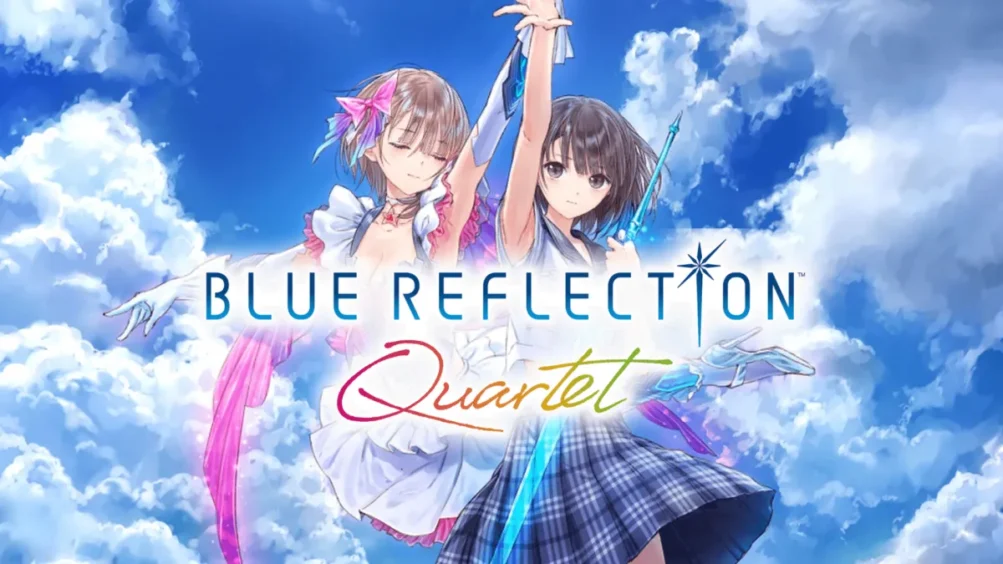
As someone who only had the chance to try out Blue Reflection Second Light a few years back on the PlayStation 4, I’m probably not the best person to tackle this review but here we are so just bear with me for a while. Blue Reflection Quartet, is not like your typical sequel. In fact it’s a complete collection similar to what you’d expect when buying an Atelier Trilogy pack. So if you’re not familiar with the series and want a complete experience, this is the infinity gauntlet that will solve that problem in a snap… or does it? More on that later.
But what is Blue Reflection Quartet? As I just mentioned, it’s a complete collection of turn-based RPGs from Gust and Koei Tecmo based on magical girls featuring a modern high school setting and some world-ending disasters here and there. But when you’re not out there saving the world then you might want to try taking your best girl out on date.
Now, if you’re looking for a more serious answer, Quartet is basically a set of four games that includes the main game (Blue Reflection) while the second (Blue Reflection Ray), is not really much of a game but is more of a really short story based on the anime spin-off. The third one (Blue Reflection Sun) is instead a mobile gacha game that was remade into a single-player RPG while the fourth (Blue Reflection Second Light) is the latest game that uses the more modern battle systems found in newer Atelier titles.
Four Games With Hours of Content
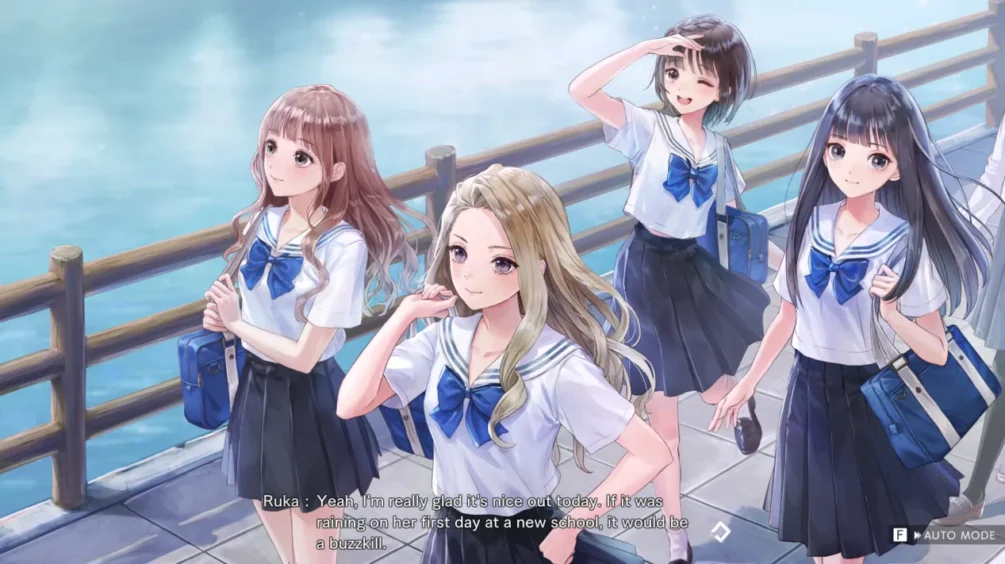
Blue Reflection is the first game in the collection and the game’s recommended starting point as well. Here we start off with Hinako Shirai, a ballet prodigy whose life has crumbled after suffering from a serious knee injury during a prestigious international ballet competition which rendered her unable to dance again. This eventually led her into becoming a magical girl called a “reflector” especially since she was told by the twin sisters, Lime and Yuzu that a wish of hers can be granted after she defeats all the Sephira.
Unconventional enemies whose presence causes large-scale anomalies. And with this newfound motivation, her along with her fellow reflectors lead a double life saving the world while taking remedial classes or gossiping about their high school crushes from time to time.
On the other hand, you have Blue Reflection Ray which takes place after the first game and features a brand new lead. Sadly though, this isn’t really what I would consider a game nor is it something you’d probably want to start playing without having to actually watch the anime spin-off as well. Reason being, this is an hour-long wall of text where you just explore a supernatural dimension and where you’d find glowing fragments that when interacted will give you more wall of text to read through based on the events that happened on the anime.
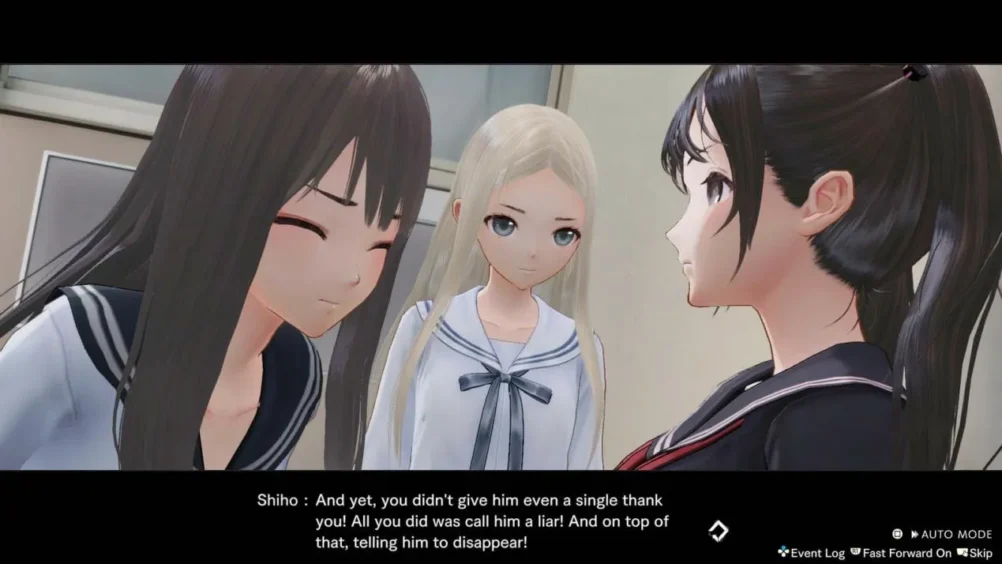
So as someone who loves to explore the unknown and play a game completely blind, I was left completely speechless as to why I was being barraged by tons of dialogue and getting introduced to a bunch of characters I don’t even remember only to find out that by the time I reach the end, it was already over instead of actually being the start of the actual game. Needless to say, I was completely jebaited.
For the third and fourth game, you’re again starting off with new main protagonists. This time though, you actually are playing a game. And if there’s one thing that needs to be said, the third game that was originally a gacha game is now a completely offline single-player experience that sadly failed to make any worthwhile moments. And for a game that roughly takes 5 to 10 hours to complete, its no wonder. Here you also get introduced to the only male lead.
A silent protagonist who has to take on the role of commanding the weakest squad of magical girls. Meanwhile the fourth game and easily the best one is Second Light where you get introduced to girls who has lost their memories and are stranded in an alternate dimension. What’s great here is that you have a lot more involvement considering the previous two games did such a poor job. You get to explore a more fleshed out world, forage for ingredients to make food, craft items for your home base while trying to find a way back home.
The Newer Combat System Is a Nice Touch
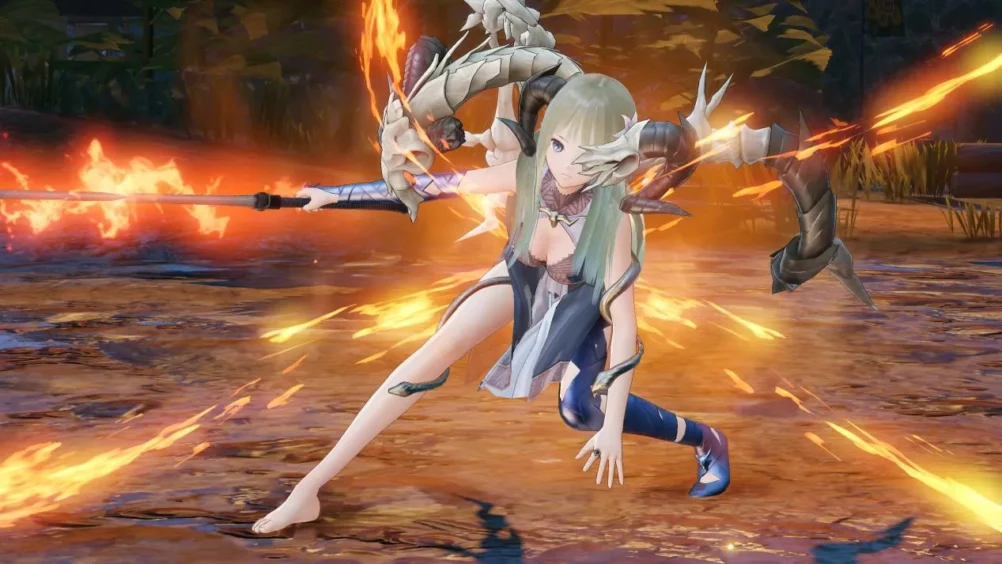
When it comes to its gameplay elements, I’m just going to make this brief. As a turn-based RPG game, you can expect pretty much all the things tied to the genre. Attack, use abilities, items etc. Pretty much all the basic stuffs you’d ever need. However considering that the first game came out in 2017 while the latest game released 4 years later, there are also quite a few changes here and there. One notable change is they embraced the faster and snappy gameplay loop of an active-time battle system you’d see from stuffs like Atelier Ryza.
Blue Reflection Sun which was originally a gacha game that used a more traditional turn-based combat has also been overhauled and now uses the same combat elements as Second Light but in a more barebones kind of way because unlike the first and fourth game, there really isn’t a lot to see here.
Characters level up but there isn’t anything to customize. You don’t have the option to allocate points and learn specific abilities as you go nor do you equip fragments that changes the stats or behavior of a certain ability or character. So as much as I hate to say it, Blue Reflection Sun aside from being a very short experience, feels more like an add-on or a DLC if you will.
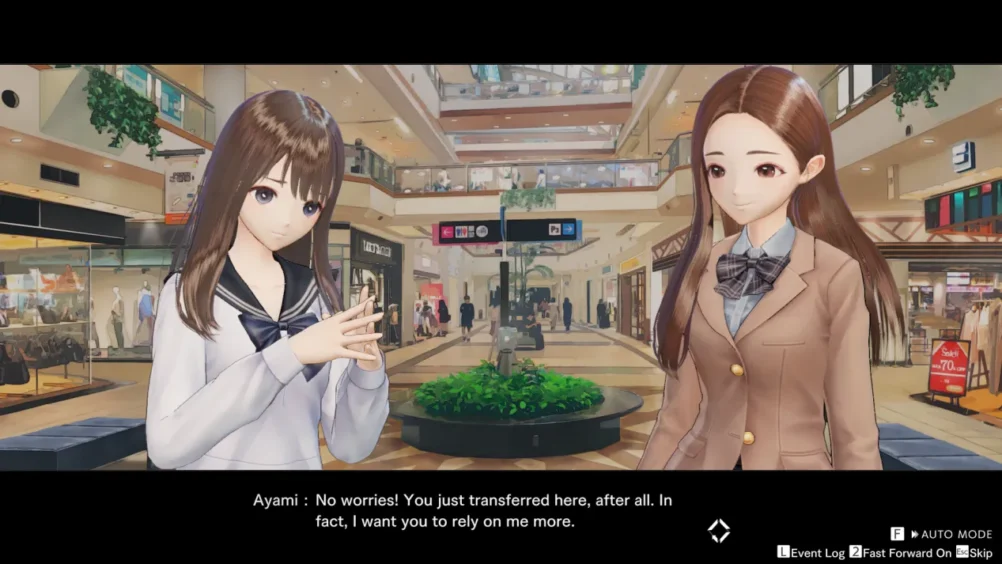
But outside of battles, you can also explore the school grounds or interact with certain characters to get to know them better. Meanwhile something unique for Second Light is that not only does it have much better exploration, it also lets you create facilities within the school which adds an extra layer of customization both visually and stat-wise while also providing you with more options for hangout spots whenever you’re on a date with your fellow reflectors.
Despite Its Age, It’s Still a Charming Game
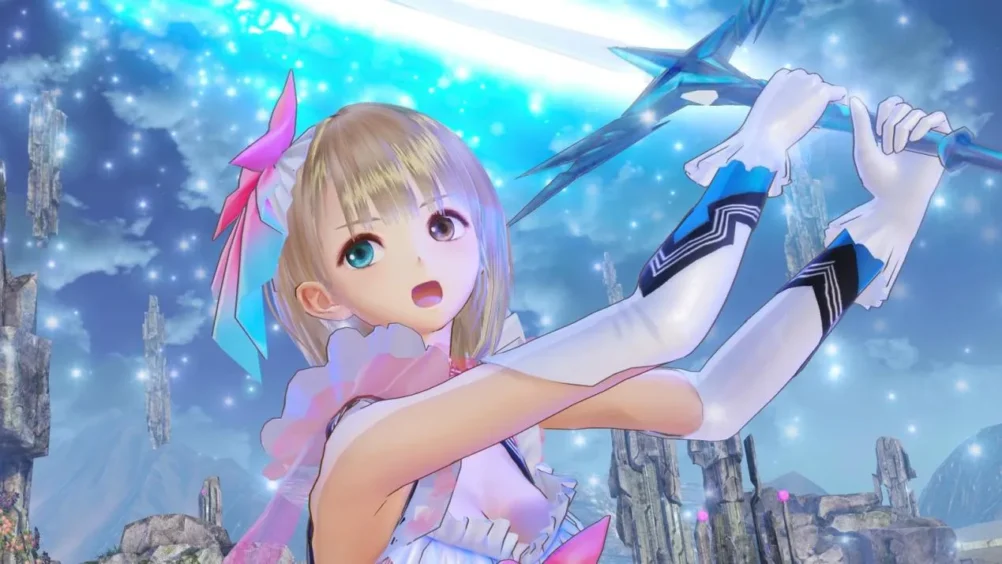
Hmmm? Where do I even start? Visually, a nine-year old game is going to look like a nine-year old game. It’s a bit rough around the edges but Mel Kishida’s artwork makes the characters itself leave a long-lasting mark… it just had that unique yet recognizable style. The added detail into making the character’s hair and clothes look wet when it rains is also a pleasant surprise. Sadly, what kind of sours the dough here is when you’re inside the special dimension called the “Common” where all the baddies hangout.
Here, movement feels rather floaty while the area feels generic and lacks anything to make it stand out. As for the next three games, the visuals are a lot better. However, while Second Light has some nicely-sized and detailed areas where you can gather materials or fight enemies, Sun is taking another L by not even having any of that. Whenever you go out for a mission, you’re only getting a few cutscenes followed by a boss battle before returning back to your home base.
And even though I’ve done nothing but sing praises for Blue Reflection Second Light, it isn’t without its flaws either. This is just a bit of a minor gripe but something you’d have to face depending on which platform you’ll play this on. Using the mouse and keyboard controls for Blue Reflection is spotless, there’s nothing to really nitpick about it. But when it comes to the last two games, sadly its changes also made it more annoying to get stuffs done.
Whether you’re in battle trying to choose abilities or scrolling through the main menu, you’d have to hover your cursor over your choices first rather than just allowing you to click anywhere in the screen when you want to confirm an action. This added input just leads me to use a controller instead just to skip that extra step.
Conclusion
Blue Reflection Quartet is just one of those games that’s a bit hard to recommend. Yes, they have great stories that mixes both the mundane everyday experiences of high school girls alongside the great struggles that comes from being reflectors. It also has a mostly pleasant combat experience with a bit of exploration, crafting and leisure time.
But it’s just sad that two out of the four included games kind of feels like an afterthought. Something that was added just for the sake of being called “complete” and since the asking price for Quartet is roughly the same as buying the first game and Second Light separately, if you’ve already own at least one of them, the extra cost is hard to justify. But if you’re new to the series, it’s a no-brainer.
Read more awesome reviews >>here<<.
The game was provided to us for the express purpose of reviewing.
Reviewed and played on PC.
Blue Reflection Quartet Review Summary
What is Blue Reflection Quartet?
Blue Reflection Quartet is a collection of four Blue Reflection experiences from Gust and Koei Tecmo, bringing together Blue Reflection, Blue Reflection Ray, Blue Reflection Sun and Blue Reflection Second Light in one package. The collection combines turn-based RPG combat, magical-girl storytelling, high-school life, exploration, crafting and character interactions.
What does Blue Reflection Quartet include?
The collection includes the original Blue Reflection, the short story-focused Blue Reflection Ray, the single-player remake of the previously mobile Blue Reflection Sun, and Blue Reflection Second Light. The review identifies Blue Reflection as the recommended starting point and Second Light as the strongest experience in the collection.
How is the gameplay?
The collection uses turn-based RPG combat, with the later games adopting a faster active-time battle system influenced by newer Atelier titles. Second Light expands the experience with exploration, crafting, ingredient gathering, facilities and character interactions, while Blue Reflection Sun is considerably more limited in its gameplay and customisation.
Which game is the highlight?
According to the review, Blue Reflection Second Light is easily the highlight of the collection. It offers a more fleshed-out world, stronger exploration, crafting, school facility creation and greater involvement with its characters compared with the earlier entries.
What are the main problems?
The review considers Blue Reflection Ray to be more of a short story experience than a conventional game, while Blue Reflection Sun is criticised for its short length, limited customisation and lack of substantial gameplay content. The review also notes some mouse and keyboard control frustrations in the later games.
Is Blue Reflection Quartet worth playing?
The review considers Blue Reflection Quartet difficult to recommend for existing owners because the additional cost can be difficult to justify if they already own Blue Reflection or Second Light. For newcomers to the series, however, the review describes the collection as a straightforward way to experience the Blue Reflection series in one package.
What score did Blue Reflection Quartet receive?
6/10



You must be logged in to post a comment.