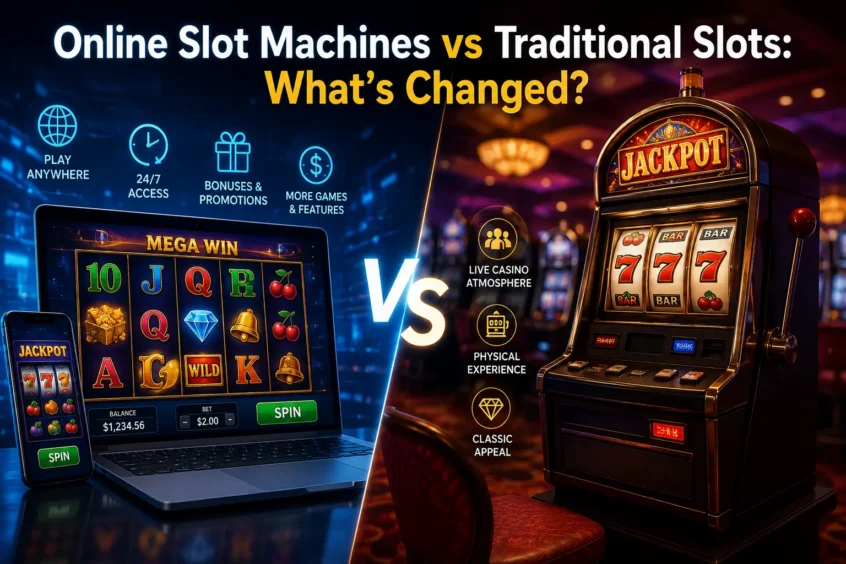
At their core, slot games still follow the same basic idea — spin the reels and wait for a result. However, the way players access and experience them has changed significantly. By comparing traditional casino slots to online versions, this article explores the shifts in technology, convenience, game variety, RTP, features, mobile play, and responsible gambling.
The Core Idea Is Still the Same
Whether pulling a physical lever or tapping a virtual button, the basic premise of slot games remains similar. Both traditional and online slots are built around spinning reels, matching symbols, predefined paylines, or modern ways-to-win systems. Most importantly, Both modern formats rely on random outcomes to determine results. The main difference between a physical casino floor and a digital lobby is not the basic goal of the game, but the format, setting, technology, and overall player experience. The fundamental pursuit of matching symbols on a grid remains unchanged.
From Casino Cabinets to Digital Game Screens
Traditional slots are tied to physical cabinets. Players must interact with mechanical buttons, physical screens, and printed cash-out systems while navigating casino floors and in-person venues. Conversely, online slots run as digital software, accessed through websites or mobile devices.
As slot games moved from physical casino cabinets to digital screens, the way players browse and compare games changed as well. Instead of choosing only from the machines available on a casino floor, players can now explore slot libraries by theme, provider, features, paylines and mobile compatibility. This also changes how games are compared: instead of walking between cabinets, players can review themes, providers, paylines, features, RTP information, and mobile compatibility across different online slot machines before deciding what type of game they understand best.
Accessibility Has Changed the Most
Playing traditional slots requires players to visit a licensed venue, such as a physical casino, arcade, or gaming hall. In contrast, online slots offer immediate access from a phone, tablet, laptop, or desktop wherever online gambling is legally regulated. While this convenience removes travel barriers, accessibility should not be viewed as a purely positive development. Having continuous access introduces distinct risks. The much easier availability provided by digital platforms makes the active use of responsible play tools significantly more important to ensure gameplay remains manageable.
Game Variety Is Much Bigger Online
Physical casinos are inherently limited by their floor space; a venue can only hold so many machines. Online casinos operate without these spatial constraints, allowing them to host vastly larger slot libraries. Players can effortlessly transition between classic three-reel slots, modern video slots, dynamic Megaways-style formats, and innovative cluster pays systems. Digital platforms also easily accommodate deeply themed games, massive progressive jackpots, and complex, feature-heavy releases. Furthermore, these online slot catalogues can be updated much more frequently than their physical counterparts. Introducing a new game digitally requires a straightforward software rollout, whereas updating a physical casino floor demands removing older hardware, shipping new units, and executing full cabinet installations. This logistical freedom ensures online platforms consistently offer an expanding variety of rapid gameplay formats to explore.
How the Technology Behind the Reels Has Evolved
RNG and Random Outcomes
At the core of all modern gaming is a Random Number Generator (RNG). In simple terms, this is a computer program that constantly generates completely unpredictable number sequences to dictate every result. Because both modern land-based slots and online slots use standardised RNG technology, every spin is independent of the one before it. Players should never assume a machine is “due” to pay out following a streak of bad luck.
Software-Based Design
While both formats rely on RNGs, online slots run entirely through dedicated digital software, allowing for much more flexible game design. Software-based slots can smoothly include deeply layered animations, complex bonus mechanics, interactive mini-games, rapidly changing interfaces, and highly advanced sound design. Without physical constraints, developers incorporate custom features and diverse win mechanics far more easily than in older cabinet-based games.
RTP, Volatility and Game Information Are More Visible
Understanding a game’s mechanics is crucial, and digital interfaces excel at transparency. RTP (Return to Player) represents the long-term theoretical return of a slot game over millions of spins. Critically, players must remember that RTP does not predict what will happen in a single, short session. Additionally, volatility highlights the difference between games that tend to pay smaller amounts more often and games that may pay larger amounts less frequently. Online slots frame the overall player experience by offering more visible game information directly on the screen. A higher RTP may indicate a better long-term theoretical return, but it does not guarantee better results in any single session.
Bonuses and Features Have Become More Advanced
Modern gameplay leans heavily into specialised mechanics. Today’s digital libraries are packed with engaging elements like free spins, substituting wilds, scatters, high-value multipliers, cascading reels, expanding symbols, interactive bonus rounds, and massive progressive jackpots. It is important to note that traditional physical slots can also include many of these exciting bonus features. However, online slots routinely support far more variety and mechanical depth because they are built from a software-first perspective. This coding flexibility empowers developers to combine multiple intricate features into a single title without worrying about physical cabinet limitations.
Mobile Play Has Changed Player Behaviour
The rise of smartphones fundamentally altered user habits. Many online slots are now intentionally designed for smaller screens, prioritised for quick sessions, optimised with touch controls, and formatted for seamless cross-device access. This accessibility drastically changes the overall experience compared with sitting at a stationary physical cabinet in a casino. Because users can simply pull out their phones and spin a few reels while commuting, this profound mobile convenience makes it even more important for players to actively set limits and stay consciously aware of the time spent playing in these brief intervals.
The Casino Atmosphere Is Still a Traditional Slot Advantage
To fairly balance the conversation, we must recognise what traditional slots still uniquely offer: an unmatched venue atmosphere. The ambient lights and sounds from the bustling casino floor, the tactile feel of physical buttons, the energy of nearby players, the satisfaction of an in-person cash-out, and the broader social experience of a shared physical space create distinct appeal. While online platforms deliver unmatched convenience and staggering game variety, traditional slot cabinets can still feel far more immersive for players seeking a comprehensive physical setting rather than a screen.
Responsible Play Matters More in a Digital Environment
While online access is incredibly convenient, that ease of use requires a structured approach to playing. Players should actively utilise built-in platform tools such as daily or weekly deposit limits, optional time-outs, pop-up reality checks, and session reminders. Because online slots can be accessed so quickly and privately away from the public eye of a traditional casino floor, establishing these guardrails and setting strict personal limits before playing is critically important. Utilising these practical tools ensures that the digital gaming experience remains balanced and controlled.
Final Thoughts
Traditional slots and online slots share the same basic DNA, but the experience has changed through software, mobile access, larger game libraries, clearer game information, and advanced features. Neither format is automatically better. The right choice strictly depends on whether someone values an authentic casino atmosphere and physical interaction or convenience, variety, and digital features.