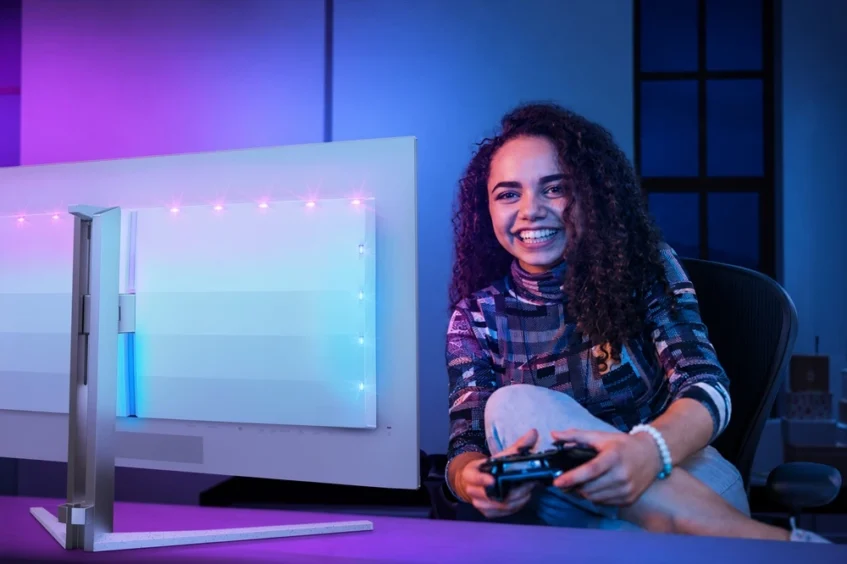
Philips Evnia is highlighting four gaming monitors aimed at players who want high-quality visuals, faster refresh rates and greater flexibility between console and PC gaming. The range includes QD-OLED displays focused on picture quality, alongside Fast IPS models featuring Dual Mode technology for switching between resolutions and refresh rates.
With HDMI 2.1 connectivity and support for up to 120 Hz on compatible consoles across the highlighted models, the range aims to offer options for different gaming setups, whether players prefer detailed 4K visuals, a more compact QHD display or the ability to prioritise speed when playing on PC.
Cesar Acosta, Regional Senior Product Manager at MMD Monitors & Displays, says the range is designed to give players more freedom to choose a display that suits how they play, rather than expecting everyone to want the same gaming experience.
Four Monitors, Different Gaming Experiences
For players looking for premium picture quality, the Philips Evnia 32M2N8900P features a 31.5-inch 4K UHD QD-OLED panel with a refresh rate of up to 240 Hz. It also offers a 0.03 ms GtG response time, HDMI 2.1 and DisplayHDR True Black 500.
The Philips Evnia 27M2N6501L offers QD-OLED technology in a smaller 26.5-inch QHD display. It delivers the contrast and colour associated with QD-OLED, alongside a refresh rate of up to 240 Hz for PC gaming. Compatible consoles can also run at QHD resolution with refresh rates of up to 120 Hz.
Both models target players who want to combine responsive gameplay with the visual benefits of OLED technology, with the choice between a larger 4K screen and a more compact QHD alternative.
Dual Mode Offers More Flexibility
Players who switch between different types of games or devices may find the Dual Mode monitors more appealing.
The Philips Evnia 27M2N5901A uses a Fast IPS panel and offers two operating modes: 4K UHD at up to 160 Hz, or Full HD at up to 320 Hz. Compatible consoles can use 4K at up to 120 Hz, while PC players can switch to the higher-refresh Full HD mode when prioritising speed.
It also includes USB-C connectivity with up to 65 W Power Delivery and a built-in KVM switch, providing additional flexibility for people using multiple devices with the same display.
The Philips Evnia 27M2N3800A follows a similar approach, offering 4K UHD at up to 160 Hz or Full HD at up to 320 Hz through its Fast IPS panel. As with the 27M2N5901A, compatible consoles can run at 4K with refresh rates of up to 120 Hz, while PC users can take advantage of the higher-refresh Full HD mode.
Dual Mode gives players the option to prioritise resolution or refresh rate without needing to switch between separate monitors.
Ambiglow Adds Lighting Around the Screen
Three of the highlighted models — the Philips Evnia 32M2N8900P, 27M2N6501L and 27M2N5901A — also feature AI-enhanced Ambiglow.
The technology analyses on-screen content and adjusts the colour and brightness of the lighting behind the monitor in real time. The aim is to extend the visual experience beyond the display itself, matching the lighting to what is happening during gameplay.
For players who enjoy adding ambient lighting to their gaming space, Ambiglow offers another way to make the monitor part of the wider setup.
More Choice for Console Gaming
Philips Evnia’s four highlighted displays cover several different priorities. The 32M2N8900P combines a large 4K QD-OLED panel with a high refresh rate, while the 27M2N6501L offers QD-OLED performance in a smaller QHD format. The two Fast IPS Dual Mode models provide more flexibility for players moving between console and PC gaming.
With HDMI 2.1 and support for up to 120 Hz on compatible consoles, the range gives players several ways to balance image quality, screen size and performance.
For more information, visit the official Philips Evnia console gaming monitors website.
Want more news from the Tech world for Gaming Peripherals to Hardware Click Here