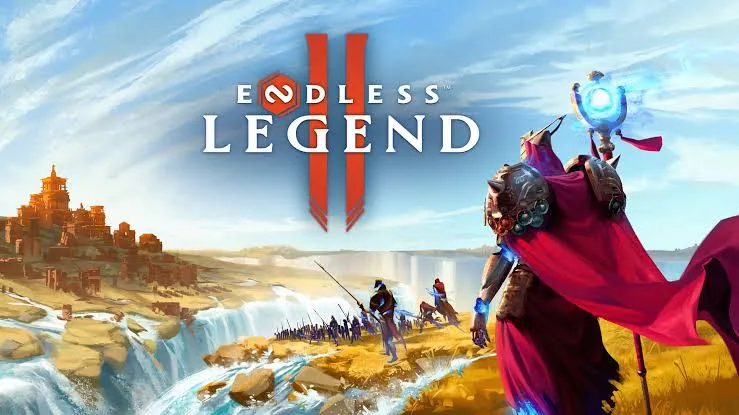
ENDLESS Legend 2 is exactly the kind of strategy game you sit down to play “just one quick turn” — then look up and realise half your evening’s vanished. Amplitude Studios have returned to their wonderful fantasy universe with a sequel that builds smartly on everything that came before: a fascinating world to explore, factions that actually feel unique, and enough big decisions to keep you thinking long after you’ve finished your first campaign.
I’ve loved every minute with ENDLESS Legend 2, and I honestly think it’s a better game than the original. That’s not to say the first one was bad — far from it — but this sequel takes those solid foundations and gives the whole experience a stronger, clearer identity. The world shifts and changes around you, every faction plays differently, and exploring doesn’t just feel like filling in blank space on a map.
It’s not perfect, of course. There’s a lot to get your head around; some of the tactical combat doesn’t quite match the quality of the empire-building around it, and the interface takes a while to get comfortable with. But none of those issues gets in the way of what’s really great here. ENDLESS Legend 2 is a fantastic addition to the 4X genre — and a sequel that truly understands what makes these games so wonderfully addictive.
A world that won’t sit still
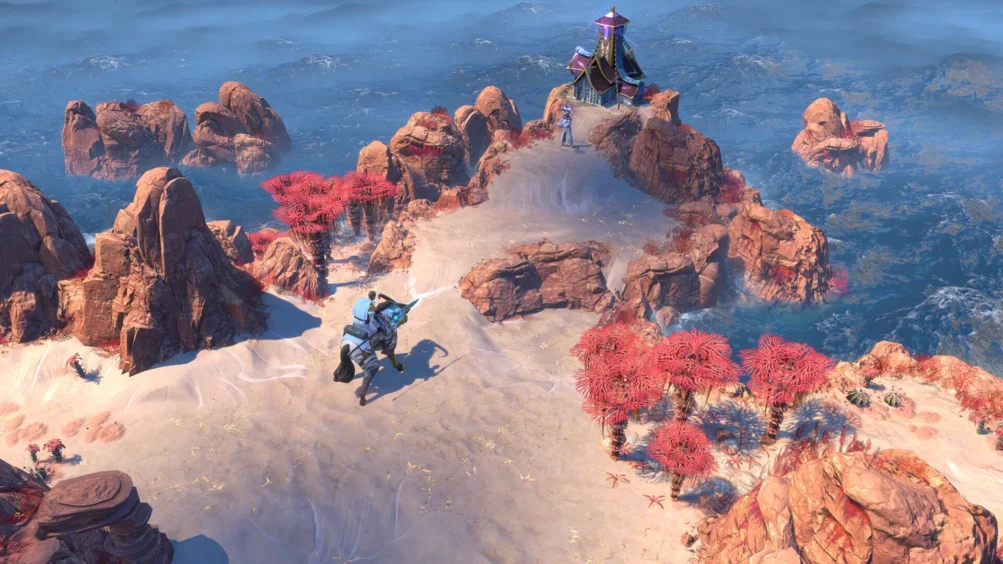
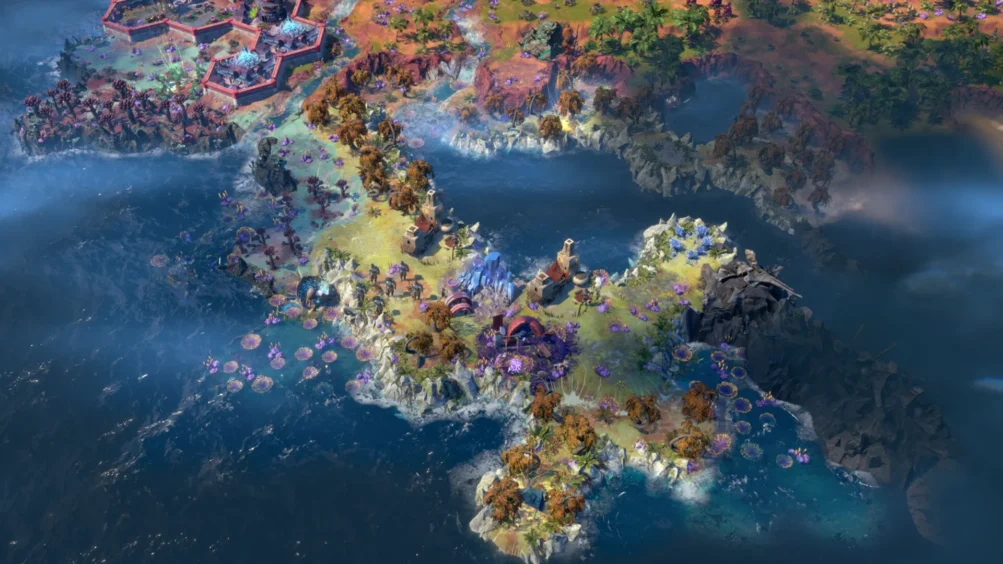
The setting is one of the first things that grabs you. This is Saiadha — an ocean world going through enormous, planet-wide changes — and it’s far more than just a pretty backdrop for building cities and marching armies. The environment itself shapes how you explore, expand, and plan your future.
The standout mechanic is something called Tidefall. Oceans recede, revealing entirely new land — fresh territory, resources, strange sites, and potential dangers. A coastline that once blocked your expansion can suddenly become a gateway. Newly uncovered paths might lead straight to rivals, or force you to rethink your whole strategy.
That shifting geography is such a clever twist for a genre that can easily settle into a familiar rhythm. In so many 4X games, exploration is most exciting right at the start — then once the map’s filled in, it’s mostly about managing borders and routine growth.
Here, the world keeps you guessing. Tidefall gives you reason to keep looking outwards, because opportunities can appear where there was only water before. You can’t just assume things will stay the same as when you first scouted an area.
There’s such a satisfying balance between planning ahead and rolling with what the planet throws at you. You’re still building cities, managing resources, and preparing armies — but now you’re also thinking about what the next environmental shift might do to your empire. It makes the world feel alive, and every expansion feels like genuine discovery.
Periodic monsoons add another layer to this, too — Saiadha isn’t something you just conquer; it’s something you learn to live with. Together, these systems give the sequel a real personality, and they’re easily some of its best ideas.
Factions that change how you play
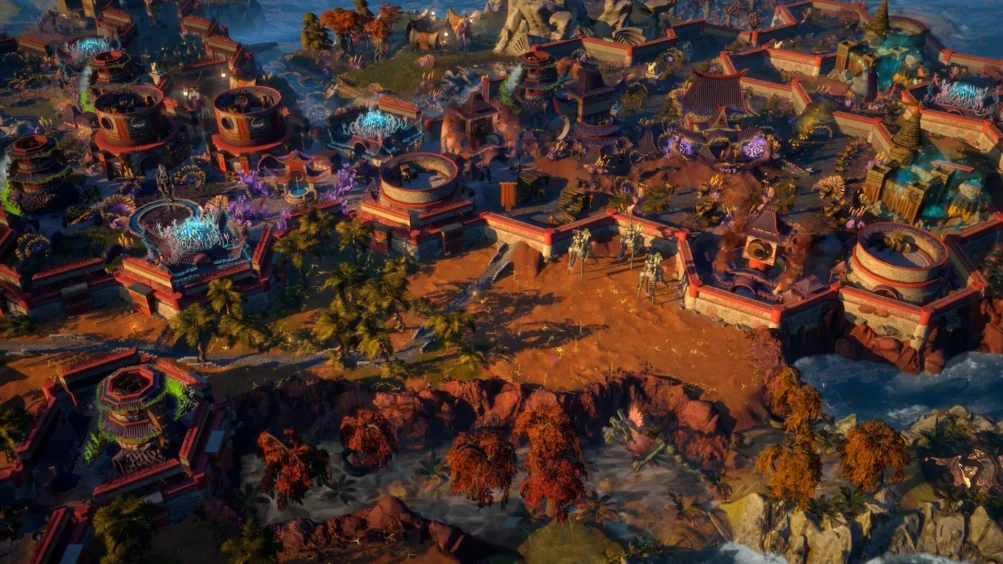
Faction design is another area where ENDLESS Legend 2 shines. Instead of offering groups that feel basically identical with a few different bonuses, every faction has its own mechanics, strengths, and way of doing things.
That matters because your choice shapes everything — how you grow your territory, how your economy works, how you handle diplomacy, and how you fight. A strategy that works perfectly with one faction might fall apart completely with another.
Some lean into direct, aggressive warfare; others build influence, shape their surroundings, or exploit resources in totally unique ways. The result is a game that rewards experimentation rather than forcing everyone down one “best” path.
That variety gives it brilliant replay value too. Finishing one campaign doesn’t mean you’ve seen everything. Switch faction, and suddenly systems you thought you understood feel completely different — decisions that seemed obvious before become questions you need to ask all over again.
I love how deeply that identity runs through everything. A faction isn’t just a name or a visual style — it changes how you approach the entire game. Choosing who to lead feels like a meaningful decision, not just picking your favourite colour.
There is a learning curve, though. With so many systems interacting across cities, research, resources, diplomacy, and military, it can feel like you’re juggling a lot at once when you start out. The game rewards patience — but that first stretch can feel a little heavy going.
Once things click, though, that depth becomes its biggest strength rather than a barrier. There’s so much to learn, and that’s exactly why it stays fresh across multiple campaigns.
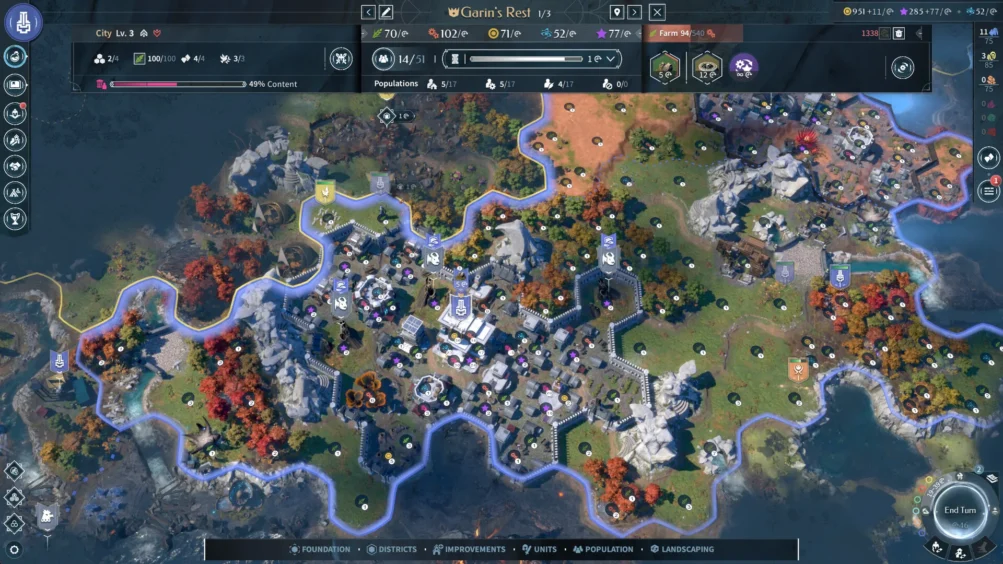
Building an empire takes more than just a big army
There’s plenty going on beyond the battlefield. You start small, with one settlement, and gradually grow — expanding your influence, building districts, gathering resources, and unlocking new tech. Every choice ripples outward; rush your expansion and you might create problems that get harder and harder to fix later.
City development is the backbone of everything else. The best army in the world still needs a strong economy behind it. Research opens up new possibilities, resources determine what you can actually build, and where you place your cities decides which parts of the map you can truly control.
It’s how all these pieces fit together that makes the strategic side so satisfying. Decisions are rarely isolated. Invest heavily in one area and something else will have to wait; settle a valuable spot and you might also be exposing your borders to rivals.
Diplomacy and relationships with smaller factions across Saiadha also mean you don’t always have to fight to get ahead. Military force is always an option — but building trust, making alliances, or integrating groups peacefully can bring huge advantages.
Keeping all these plates spinning is the real challenge, though. At times the sheer amount of information and choices can feel overwhelming, especially while you’re still learning how everything connects. The interface doesn’t always make things as easy as it could, and some of the more detailed numbers take a bit of digging to find.
But the systems underneath are genuinely rewarding. The more you play, the clearer it becomes how every choice shapes your long-term plans. Watching a humble settlement grow into a powerhouse and seeing decisions you made hours earlier pay off? There’s nothing quite like it.
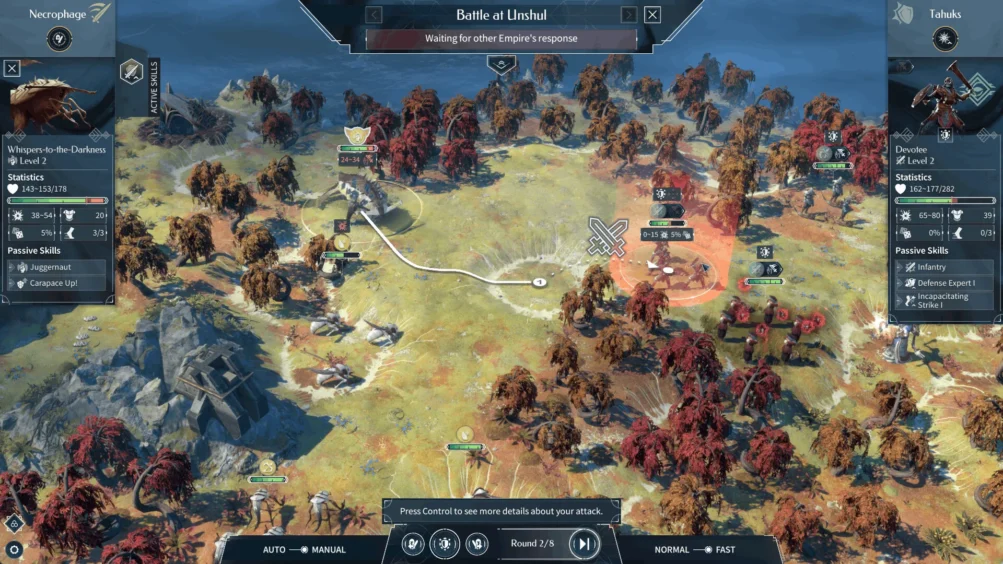
Tactical battles reward careful thought — though they’re not perfect
When armies clash, you can let the game handle the result — or take direct command and fight it out tactically. Taking control means positioning matters. Terrain, high ground, chokepoints, and special abilities all change how things go. Sending the biggest army you’ve got straight at the enemy isn’t always smart — a well-placed, smaller force can take you apart if you’re careless.
This tactical layer works really well alongside the bigger picture. Recruiting units is just the start; you need to think about how they work together and when to use their strengths. And since every faction fights differently, no two battles feel quite the same.
That said, combat is also where the game feels least consistent. The strategic planning around battles is often more compelling than the fights themselves. Positioning well and landing clever abilities is satisfying — but some encounters can feel a little routine.
Enemy AI can also be unpredictable. When opponents make strange choices or don’t react as you’d expect, it undermines that feeling of outwitting a worthy rival. Strategy games need to push you — but it’s only truly satisfying when that opposition makes sense.
None of this makes combat bad, and there’s definitely enough depth to keep it interesting. It just doesn’t quite match the polish and excitement of the city-building, exploration, and faction design. I just wish the battles felt as consistently great as everything around them.
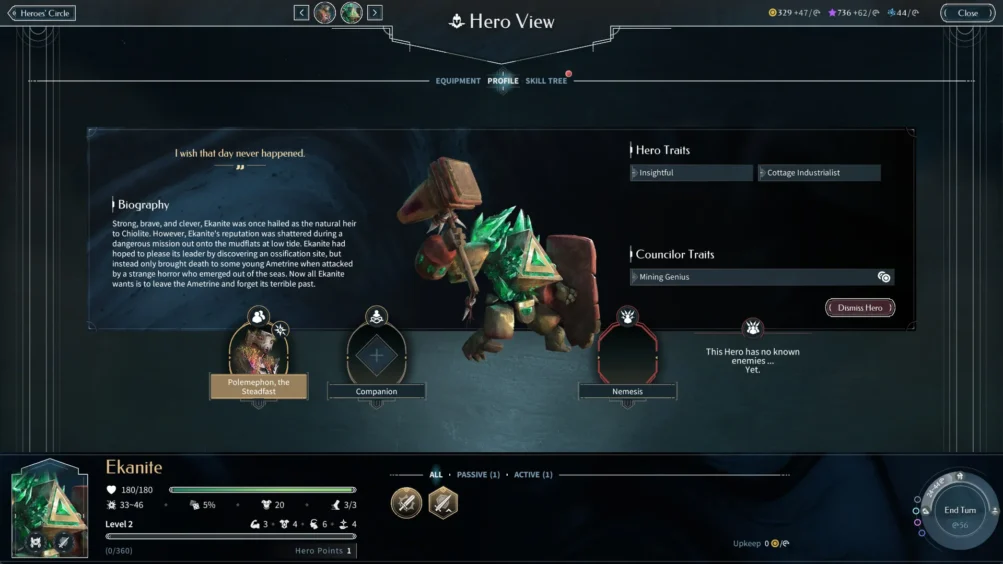
Beautiful world, wonderful atmosphere
Visually, ENDLESS Legend 2 has bags of character. Saiadha is colourful, strange, and totally distinct from the generic fantasy settings you see everywhere else. From weird landscapes to unique faction designs, everything feels like it has its own history and rules.
That detail can occasionally make things a little harder to read, though. When you’re weighing up a big decision, you need important information to stand out clearly. Sometimes the very things that make the world look lovely — all that texture and detail — can make it trickier to pick out what matters most on the map.
It’s a small frustration, but it highlights the balancing act every strategy game has to pull off: the world should look amazing, yes — but it also needs to communicate clearly when you’re making choices that affect your whole empire.
The soundtrack deserves a shout too. The music fits the setting perfectly and wraps you up in Saiadha’s mystery. Exploration feels so much more inviting when the sound matches the atmosphere, and the music gives the world an identity all its own. Together, sights and sounds make this somewhere you actually want to spend hours and hours in — and that’s huge in a game where one campaign can stretch on for ages.
Better than the first one? Absolutely
For me, yes — ENDLESS Legend 2 is a clear step forward. The original laid brilliant groundwork, but this sequel stands on its own two feet. Saiadha and the Tidefall system keep exploration alive right through to the end, and faction differences mean no two campaigns feel the same.
It’s not flawless. The learning curve is steep, some interface bits could be clearer, and tactical combat doesn’t always hit the same high notes as the rest of the game. Those things stop it from being perfect — but they don’t take away from what Amplitude have achieved here.
This isn’t just a sequel because the first one sold well. It takes familiar 4X ideas and builds something fresh around them, giving you every reason to explore, experiment, and start all over again.
Verdict: a strategy gem worth your time
ENDLESS Legend 2 is an excellent game — and a genuine improvement on its predecessor. What ties everything together is how well its systems work: distinct factions mean totally different playstyles, Saiadha keeps shifting so you never settle into a routine, and building your empire is always engaging.
It’s not without rough edges. New players will need time to get to grips with everything, the interface could be clearer, and combat doesn’t always feel as sharp as it should. Enemy AI can also be inconsistent.
But I’ve loved every hour playing it. There’s real depth here, the world has so much personality, and it always gives you something to think about next. Most importantly, it moves the series forward in ways that feel meaningful.
If you enjoy turn-based strategy, building empires, and adapting your plans as the world changes around you — this is well worth your time. It might take a little patience to get up to speed, but that investment pays off beautifully.
Endless Legend 2 Trailer
Read more awesome reviews >>here<<.
The game was provided to us for the express purpose of reviewing.
Written by myself then edited and formed by my partner.
ENDLESS Legend 2 Review Summary
Is ENDLESS Legend 2 worth playing?
Yes. Its distinctive factions, deep empire-building and changing world make it a rewarding 4X strategy game. It earns an 8/10 despite some rough edges in combat and interface design.
Is ENDLESS Legend 2 better than the first game?
In my opinion, yes. The sequel builds on the original with more distinctive strategic possibilities and the Tidefall mechanic, which keeps exploration and expansion fresh.
What makes ENDLESS Legend 2 different?
Its factions play differently, while Tidefall periodically reveals new territory, resources and dangers. Together, these systems make you adapt your strategy as the world changes.
What are the main problems with ENDLESS Legend 2?
The learning curve can be steep, the interface is not always clear, and tactical battles can suffer from inconsistent enemy AI.
What score does ENDLESS Legend 2 get?
ENDLESS Legend 2 scores 8/10. It is an enjoyable improvement over the original, with excellent world design and strategic depth.