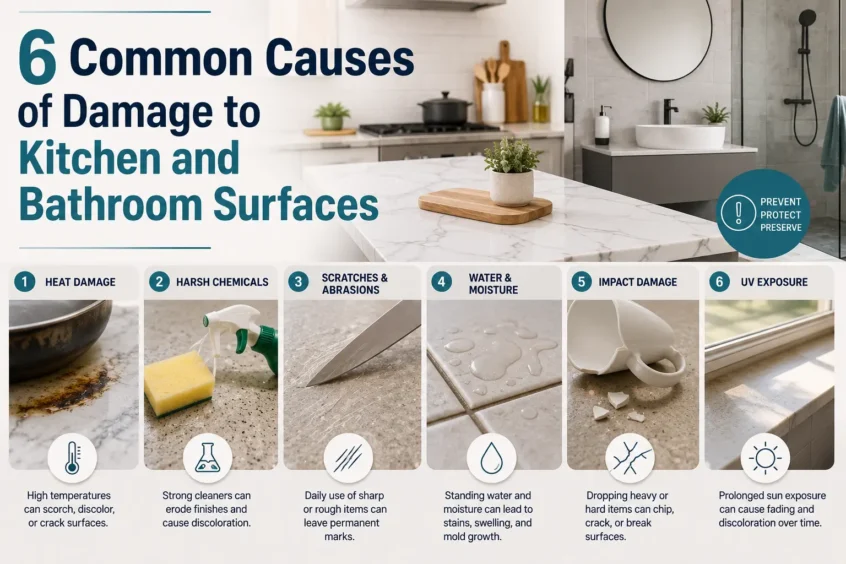
Most damage to kitchen and bathroom surfaces comes from everyday habits like leaving water puddles on worktops, dropping heavy pots, poor ventilation trapping steam, and using harsh cleaning chemicals. Those routine actions chip tiles, swell laminate seams, and burn acrylic baths far more often than major plumbing disasters. You probably expected some rare catastrophe to be the main culprit. But it is usually just normal life happening in high traffic rooms.
I see this constantly when looking at damaged properties. Homeowners get frustrated because a single dropped perfume bottle shattered their ceramic sink basin. They assume the whole thing needs ripping out and replacing at massive expense.
It rarely does.
The reality of heavy daily use
UK homes push their kitchens and bathrooms to the absolute limit. We cook, we clean, we shower, we rush around trying to get out the door. All that activity means constant moisture and heat hitting vulnerable materials. The damage rate obviously varies depending on whether you have a solid stone worktop or a cheap laminate one. But the principle remains the same across the board. These rooms are exposed to constant stress.
I think people forget how much punishment a bathroom takes in a single week. Steam builds up on the ceiling and walls. Condensation drips down onto the silicone seals and grout lines. Eventually that moisture finds a tiny gap and starts working its way behind the tiles or under the Bath edge. You might not notice it for months. Then one morning you lean against the sink and hear a faint crunching sound from the rotten wood underneath.
That is when panic usually sets in.
We spend a massive chunk of our daily lives in these spaces. It is no surprise they wear out faster than a spare bedroom. Landlords and letting agents are always arguing with tenants about what constitutes ‘fair wear and tear’ versus actual negligence. A chipped Worktop is usually classed as damage rather than wear. So it pays to know what actually causes these issues.
The eight main culprits of surface damage
We can blame bad luck all we want. The truth is usually much more boring. Surface wear happens because of specific repeated actions or sudden clumsy moments. We are all guilty of rushing and making mistakes when we are tired.
I remember dropping a heavy cast iron pan on a rented kitchen floor back in my twenties. The tile cracked straight down the middle with a sickening crunch. I spent hours trying to hide it with a strategically placed rug. It didn’t work. The landlord spotted it immediately and charged me a fortune.
So here are the specific things that actually destroy our interiors.
Dropped objects
Heavy pots, glass bottles, and tools can easily chip or crack ceramic sinks, baths, and tiled floors upon impact. A heavy mug slipping from your wet hand is all it takes to ruin a perfectly good porcelain basin.
Impact damage is probably the most annoying because it happens in a split second. One minute your kitchen looks great. The next minute there is a massive white chip missing from your dark granite counter.
People often drop heavy shampoo bottles in the shower too. Acrylic shower trays crack very easily if something heavy hits them at the wrong angle. It is incredibly frustrating.
Standing water
Puddles left around sinks or on Worktops can soak into laminate seams and cabinetry. This causes irreversible swelling and peeling. We all splash water when doing the washing up.
The problem starts when we leave those puddles sitting there overnight. Laminate is essentially just compressed wood chips with a nice plastic sticker on top. Once water gets into the joints it swells up like a sponge.
You see this a lot around kitchen taps. The sealant degrades slightly and water seeps underneath. Before you know it the worktop is blown and bubbling up. It looks terrible and you cannot just push the wood back down.
Poor ventilation
Inadequate airflow traps steam and humidity. This gradually degrades paint, grout, and wooden surfaces over time. Extractor fans are noisy so people switch them off.
That is a terrible idea. All that steam turns back into water on your cold bathroom walls. It feeds mould and weakens the adhesive holding your tiles up.
UK housing stock is notoriously prone to damp anyway. Adding poor ventilation to the mix just accelerates the decay of your bathroom surfaces. Open a window.
Hidden leaks
Faulty plumbing under sinks or behind appliances often goes unnoticed until it causes severe staining, warping, or structural rot. A dripping tap is annoying. A dripping pipe joint hidden behind a washing machine is a disaster.
Small leaks waste significant water over time. They also rot floorboards and ruin expensive base cabinets before you even know they exist. I highly recommend checking under your kitchen sink with a torch every few months.
Plumbers always say the most expensive damage is the stuff you cannot see. A slow drip over six months will destroy a kitchen faster than a sudden flood.
Abrasive cleaners
Harsh chemicals and scouring pads can strip the protective finish off worktops and baths. This leaves them dull and easily scratched. Bleach is not a magic solution for everything.
People love scrubbing their acrylic Baths with rough sponges and strong powders. They think they are making it cleaner. In reality they are scratching the surface so badly that dirt will stick to it even faster next time.
Cleaning professionals hate seeing this. Once you etch the surface with harsh chemicals it is very hard to get the original shine back without specialist polishing.
DIY accidents
Dropped tools, careless fixture removals, and general renovation dust can cause stress cracks and surface abrasions. We all fancy ourselves as handy sometimes.
I tried to replace a bathroom tap once without the right spanner. I ended up scratching the chrome and chipping the basin enamel. Sometimes enthusiasm is dangerous.
If you are doing DIY around fragile surfaces you must protect them. Put a thick blanket in the bath before you start changing the tiles above it. It takes two minutes and saves a lot of tears.
Heat and chemical burns
Placing hot pans directly on counters or spilling items like nail polish remover can leave permanent scorch marks and stains. You take a hot baking tray out of the oven and just put it down without thinking.
Laminate and resin surfaces cannot handle that kind of direct heat. They will blister and turn brown. Nail polish remover is basically a solvent and it will melt right through an acrylic bath surface if you spill it.
I have seen people leave hair straighteners on carpet and burn a hole straight through. They do exactly the same thing to bathroom vanity units.
Natural ageing
Older materials naturally become more brittle and vulnerable to damage. This is especially true when subjected to years of daily cleaning and moisture. Nothing lasts forever.
A twenty year old ceramic sink is definetely going to chip easier than a brand new one. The glazing wears down. The material gets tired.
Even the best quality stone worktops need resealing eventually. If you ignore the maintenance the natural ageing process speeds up significantly.
Spotting the early warning signs
You do not have to wait for a cabinet door to fall off to know there is a problem. There are usually clear signs that water or wear is taking a toll. You just have to look for them.
Keep an eye out for bubbling paint or lifted edges on laminate worktops. Discoloration around silicone seals is a MASSIVE red flag. If the grout between your shower tiles starts crumbling and falling out you have moisture getting behind there. Soft spots on a bathroom floor mean a hidden leak is already rotting the timber underneath.
Catching these things early saves a ridiculous amount of money.
Mould growth is another obvious indicator. It means water is sitting somewhere it shouldn’t be. Do not just paint over it. Find out where the moisture is coming from. Sometimes you can actually smell the damp wood before you see the damage. Trust your nose.
Fixing the damage without starting over
When a worktop burns or a sink cracks most people immediately start looking at replacement costs. Ripping out a whole kitchen counter because of one scorch mark is incredibly wasteful. It is also massively disruptive to your life.
Repair is often more sustainable than replacement because it avoids removing still serviceable fixtures and reduces landfill waste. You can actually get chips, burns, and scratches fixed right where they are. A professional surface repair company can restore the damaged area to a factory fresh standard without tearing your house apart. They have the tools to accomodate almost any surface material from quartz to basic acrylic.
I find it crazy how many perfectly good baths end up in skips just because someone dropped a shower head and chipped the enamel.
The technicians mix colors on site to match your exact surface. They fill the chip or crack and blend it in so you cannot even see where the damage was. It takes a few hours instead of a few days. You keep your original kitchen or bathroom intact while saving a small fortune.
Preventing future kitchen and bathroom wear
Stopping damage before it happens is mostly about changing a few lazy habits. Use mats & trivets for hot pans. Wipe up standing water around the sink as soon as you finish washing your hands. It takes two seconds.
You also need to maintain your seals. Reseal grout and silicone when it starts looking tired or peeling away. Turn the extractor fan on before you get in the shower and leave it running for ten minutes after you get out.
Stop buying those aggressive scouring powders. A soft cloth & some mild detergent will clean almost any surface perfectly well without scratching it to pieces.
Hard water is a huge issue in many parts of the UK. Limescale builds up and ruins taps and glass screens. Wipe things down dry after use. It sounds tedious but it protects your investment. A quick wipe down is much cheaper than buying a new shower screen.
Common questions people ask
People always want to know if surface repair is actually cheaper than replacement. Yes. It almost always is. Replacing a bath means paying for the new bath, the plumber, the tiler, and the disposal of the old one. Repairing a chip takes a couple of hours and costs a fraction of that total bill.
Another frequent question is whether water damaged kitchen surfaces can be repaired. That depends on how bad the swelling is. Minor moisture damage can sometimes be stabilized and sealed. If the wood is completely rotten and falling apart it has to go.
Can heat marks on laminate be fixed? Often they can be color matched and filled by a specialist. But again it depends on how deep the burn went. Sometimes the heat delaminates the whole board.
Are scratches from abrasive cleaners permanent? Cosmetically yes. You cannot wash a scratch away. A repair technician can sometimes polish them out if they are shallow enough. If they are deep you might be stuck with a dull surface forever.
Final thoughts
Our homes take a beating because we actually live in them. Kitchens and bathrooms are workrooms. They are going to get scratched, splashed, & occasionally battered by flying objects.
I think we need to stop expecting our interiors to remain flawless forever. Perfection is a myth sold by home styling magazines. When accidents do happen we should try to fix them instead of throwing the whole fixture in the bin.
If you have a chipped sink or a burnt worktop staring at you every morning just get it sorted. Take a quick photo on your phone and send it to a repair specialist for an estimate. It is much less hassle than you might think.