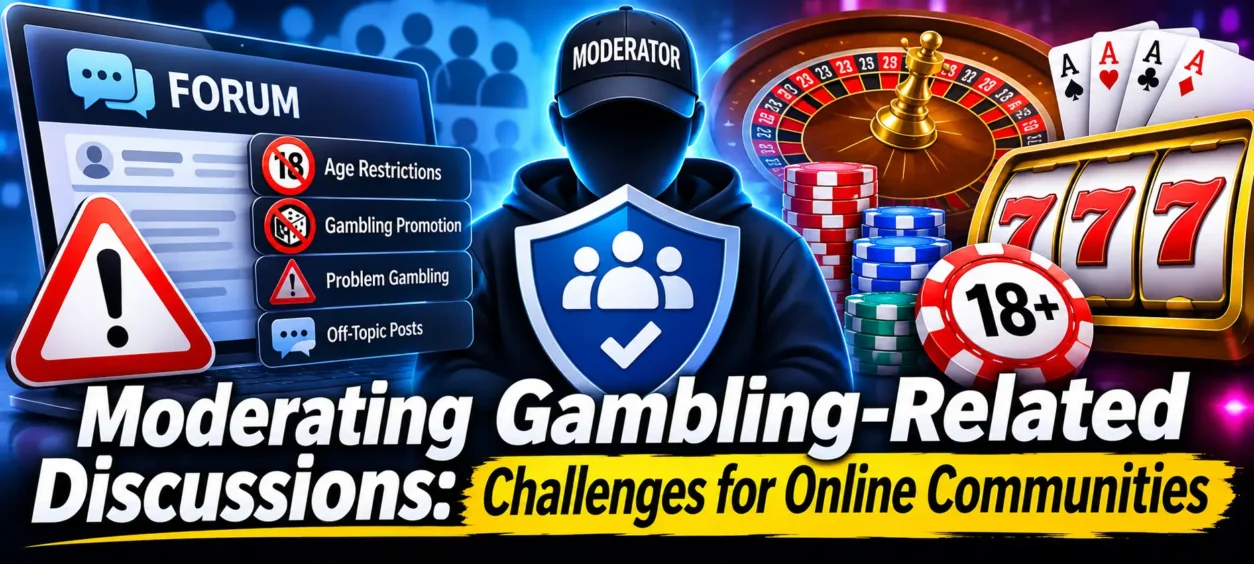
Online communities regularly host conversations about gambling, ranging from sporting events and betting regulations to personal experiences with financial losses. These discussions can provide useful information, but they also present challenges for moderators. Promotional messages, misleading claims and posts involving vulnerable individuals require different responses. Effective moderation therefore depends on clear rules, consistent enforcement and an understanding of the distinction between ordinary discussion and commercial gambling content.
Recognizing the sensitive nature of gambling discussions
Gambling-related conversations can involve sensitive personal circumstances. Some members discuss sporting results or legal developments, while others describe financial difficulties, compulsive behaviour or conflicts with family members. Moderators should distinguish between these situations rather than treating every reference to gambling as problematic. A respectful discussion about personal experiences may be appropriate, whereas harassment, encouragement to recover losses through further gambling or the exploitation of vulnerable users may require intervention.
Community guidelines should explain which behaviours are unacceptable and how moderators respond to concerning posts. These rules might prohibit personal attacks, misleading claims about guaranteed winnings and attempts to pressure others into gambling. Moderators should also avoid presenting themselves as healthcare professionals when responding to members who describe gambling-related harm. Their responsibility is to maintain a respectful environment, recognise potential warning signs and direct individuals towards appropriate support when necessary.
Navigating legal and regulatory frameworks
The legal treatment of gambling-related content depends on its purpose, presentation and jurisdiction. A discussion about the outcome of a football match is not equivalent to advertising a gambling service. However, commercial messages, affiliate promotions and paid recommendations may be subject to specific restrictions. In Great Britain, advertising rules apply to relevant marketing communications, including promotions connected with sports betting. The Advertising Standards Authority provides guidance on gambling advertising, including requirements concerning misleading claims and the protection of children.
Moderators should therefore establish clear policies for promotional content. Undisclosed commercial relationships, referral links and advertisements disguised as independent recommendations can undermine trust and create compliance concerns. Communities serving international audiences may also encounter different national restrictions, making it important to consider the intended audience and applicable rules. Ordinary discussion should not automatically be classified as advertising, but commercial activity requires closer scrutiny. Where legal obligations are uncertain, platform operators should obtain appropriate guidance rather than relying solely on moderators’ individual interpretations.
Promoting responsible dialogue and user support
Communities discussing gambling can establish procedures for responding to members who express distress. Moderators might provide information about specialist support services, remove harmful replies and discourage other users from offering unqualified financial or medical advice. In Great Britain, GamCare provides information and support concerning gambling-related harm. Including a link to an appropriate service in community guidance can make reliable information easier to find without turning every discussion into a warning about gambling.
The tone of moderation is equally important. Members describing financial losses or difficulties controlling their gambling should not be ridiculed or pressured to disclose personal information. Moderators can acknowledge concerns, explain community boundaries and suggest professional support where appropriate. Discussions involving betting strategies or probabilities may remain permissible under community rules, but claims that particular methods guarantee profits should be challenged or removed. A supportive environment depends on proportionate responses rather than excessive restrictions or repeated generic disclaimers.
Implementing tools and best practices for moderation
Automated moderation tools can help identify spam, suspicious links and repeated promotional messages. Keyword filters may flag content for review, while reporting systems allow members to alert moderators to potentially harmful behaviour. However, automated detection has limitations. A post discussing gambling addiction might contain the same terminology as an advertisement, despite having a completely different purpose. Human review is therefore important when decisions depend on context, intent or the circumstances of individual users.
Moderator training should focus on consistent rule enforcement, recognising promotional content and responding appropriately to sensitive disclosures. Communities can also maintain internal guidance explaining when to remove posts, issue warnings or escalate serious concerns. Regular policy reviews help ensure that moderation practices remain appropriate as platforms and legal requirements change. Ultimately, effective moderation does not require eliminating gambling-related discussion. It requires creating conditions in which members can exchange information without being exposed to misleading promotions, harassment or avoidable harm.