The spawn of Baron Nashor at the 20-minute mark traditionally serves as the primary turning point in any professional League of Legends match. On paper, securing a quick Baron buff seems like the ideal vehicle to snowball a lead and crack open outer turrets. In practice, however, attempting to take down the objective immediately upon arrival remains one of the most perilous traps in competitive play. At minute 20, carries simply lack the items required for swift burst damage, while the pit’s inherent debuffs turn even an advantaged squad into sitting ducks. In this breakdown, I analyze the latent hazards of early Baron attempts and explain why rushing the pit during the Worlds 2026 Swiss stage borders on pure gambling.
The Illusion of Early Advantage and Nashor’s Debuffs
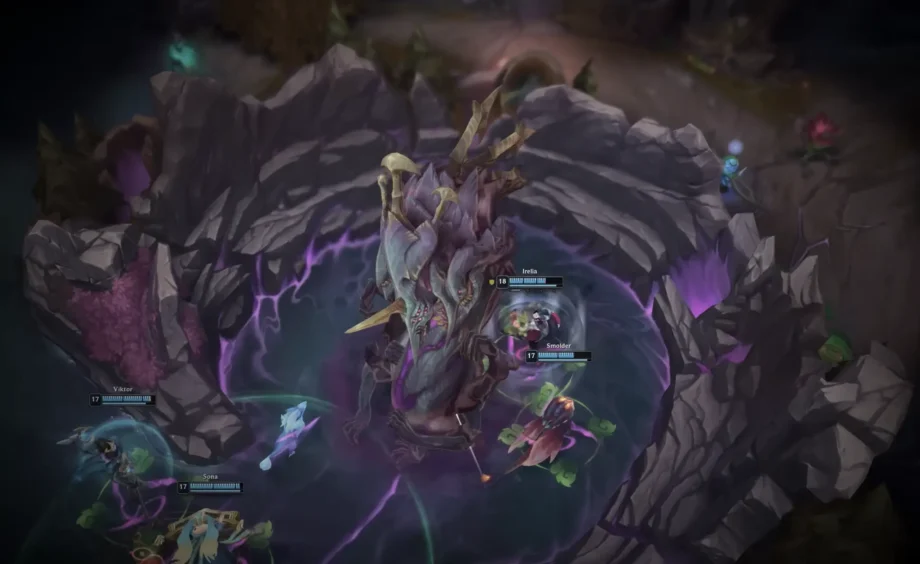
When a roster establishes a 3,000 to 4,000 gold lead by the 20-minute mark, shotcallers face an irresistible urge to force the primary objective immediately. The issue lies within the monster’s core mechanics: a base health pool hovering around 15,000 HP combined with Baron’s Gaze, which slashes the damage of the primary aggro-holder by 50%, stretching the takedown into a grueling 25 to 30-second ordeal. Over this duration, players accumulate stacks of Void Corruption, steadily shedding up to 50 armor and magic resistance, completely erasing any early gold differential.
I frequently see premier lineups blindly walk into the pit while disregarding their own frailty. Tracking match dynamics through dedicated hubs covering league of legends live scores teams, a classic breakdown plays out regularly: the leading roster burns key cooldowns on the monster, bleeds health to void attacks, and ends up trapped inside tight terrain. The defending team needs no intricate setup; they simply flank the river and unload two area-of-effect ultimates onto compromised targets.
Two completed items on your ADC and mid laner are nowhere near enough firepower to melt Baron before the enemy responds. Any hitch instantly reduces the play to a 50/50 Smite flip where item leads mean absolutely nothing.
The Threat of Short Death Timers
A second critical factor frequently overlooked during early Baron takes stems from death timer scaling. At the 20-minute threshold, an eliminated champion respawns in a mere 25 to 30 seconds. Even if the initiating squad secures an early pick onto the opposing support or top laner, the operational window to execute a clean objective take remains razor-thin.
While the four surviving defenders stall with poke damage around the mouth of the pit, the fallen opponent utilizes the Homeguard fountain boost to sprint straight back to the river. Reviewing past international match logs cataloged on Liquipedia’s World Championship hub, this premature trigger regularly punishes overeager favorites. Consequently, the team inside the pit whittles Baron down to half health, burdened by maximum debuff stacks, only to collide with a fully refreshed enemy who just spent all accumulated gold in base.
This positional tradeoff has repeatedly buried tournament favorites in past seasons. Finding a single pick in the early game provides a clean window to claim a dragon or knock down an outer turret, but forcing an early Baron without suffocating vision control far too often triggers a disastrous reverse ace.
The Psychological Trap of the Bo1 Format
Across the Worlds 2026 Swiss stage, the cost of a single defeat in a Bo1 format multiplies exponentially. It is specifically within these single-game fixtures that teams pull the trigger on reckless maneuvers, scrambling to close out the match before the opposing composition outscales into the late game. When a lineup built around early tempo feels its window of dominance closing, the call to pull Baron is too often made in panic.
Pure tournament psychology takes over here: an underdog in a Bo1 has nothing to lose and will gladly accept an all-in skirmish in a narrow river choke. A lower-seeded squad will jump at the chance to punish an elite favorite for any slight positioning lapse. Forcing an early brute-force Baron power play frequently leaves the fate of the entire game to a stray skillshot crowd-control chain or a 50/50 Smite steal by the opposing jungler.
In my view, top-tier organizations like Gen.G and Bilibili Gaming sustain their consistency specifically by refusing to engage in these coin flips. They methodically hollow out the enemy jungle quadrant, establish deep vision lines, and step into the pit only when the opposing lineup is physically cordoned off from the river and unable to contest within basic engagement range.
Alternative Paths of Pressure at the 20-Minute Mark
Instead of forcing a risky raid on the Baron pit, sound macro play offers far safer avenues to convert a lead. Securing suffocating control over the enemy’s topside jungle cuts off rotations to sidelanes, opening the door to peel off outer tier-two turrets without risking a catastrophic team wipe. Armed with deep vision lines, the leading roster forces the opposition into blind face-checks, engineering picks without taking sustained shred from the monster.
Another natural priority during this window is stacking dragons and establishing Soul Point. Locking in a third dragon by minute 21 applies immense structural pressure on the trailing team without burdening your frontline with crippling resistance debuffs. The terrain surrounding the dragon pit is far more forgiving, escape angles remain clear, and the overall margin for error is substantially wider.
True competitive mastery lies in treating Baron purely as bait. Feigning a start on the objective drags the enemy face-first into fog of war, straight into a pre-positioned firing squad. Pulling Nashor prior to the 25-minute mark should remain reserved for a single scenario: when at least three core opponents are staring at death timers and your jungler retains uncontested control over the river.
Conclusion
Forcing an early Baron Nashor during the opening rounds of the Worlds 2026 Swiss stage will serve as the definitive litmus test for competitive discipline. Teams that yield to the impulse to rush an early finish without completed items or ironclad vision coverage will hand their opponents effortless comebacks. Success across this dense tournament format belongs strictly to rosters capable of curbing impatience, converting advantages through methodical map control, and banishing unforced 50/50 flips from their playbook.
For even more news from the Rising World of eSports Head here