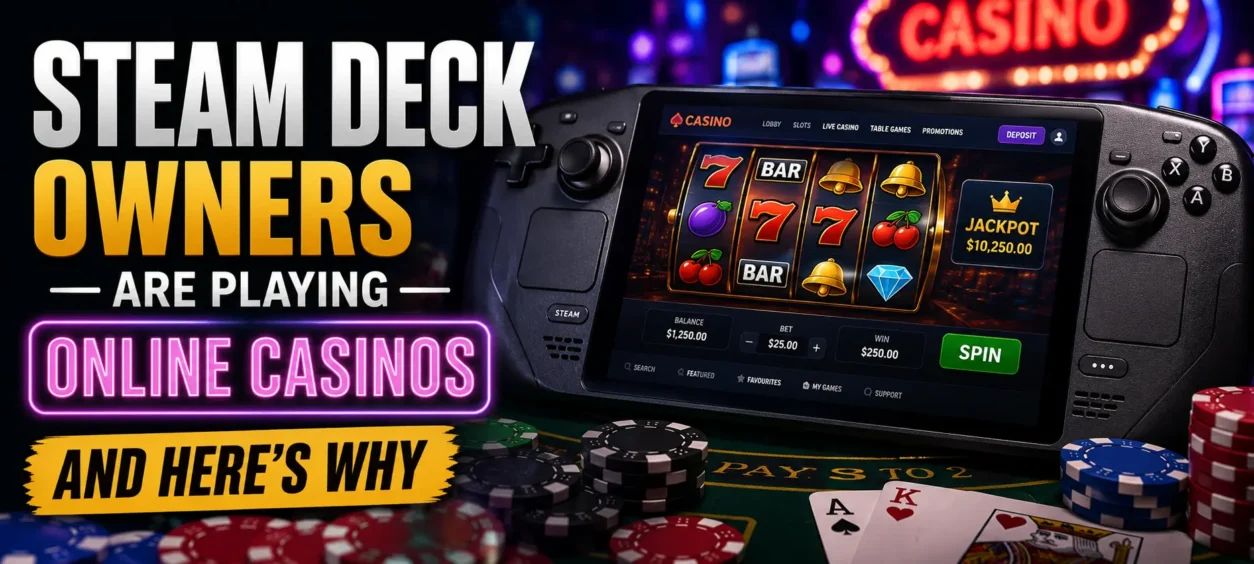
A Steam Deck sitting on the arm of the sofa used to mean one thing: someone was halfway through a JRPG they should have finished months ago. These days it might just as easily mean someone is spinning a slot reel on a browser tab between matches, or checking a free spins offer during a loading screen. Handheld PCs were built to run games, full stop, but the browser access that comes with that has quietly opened the door to a lot more than Steam’s own library.
It is a strange sort of side effect. Valve never marketed the Deck as a gambling device, and nobody buying a ROG Ally or a Legion Go was thinking about slot RTPs at the till. But full browser access on a proper operating system means whatever a laptop can do, the handheld can do too, and that includes logging into a casino lobby just as easily as launching a Steam library.
Handheld Devices Caught Up
For years, mobile casino play meant a phone screen and a compromise. A handheld changes that equation because it is running a proper operating system rather than a stripped-down app store version of anything. Live dealer tables load at full resolution, slot animations play without the stutter that used to plague older mobile browsers, and a full game library sits open in a tab right next to whatever’s loaded on Steam. The screen is bigger too, which sounds trivial until you have tried reading paytable terms on a phone at arm’s length on a train.
UK players have noticed this shift as much as anyone. Handheld ownership has climbed steadily since the Deck’s original launch, and hobbyist gaming writers have started covering the crossover as its own small trend rather than a footnote, since a device bought purely for Elden Ring turns out to be just as capable of running a casino lobby.
Freebies
Free spins are the obvious entry point for someone dipping a toe in from the gaming side, since they work a bit like a demo mode with actual stakes attached. A short session fits neatly into a commute or a break between longer game sessions, which suits handheld play far better than sitting at a desktop ever did.
The trouble is that the offer everyone searches for first is rarely the offer that exists in reality. Search results tend to surface headline numbers, two hundred free spins with no deposit required, that sound generous right up until the terms get checked. A proper breakdown of real free spins lays out how these offers work on legitimate platforms, and the gap between the advertised headline and the workable version is usually the whole story.
Wagering requirements are where most of that gap hides. A bonus with a low multiplier converts winnings into something withdrawable fairly quickly, while one with a steep multiplier can demand thousands in additional bets before a single penny becomes real. The spin count printed in bold rarely tells that part of the story, and neither does the flashy graphic promising a jackpot on the landing page.
It is worth remembering that free spins are usually restricted to one or two specific slot titles rather than the whole library, which means a big spin count can look impressive while only applying to a game nobody particularly wanted to play in the first place. Reading which titles qualify takes thirty seconds and saves the disappointment of discovering the fine print later.
Fair Terms at the Heart of Offers
Britain has stricter rules around this than plenty of other markets, which is worth knowing before assuming every free spins offer plays by the same book. The Gambling Commission’s own guidance on free offers and bonuses sets out what a fair promotion looks like for UK players, right down to what a licensed operator has to disclose before anyone claims anything. It also points players toward the Competition and Markets Authority’s own guidance on promotional terms, which covers similar ground from a broader consumer protection angle.
A handheld makes it painfully easy to accept a bonus in seconds without reading a word of that. Checking the wagering requirement, which games count toward clearing it, and whether the spins are locked to one title takes barely longer than claiming the offer itself, and it is the difference between a session that pays out and one that quietly resets to zero.
None of this is really about the hardware anymore. The Deck, the ROG Ally, whatever handheld ends up in someone’s bag, all of them solved the where and the when of casual casino play a while ago. The part that still trips people up is reading three lines of terms before tapping claim, and that has nothing to do with how good the screen looks or how many teraflops sit under the hood.