
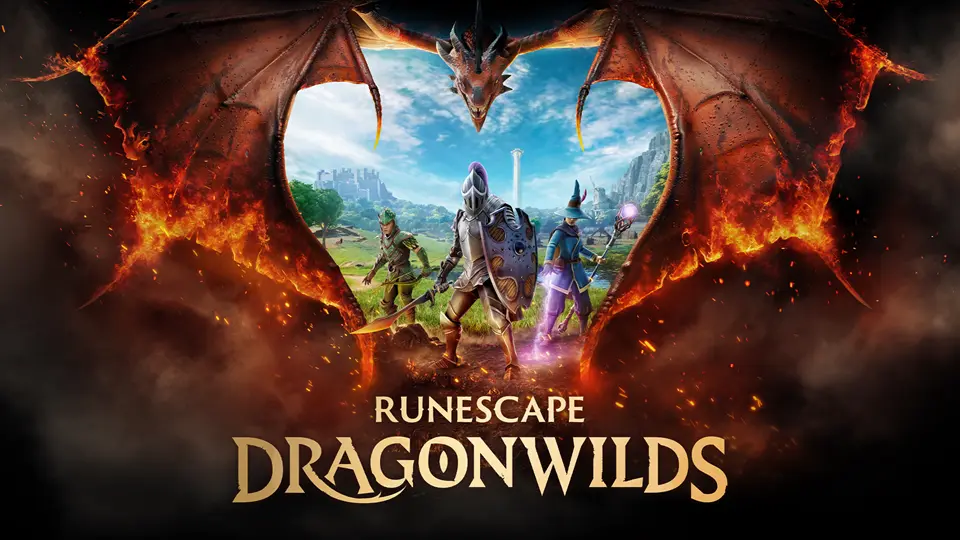
RuneScape Dragonwilds by developers Jagex feels like it’s doing something quite bold with a name a lot of players already associate with a very specific kind of experience. Instead of leaning into traditional MMO structure, quests, and familiar hub-driven progression, it shifts everything into a survival-first sandbox set on Ashenfall.
That change is immediate. If you go in expecting old-school RuneScape pacing, quest chains, or that steady sense of guided progression, you’ll notice pretty quickly that this isn’t really trying to be that. It’s closer to a survival crafting game that just happens to be built inside a RuneScape-inspired world.
Everything flows from that decision.
You’re not really “following a story” here in the usual sense. You’re surviving, gathering, building, improving your tools, and slowly pushing further out into harsher areas because you need better resources. Progression is something you create for yourself rather than something handed to you through structured content.
Getting into the World and What You Actually Do
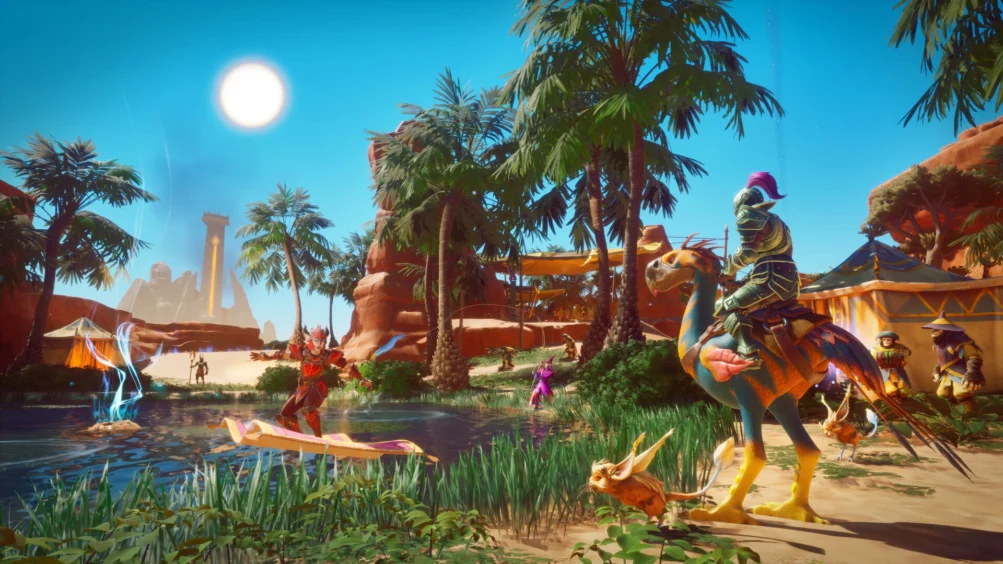
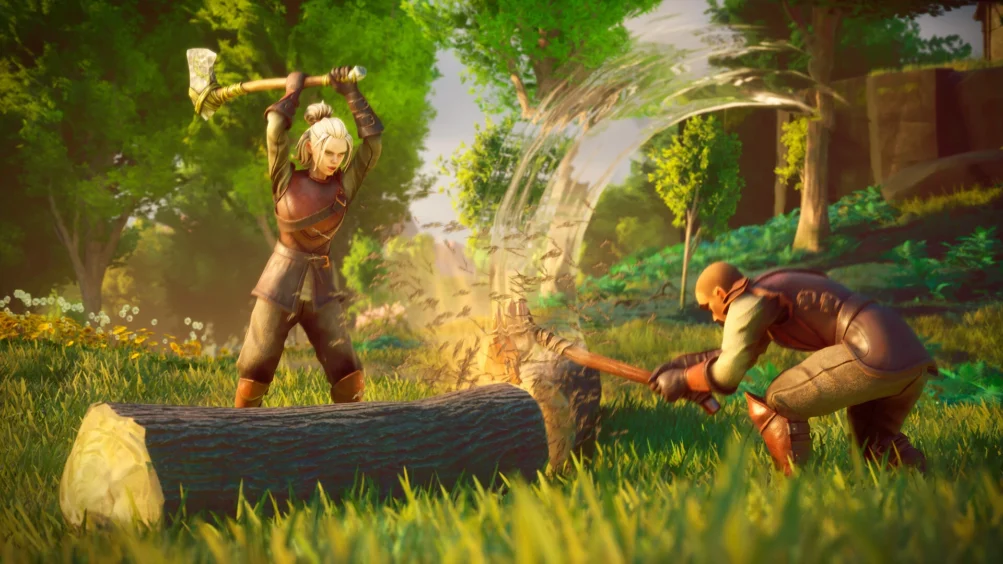
When you first land in Ashenfall, RuneScape Dragonwilds doesn’t really hold your hand much. You’re left to figure out what you need pretty quickly, and that usually comes down to the basics: wood, stone, food, and whatever else keeps you alive long enough to start thinking about better gear.
It doesn’t take long before you realise the loop. You gather materials, build a bit, upgrade tools, and then head further out because the next tier of resources is always just beyond where you are comfortable staying. It’s a familiar survival loop, but it works here because RuneScape Dragonwilds doesn’t overcomplicate it early on.
There’s something quite satisfying about how quickly you move from “I need shelter” to “I need a better base because I’m staying out longer than planned.” That sense of self-driven progression is really where RuneScape Dragonwilds starts to click.
Building Feels Like the Strongest Part Right Now
The building system is easily the standout feature at this stage. It’s surprisingly smooth and feels like it’s been given a lot of attention compared to other systems.
Placing structures is straightforward. Pieces snap together cleanly, and you don’t constantly fight the controls, which already puts it ahead of a lot of survival games in the same space. Even early shelters feel good to put together, which matters more than it sounds like it should.
The blueprint system also helps a lot here. Instead of placing things randomly and hoping it works out, you can actually plan your structure first and then commit resources once you’re happy. That alone removes a lot of frustration that usually comes with survival base-building. Though to do blueprinting you will need to have unlocked the eye of oculus, as it is an unlockable construction spell.
As you get deeper into RuneScape Dragonwilds, building stops feeling like a side activity and becomes part of everything you do. You go out, gather materials, come back to improve your base, then push out again. It becomes this constant back-and-forth rhythm that actually feels quite natural.
It’s probably the most polished and complete-feeling system in the game right now.
Exploration Without Much Direction
Exploration in Ashenfall is very much on you. There aren’t really clear questlines pushing you from one region to the next, so most of your movement is based on what you need rather than what the game tells you to do.
If you want better gear, you go further. If you need rarer materials, you take more risks and explore more dangerous areas. If you want to expand your base, you end up travelling just to find what you need.
That freedom works well if you enjoy survival games where you set your own pace. There’s a nice sense of “do what you want, go where you want” that fits the sandbox approach.
But at the same time, there are moments where it can feel a bit loose. Without quests or stronger narrative structure, the world doesn’t always give you much reason to care about where you are beyond resources. You move through areas more because you need something from them rather than because the world itself is pulling you forward.
So it’s a bit of a trade-off. Freedom is high, but direction is fairly low.
Combat Doesn’t Quite Match the Rest Yet
Combat is probably the part that feels the least developed right now.
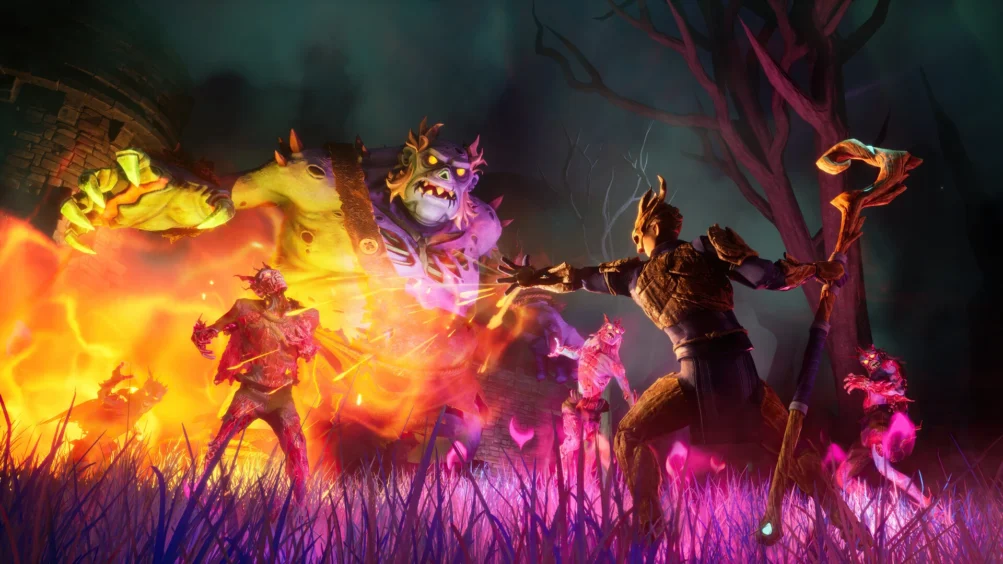
It works, in the sense that you can fight, dodge, use ranged attacks, and get through encounters without any major issues. Controls are responsive enough, and nothing feels broken or frustrating in a technical sense.
The problem is more that it doesn’t really evolve. Once you’ve fought a few enemies, you’ve basically seen what combat is going to be for a while. It stays quite basic, relying on simple attacks, positioning, and dodging rather than anything more layered.
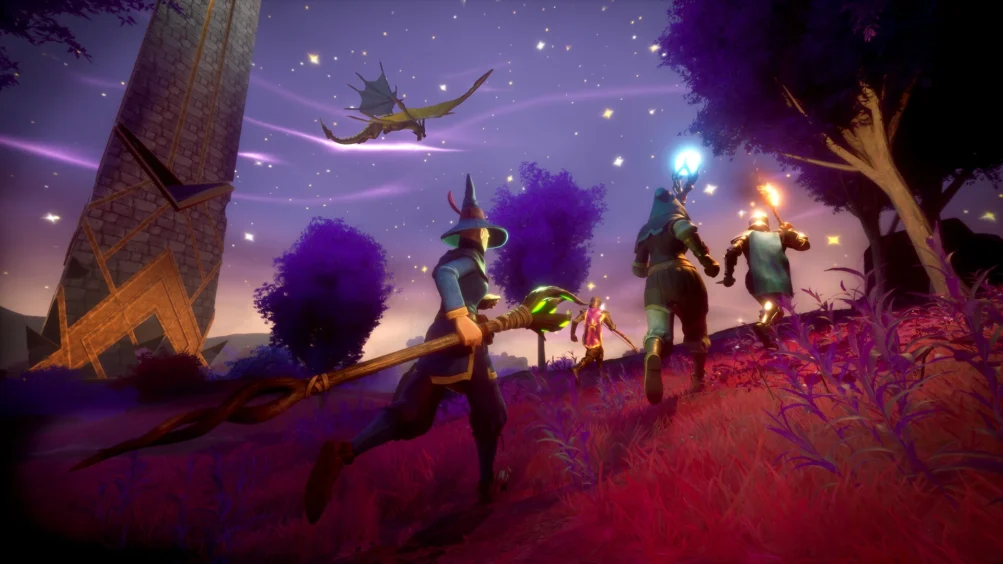
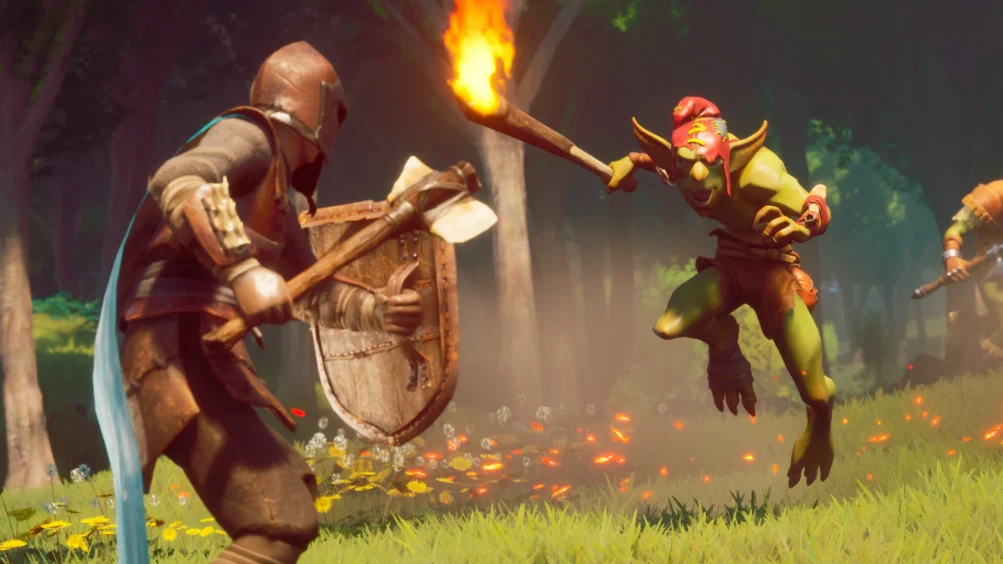
Different enemies look different, but they don’t really force you to change how you approach fights in any meaningful way. Gear upgrades mostly just make fights faster or safer rather than changing how you actually engage.
It feels like a system that will probably grow over time, because the foundation is there. It just doesn’t have much depth yet compared to the survival and building systems.
Magic, Runes, and Spellcasting
Magic is still in RuneScape Dragonwilds, but it doesn’t work the way long-time RuneScape players might expect.
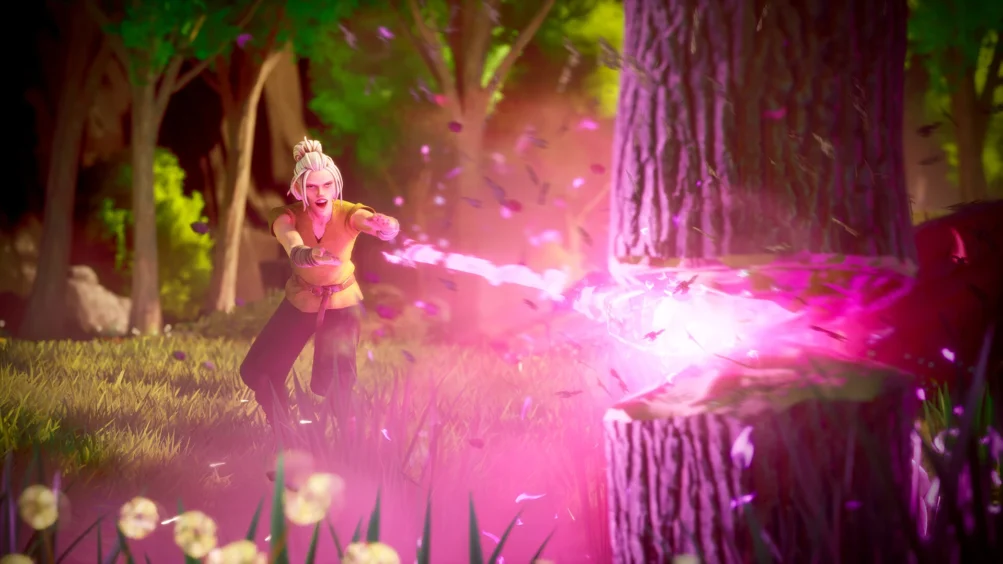
Instead of having a standalone Magic skill and a full spellbook system, it’s woven into the wider progression setup. You pick up spells through different skill trees as you progress, so it’s not something you lock into early on or build your entire playstyle around.
Runes still matter quite a bit. You gather Rune Essence and turn it into different types of runes, covering the usual elements like Fire, Air, Earth, and Nature, along with higher-tier ones such as Law and Astral that lean more into utility and crafting-style effects.
In practice, magic isn’t really about sitting back and casting combat spells in a traditional MMO sense. Most of what you unlock ends up being more practical—movement abilities, defensive tools, buffs, small utility effects, and things that support survival rather than replace it.
There is some combat magic in there, but it doesn’t sit at the centre of how you play. It’s more of an extra layer you mix in rather than a full build focused around spell rotations or pure casting.
Overall, it still feels rooted in RuneScape’s identity, just reshaped into something that fits a survival RPG where magic supports your decisions instead of defining them.
The World Itself Has a Strong Look, Even If It Feels Light on Interaction
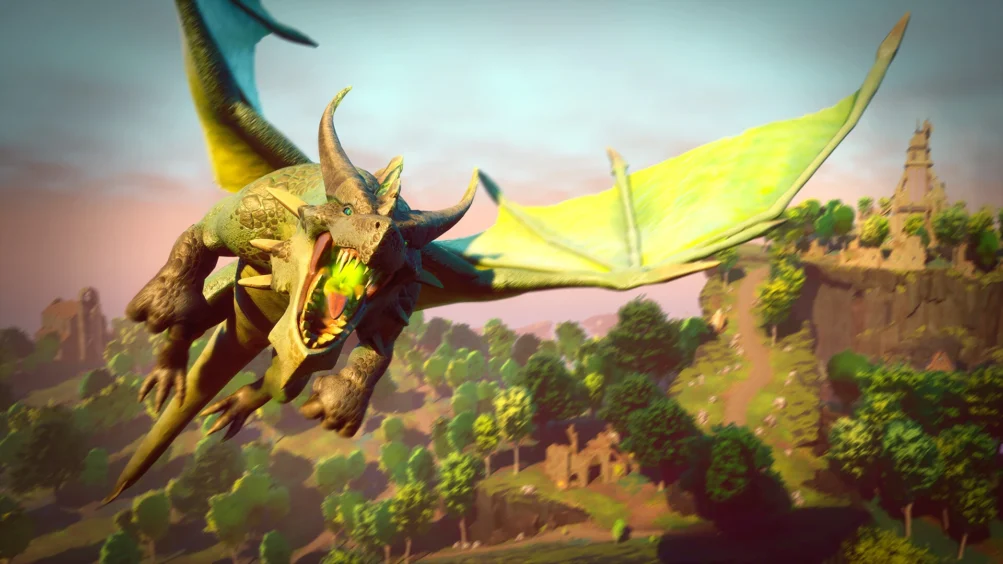
Ashenfall does look good. There’s a clear fantasy identity running through it, and it still carries that RuneScape-inspired style in its environments and creature design.
The world feels large, and different regions do a decent job of separating themselves visually. You get a sense of scale when travelling, especially when moving between safer and more dangerous zones.
Those danger areas are probably where exploration feels most interesting, because there’s always that risk-versus-reward feeling. You’re pushing further out for better materials, knowing it’s going to be harder to survive.
The downside is that a lot of the world is built around function rather than discovery. Most areas exist to support gathering and progression rather than offering unique moments or world interactions. You don’t often stumble into something that feels surprising or narrative-driven.
So while the world looks solid, it’s more of a survival space than a place full of stories or events.
Performance and Rough Edges
For an Early Access game, performance is generally okay, but it’s not perfectly stable across the board.
Early gameplay runs smoothly enough, especially when you’re just exploring or gathering. But once your base starts getting larger and more systems are running at once, you can start to notice dips depending on your setup.
There are also the usual Early Access rough edges. Some animations feel a bit off at times, enemy behaviour can occasionally be inconsistent, and the UI—especially around crafting and inventory—can feel slightly clunky when you’re managing a lot at once.
Nothing here really breaks RuneScape Dragonwilds, but you can definitely tell it’s still being worked on.
Overall Feel So Far
Right now, RuneScape Dragonwilds feels like a survival game built on a really strong foundation, but still very early in terms of everything sitting on top of it.
The building system carries a lot of the experience. It’s the most complete, most satisfying part of RuneScape Dragonwilds, and it ties neatly into the core loop of gathering and progression.
Outside of that, everything feels like it still needs more time. Combat needs depth, exploration could benefit from more purpose beyond resources, and progression could use more structure or direction to give players something stronger to follow.
At the moment, it works best if you enjoy sandbox survival games where you make your own goals and build your own rhythm. If you’re expecting something closer to traditional RuneScape questing or RPG structure, it’s not really there
Final Thoughts
There’s definitely potential here. You can see what RuneScape Dragonwilds is aiming for, and the core survival loop already works well enough to be enjoyable.
What will decide how strong it becomes is how much gets layered onto that foundation over time. If combat deepens, exploration becomes more meaningful, and progression gains more structure, it could turn into something much more complete.
Right now though, it sits in that Early Access space where the core idea is strong, but the surrounding systems still feel like they’re catching up.
RuneScape Dragonwilds Trailer
Read more awesome previews >>here<<.
The game was provided to us for the express purpose of reviewing.
The review was written by me and edited by my partner.
The Code was Provided to us to preview the game in early access NOT to review as the game is not complete.



You must be logged in to post a comment.