Online gaming communities are consistently among the most vibrant and loyally engaged audiences anywhere on the internet. A well-run community built around a specific game, genre, or platform type can generate extraordinary levels of participation, provide genuine and ongoing value to its members, and in the right circumstances become a sustainable business in its own right. Sponsored content from platforms like online slots at Arena Plus can work well within a gaming community context when it is clearly labelled, genuinely relevant to the community’s interests, and integrated thoughtfully rather than inserted aggressively. Done correctly, relevant sponsorship enhances rather than disrupts the community experience.
Building a successful gaming community from scratch requires more than enthusiasm and a platform. It requires a clear understanding of what makes communities cohere and grow versus what causes them to fragment, stagnate, or collapse. The mistakes that kill early-stage communities are surprisingly consistent across topics and formats, and avoiding them is considerably more achievable than it might initially appear to someone starting from scratch.
Clarity of Purpose From the Very Beginning
The foundation of every successful gaming community is clarity of purpose, established clearly and communicated consistently from day one. The most successful communities serve a specific audience with a specific shared interest. A forum designed for dedicated competitive poker players has a fundamentally different culture, tone, information need, and set of community norms than a casual community built around slot gaming or broad casino entertainment. Attempting to serve both audiences simultaneously at the launch stage is one of the most reliable ways to serve neither effectively.
Being specific about who the community is for also helps with the most important early decision: who your first one hundred members should be. Communities need a critical mass of engaged founding members who set the cultural tone before the community is large enough to sustain itself organically. Recruiting those founding members from the right specific audience is far more valuable than pursuing maximum early growth from an undifferentiated general audience who lack a strong shared interest.
Moderation: The Most Underestimated Challenge
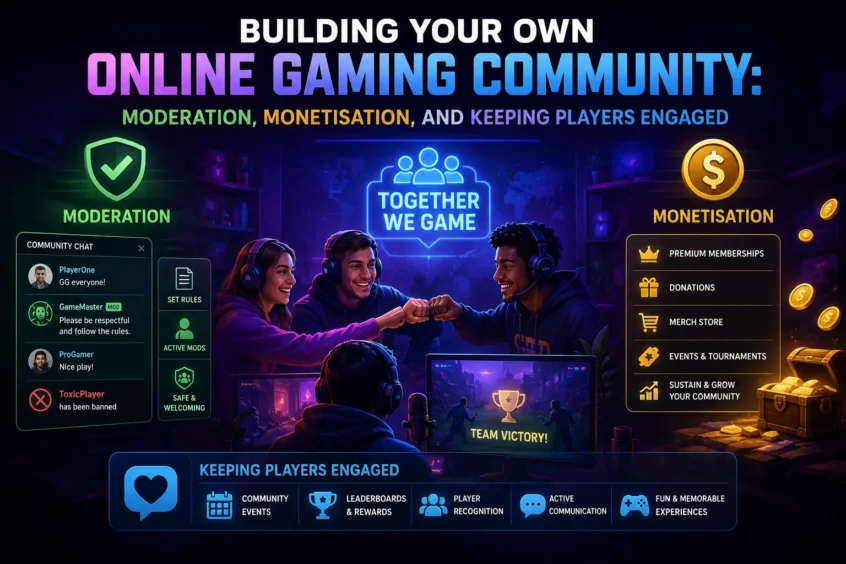
Moderation is consistently the most underestimated challenge in community building. Most founders focus their early energy on content creation, platform features, and growth initiatives while giving insufficient thought to how disputes will be resolved, what standards of conduct will be expected and enforced, and what will happen when toxic behaviour appears, which it will in any community of meaningful size.
A clear, consistently applied ruleset that is communicated explicitly at the point of joining is significantly more effective at shaping community culture than reactive enforcement after problems emerge. Rules that exist in a terms and conditions document that nobody reads do not function as community norms. Rules that are woven into the onboarding experience, reinforced by community leadership, and consistently enforced without exception or favouritism do. Volunteer moderators recruited from within the engaged membership can be genuinely valuable if given proper orientation, clearly defined authority, and ongoing support.
Engagement Mechanics, Monetisation, and Long-Term Retention
Engagement mechanics deserve particular attention in gaming communities because the audience is inherently familiar with the feedback loops, progression systems, and reward structures they have encountered in games themselves. Post milestones, contribution-based user ranks, community challenges, member spotlights, and weekly discussion formats all borrow from game design principles and apply them to community participation in ways that resonate naturally with this specific audience.
Monetisation requires careful handling. Advertising is tolerated when it is relevant and not intrusive. Subscription tiers offering premium access or an ad-free experience have become an increasingly viable model as audiences have become more comfortable with direct support models. Long-term retention is ultimately about whether members feel the community provides something they genuinely cannot access elsewhere: quality conversations, early information, and a sense of belonging to something with a distinct and valued shared identity.