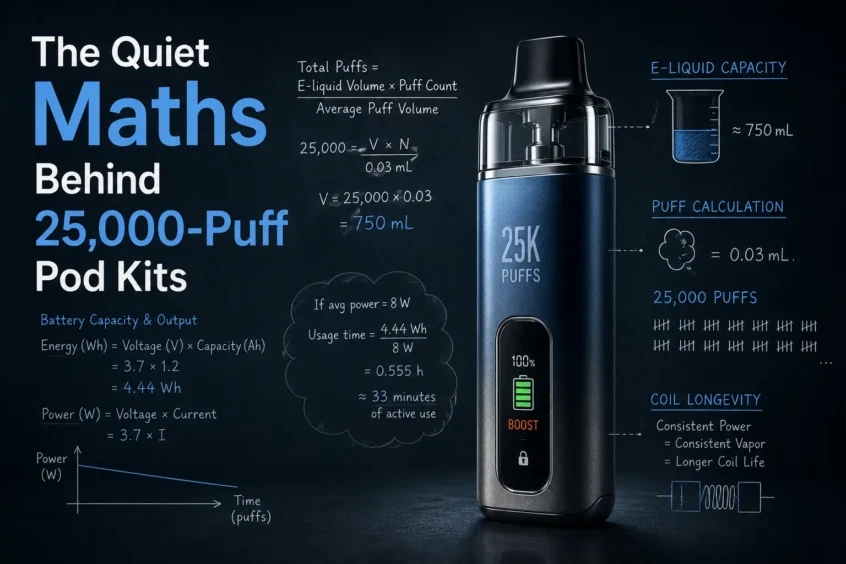
The headline number on most modern UK pod kits is the puff count. 25,000. 30,000. Sometimes 35,000. The marketing message is simple: more puffs equal better value than disposables. But the actual maths is more interesting than the headline suggests, and once you work through it, the value case for refillable pod kits becomes much clearer.
Start with what a single old disposable cost. A typical UK disposable in 2024 retailed for around £5 to £7 and delivered roughly 600 puffs. That works out to roughly one penny per puff. The cost-per-puff metric is the cleanest way to compare formats because it strips out the convenience and packaging differences and gets to the underlying economics.
Now apply the same calculation to a modern refillable pod kit. The Hayati Pro Ultra Plus 25K kit costs around £20 to £25 to buy, plus pods at £6 to £8 each. To get the full 25,000 puffs you’ll need roughly five pod refills (each refill pod is good for around 5,000 puffs). So the total spend across the device lifetime is about £20 for the kit plus five pods at £7 each, which comes to £55 for 25,000 puffs.
That works out to about 0.22 pence per puff. Roughly four times cheaper per puff than disposables.
Put it another way: the equivalent of 25,000 puffs in disposable form would be around 42 disposables at £6 each, or £252 in total. The pod kit costs £55 for the same amount of vaping. The saving is roughly £200 over the device’s lifetime, which spans about four to six months for an average UK vaper.
A few things worth flagging in this maths.
The headline puff counts are theoretical maximums. Real-world puff counts depend on inhalation length and intensity. Most users see slightly less than the marketing number, perhaps 80 to 90 percent of the rated capacity. This applies to both disposables and refillable pods, so the comparison still holds.
The pod kit purchase isn’t a one-off. After 25,000 puffs you’ll typically replace the device itself rather than buying more pods, because the battery degrades and the internal components wear. So the £20 kit cost recurs roughly twice a year. Over a full year, the total spend is £40 in kits and around £80 in pods, totalling £120 for around 50,000 puffs. The disposable equivalent for a year would be around £600 in pure disposable cost.
The October 2026 vape duty will affect this calculation, but not as much as you might expect. The duty is per 10ml of e-liquid, so it affects pod refills proportionally to their liquid content. A typical 5,000-puff pod contains around 12 to 15ml of liquid, so the tax adds maybe £3 per pod. New pod kit cost-per-puff with the duty applied is around 0.27 to 0.30 pence. Still roughly three to four times cheaper than disposables would have been.
The convenience trade-off is real but small. Refillable pod kits require you to swap pods every two to three weeks, charge the device every couple of days, and store a couple of spare pods. None of this is dramatic, but it’s more friction than a disposable’s open packet, vape, throw away model. For most users the friction is worth the £150 to £200 annual saving.
There’s also a reliability dimension. Disposables had a relatively high faulty-rate. Maybe one in twenty arrived with a coil issue or battery problem that meant you’d thrown a fiver in the bin. Pod kits are mass-manufactured but the failure rates are lower in practice because the device is reusable and warranty support exists. Stocked at Ecigone among other independent UK retailers, the major pod kits come with manufacturer warranties that cover defective devices for the first months of use.
For a UK vaper still working through the maths, the takeaway is straightforward. Refillable pod kits cost less than disposables across any reasonable time period, the savings compound over months, and even with the October tax, the gap doesn’t close. The headline puff numbers are real value propositions, not marketing fiction.