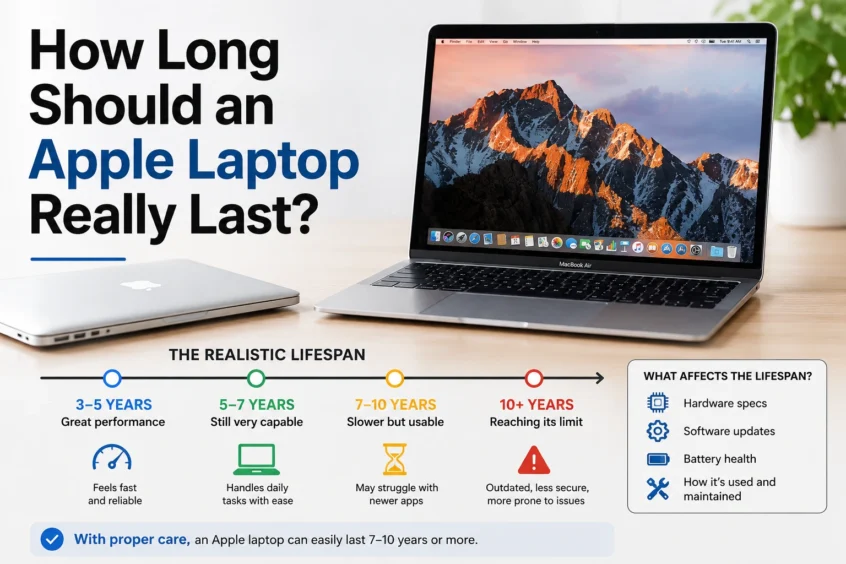
One of the reasons Apple laptops continue attracting strong resale value is the widespread belief that they last far longer than many competing devices. It is not unusual to see people still using MacBooks that are six, seven, or even eight years old for everyday tasks. That reputation for longevity has helped fuel the growing market for second-hand and refurbished devices, especially among buyers hoping to avoid the cost of purchasing brand-new technology.
But the question of how long a laptop should realistically last is more complicated than simply counting years. Two machines released at the same time can age very differently depending on how they are used, maintained, and upgraded throughout their lifespan.
For some people, a laptop only needs to handle basic browsing, streaming, emails, and office work. In those situations, older Apple devices can remain perfectly capable long after their original release date. Someone using a MacBook casually for a few hours a week may experience far less strain on the hardware than a professional editor, designer, or programmer relying on the machine every day for demanding workloads.
Battery health is often one of the earliest signs of ageing. Even when performance remains acceptable, older batteries naturally lose their ability to hold charge efficiently over time. A laptop that once lasted an entire day away from a charger may eventually struggle through only a few hours of use. For many owners, this becomes the moment they begin considering an upgrade, even if the machine itself still performs reasonably well.
Software support also plays a major role in determining lifespan. Apple generally provides operating system updates for far longer than many manufacturers in the wider laptop market, which helps older devices remain secure and functional for extended periods. However, there eventually comes a point where older hardware stops receiving the latest updates. Once that happens, compatibility with newer applications and security features can gradually decline.
Performance expectations have changed significantly over the years as well. Modern software, websites, and multitasking demands place far more pressure on laptops than they once did. A machine that felt incredibly fast several years ago may begin showing limitations simply because the digital world around it has become more demanding. Browsers now consume large amounts of memory, video conferencing software requires constant processing power, and cloud-based workflows are far more common than before.
Interestingly, many buyers underestimate how much physical condition influences longevity. Devices kept clean, protected from overheating, and handled carefully often remain reliable for far longer than heavily used machines exposed to daily knocks and strain. Even simple habits such as avoiding full battery depletion and maintaining storage space can contribute to smoother long-term performance.
The rise in popularity of the refurbished macbook market reflects changing attitudes towards technology ownership. More consumers are recognising that they do not always need the newest release to enjoy a reliable and capable laptop experience. A properly refurbished Apple device can often provide years of additional use at a fraction of the original cost, making it especially attractive for students, remote workers, and households trying to manage spending more carefully.
Retailers such as Tech.Trade have seen growing demand from buyers who are increasingly comfortable choosing refurbished devices over brand-new alternatives. Rising laptop prices have encouraged people to think more practically about value, durability, and long-term usefulness rather than simply focusing on owning the latest model.
In reality, there is no single lifespan that applies to every Apple laptop. Some machines become frustratingly slow after only a few years because their hardware no longer matches the user’s needs. Others continue operating reliably for the better part of a decade because their owners use them in less demanding ways. The key factor is not simply how old the laptop is, but whether it still delivers the experience the owner expects from it.
Want more news from the Tech world for Gaming Peripherals to Hardware Click Here