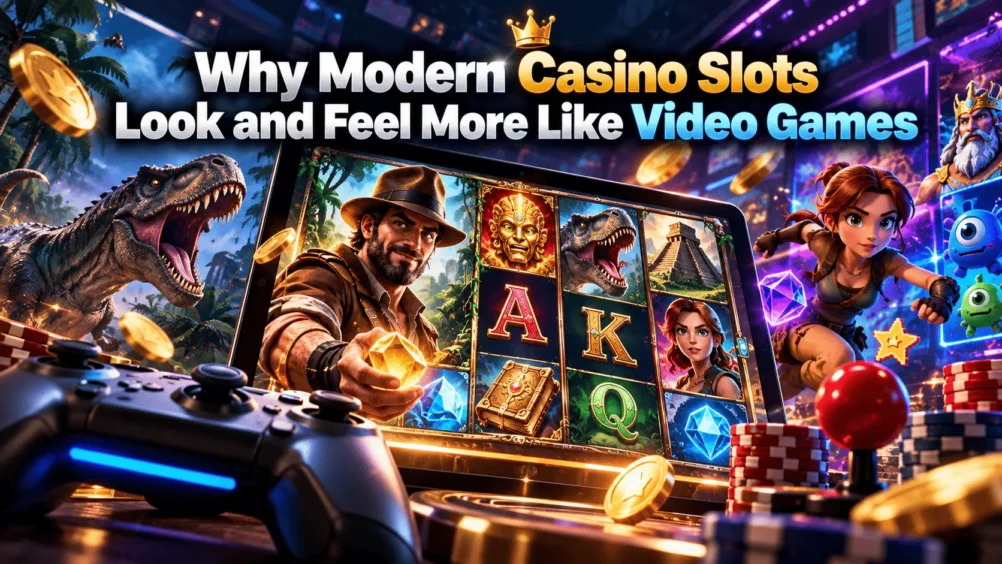
Online slots have changed considerably from the traditional three-reel machines once found in pubs and casinos. Modern releases feature animated characters, detailed environments, interactive bonuses, and mechanics familiar from video games. Some even introduce missions, collectible symbols, and changing game worlds. Developers increasingly borrow ideas from adventure games, mobile apps, and arcade titles to make spinning reels more visually engaging. The result is a generation of slots that often resemble interactive entertainment rather than conventional gambling machines.
From Mechanical Reels to Interactive Game Worlds
Traditional fruit machines relied on a small selection of symbols, fixed paylines, and straightforward bonus features. Their digital successors have considerably more room for creative design.
Modern developers use 3D animation, cinematic transitions, and detailed environments to establish a game’s atmosphere. A fantasy slot might feature moving creatures, magical effects, and a changing landscape.
Games such as Gonzo’s Quest helped popularise animated characters and cascading symbols. Winning combinations disappear, allowing new symbols to fall into place.
These mechanics create a sense of movement beyond the familiar spinning reels. The visual presentation can resemble a puzzle game, even though outcomes remain random.
Progression Systems and Unlockable Features
Progression is a familiar concept in video games. Players complete objectives, unlock abilities, or advance through increasingly complex environments.
Some slot developers have adapted similar ideas through expanding grids, symbol collection, and bonus features that develop across successive spins.
Reactoonz, developed by Play’n GO, provides a recognisable example. Its colourful alien characters appear on a grid where winning clusters disappear, and new symbols arrive.
Special features can activate as the game progresses, creating a changing visual experience during individual sequences.
Other releases use meters, collected symbols, or expanding reels to represent progress towards a feature. These elements make the presentation feel more dynamic.
Unlike conventional video games, though, slot progression does not generally reward improved skill. The underlying results are determined by the game’s mathematics.
Bonus Rounds Resemble Mini-Games
Bonus rounds provide one of the clearest connections between modern slots and video games. Some replace the standard reels with entirely different interactive screens.
Players might select treasure chests, choose pathways, or reveal hidden prizes. Other features involve spinning wheels, collecting objects, or triggering animated sequences.
These interactions resemble familiar mechanics from casual mobile games. They introduce variety without requiring complicated controls or lengthy instructions.
The player’s choices may influence which animation appears or which predetermined prize is revealed, depending on the game’s design.
An interactive feature should not automatically be interpreted as a skill-based challenge. Its rules determine whether decisions can affect the outcome.
Graphics, Sound and Cinematic Storytelling
Video game development has raised expectations for digital entertainment. Slot studios now use many of the same visual and audio techniques.
Detailed character models, atmospheric music, and animated backgrounds help establish a recognisable setting. Some games introduce short sequences before important bonus features.
Fantasy adventures, ancient civilisations, and science-fiction worlds are particularly suited to this approach.
Sound design also plays an important role. Developers use different audio cues for ordinary spins, feature activations, and changing game states.
These effects make the presentation more elaborate, although they do not alter the probability of winning.
How Mobile Gaming Influenced Slot Design
Smartphones have changed how digital games are designed. Touchscreen controls, vertical layouts, and short interactions are now common across entertainment apps.
Slot developers have adopted similar principles. Many releases use large buttons, simplified menus, and interfaces designed for smaller screens.
Mobile compatibility also influences how casinos organise their game libraries. In some jurisdictions, players can join casinos that aren’t on GamStop and access different slot collections, mobile interfaces, and software providers. Game availability depends on the operator and the player’s location.
These differences reflect the wider variety of software platforms and distribution agreements across online gambling.
A responsive interface can make a slot easier to navigate, but it does not indicate whether a casino is properly licensed.
The Difference Between Gaming and Gambling Mechanics
Despite their similarities, video games and online slots operate under different systems.
Traditional video games frequently reward practice, timing, and strategic decisions. Most online slots use random number generators to determine results.
A player cannot improve the underlying odds through faster reactions or repeated attempts. Progress bars and character animations do not necessarily represent increasing winning probabilities.
Return to Player describes a game’s theoretical payout percentage across a large number of plays. It cannot predict the result of an individual session.
This distinction matters when games borrow familiar achievement systems. A visually rewarding sequence might still produce a financial loss.
How Slot Developers Borrow Ideas from Video Games
Modern slot developers increasingly use design elements associated with adventure, puzzle, and arcade games. These include collectible symbols, changing environments, achievement-style animations, and character-based bonus features.
Some slots introduce persistent elements that remain active across several spins. Others use expanding grids, unlocking symbols, or multipliers that develop during a bonus round.
Visual feedback also plays an important role. Flashing symbols, animated progress meters, and changing sound effects can make individual game events feel more significant.
These mechanics create a stronger resemblance to video games, although they do not necessarily introduce skill-based outcomes. Most online slots still rely on random number generators to determine results.
Where Slot Game Design Is Heading
The boundary between casino presentation and video game design continues to narrow. Developers can now build elaborate environments, animated characters, and interconnected bonus features.
Future releases may place greater emphasis on storytelling, distinctive interfaces, and interactive visual elements.
Yet sophisticated graphics cannot change the central distinction between these forms of entertainment. Slot outcomes remain governed by mathematical probabilities rather than player skill.
Understanding that difference is essential when evaluating games that increasingly resemble familiar video game experiences.