Online security has become a major concern for individuals and businesses alike. Companies spend considerable resources protecting their systems, customer information, and employee accounts.
Many use tools like a password generator to create stronger login credentials and secure their accounts in such a way. However, businesses are no longer the only ones with valuable digital assets to protect.
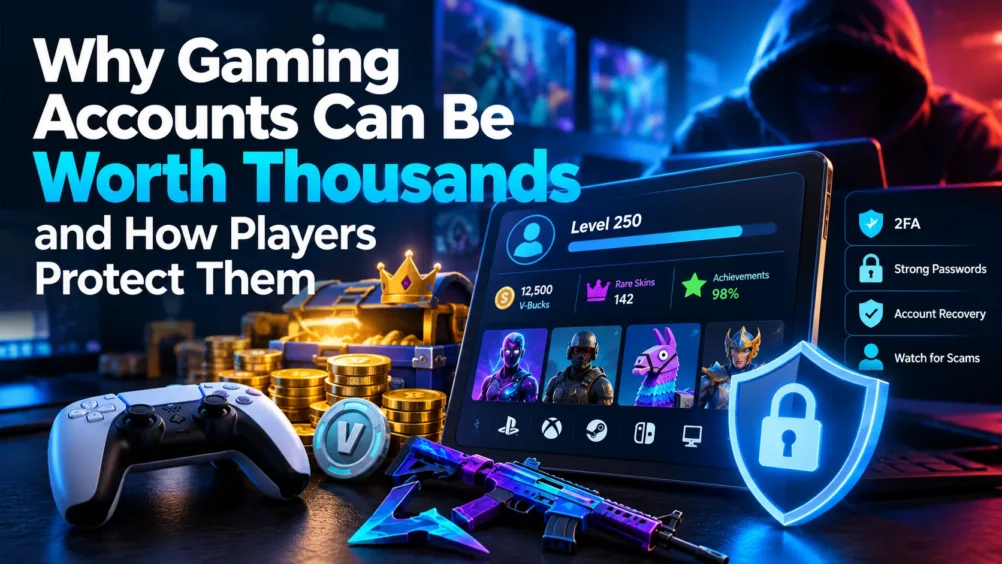
Gaming accounts now deserve similar attention. Players can spend years collecting rare items, unlocking achievements, and developing characters, sometimes building accounts worth thousands of pounds in purchases or potential resale value. For some, losing access would mean losing both money and years of progress.
But what makes certain gaming accounts so valuable, and how can players keep them secure?
What Makes Some Gaming Accounts So Valuable?
Not every gaming profile has significant financial value. An account created last week is unlikely to attract much interest. One developed over several years, however, may contain items and achievements that are difficult or even impossible to obtain today.
Several factors can influence an account’s perceived value.
Rare Skins and Exclusive Cosmetic Items
Skins are among the clearest examples of how virtual items can become valuable. They change the appearance of characters, weapons, or equipment without necessarily improving performance.
Consider these examples:
- Counter-Strike 2: Rare weapon finishes, particularly certain knife and AK-47 skins, can attract substantial prices. Their value depends on factors such as condition, pattern, and availability.
- Fortnite: Older cosmetic items, including the Black Knight outfit from Chapter 1 Season 2, are desirable to collectors because they are associated with earlier periods of the game.
- Valorant: Premium weapon collections, such as Elderflame and Champions bundles, can represent considerable spending, particularly when a player owns multiple collections.
An important distinction is that not all these items are tradable. Counter-Strike 2 supports item trading and an official marketplace, whereas Fortnite and Valorant cosmetics generally remain attached to the original account.
Account Levels and Years of Progress
Time is another important factor.
In games such as World of Warcraft, reaching a high character level is only part of the process. Players also collect mounts, achievements, equipment, and rewards from difficult activities.
Similarly, a long-established Old School RuneScape account might have highly developed combat skills, completed quests, and valuable equipment.
These achievements can take hundreds or thousands of hours to obtain.
For experienced players, the account’s value isn’t simply about the money spent. It also reflects the considerable time required to achieve the same results again.
Powerful Weapons and Uncommon Equipment
Certain games place considerable emphasis on obtaining effective weapons and equipment.
In MMORPGs and collection-based games, rare rewards can require difficult challenges, repeated attempts, or participation in special events.
For example, Destiny 2 players may spend substantial time earning specific Exotic weapons, completing difficult activities, or collecting equipment with desirable attributes.
The value of these collections depends on the game’s rules and player demand. A powerful weapon doesn’t automatically make an account worth thousands, especially when account transfers are prohibited.
Can Gaming Accounts Really Be Worth Thousands?
Some can attract valuations reaching thousands of pounds, although such cases are uncommon.
An account with rare collectibles, extensive progress, and exclusive rewards may be especially desirable to another player. However, there is a significant difference between what someone believes an account is worth and what another person can legally or safely purchase.
Why Estimated Prices Can Be Misleading
Account valuations often consider:
- The rarity and availability of virtual items.
- Total spending on cosmetics and additional content.
- Character levels, achievements, and completed challenges.
- The age and history of the profile.
- Demand within the game’s community.
Even so, the original purchase cost doesn’t necessarily reflect its current value.
Spending £2,000 on cosmetics does not mean an account can be sold for £2,000. Some items lose popularity, while developers can introduce new rewards that change demand.
There are also restrictions to consider. Epic Games and Riot Games prohibit account sales and transfers under their terms. Players attempting such transactions risk losing access permanently.
This makes account value more complicated than the price of an ordinary physical product.
Why Valuable Gaming Accounts Attract Criminals
Cybercriminals don’t necessarily distinguish between a corporate account with sensitive information and a gaming profile with valuable items.
Both can provide opportunities for financial gain.
A compromised gaming account may allow someone to steal transferable items, access personal information, or make unauthorized purchases.
Common Methods Used to Steal Accounts
Several attacks are particularly relevant to gamers:
- Phishing messages: Fraudulent emails or direct messages imitate gaming platforms and ask players to enter their login details.
- Fake giveaways: Websites promise free skins, currency, or exclusive rewards in exchange for access to your account.
- Malicious downloads: Unofficial cheats, modifications or software may contain programs designed to steal credentials.
- Reused passwords: Criminals test passwords exposed in previous data breaches against gaming services.
- Fake trading offers: Scammers use misleading trade requests or imitation websites to trick players into transferring valuable items.
For example, Counter-Strike players may encounter fake tournament invitations or trading websites that request Steam authentication.
These attempts can appear convincing, especially when they imitate familiar gaming services.
How Players Can Protect Their Gaming Accounts
Protecting an account does not require advanced technical knowledge. Most serious risks can be reduced through a few consistent security practices.
Strengthen Login Security
The first priority is preventing unauthorized access.
Players should:
- Use a long, unique password for every gaming service.
- Store login details securely in a trusted password manager.
- Avoid sharing credentials with friends or third-party services.
- Review active sessions and connected applications regularly.
The email account linked to a gaming profile deserves particular attention. Someone who gains access to that inbox may request password resets and take control of associated accounts.
Be Careful With Trading and External Websites
Players who trade virtual items should use official systems whenever possible.
Steam provides an established marketplace for supported items, although its sales generate Steam Wallet funds rather than direct cash withdrawals.
Before confirming a trade, users should carefully check the recipient, item details, and transaction.
Unexpected links advertising discounted skins or exclusive rewards should be treated cautiously. A familiar logo or professional-looking website doesn’t prove legitimacy.
Prepare for Account Recovery
Security also involves knowing what to do when something goes wrong.
Players should keep purchase receipts, keep recovery information up to date, and understand their platform’s account recovery process.
If suspicious activity appears, the immediate priorities are to change affected passwords, secure the linked email account, end unfamiliar sessions, and contact official support.
Acting quickly can prevent further damage, though recovering stolen items isn’t always possible.
Gaming Accounts Have More Than Financial Value
Financial estimates explain only part of why people protect their gaming profiles.
A long-standing Minecraft world, a World of Warcraft character developed over many expansions, or a Fortnite account with years of seasonal rewards may hold substantial personal value.
These accounts also preserve friendships, competitive achievements, and experiences you can’t simply buy again.
For this reason, protecting a gaming profile should be a normal part of online security, not something reserved for professional players or collectors.
Rare skins and expensive equipment may attract attention, but every player has something worth protecting. Strong login security, careful trading habits, and awareness of common scams can significantly reduce the likelihood of losing years of progress.