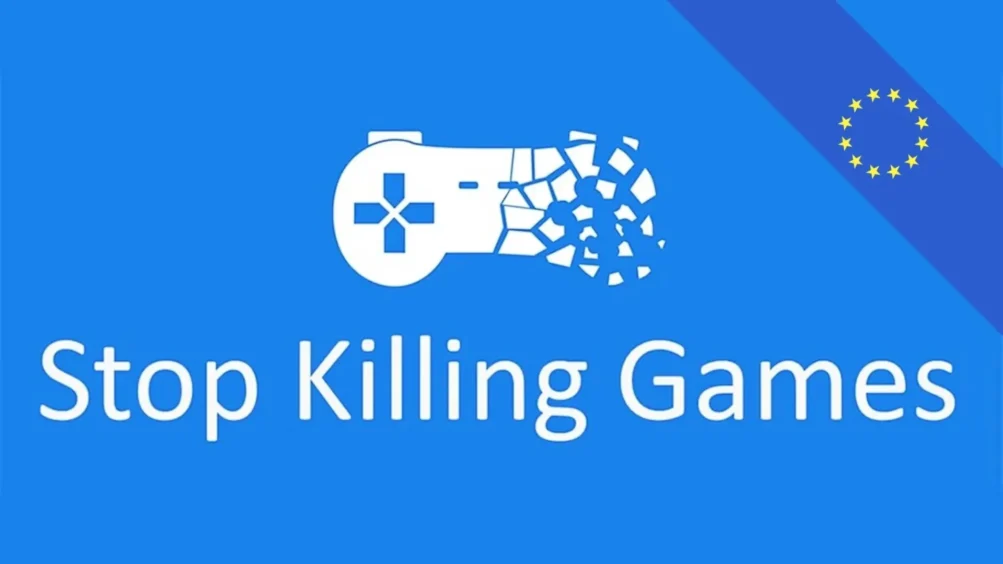
There’s been a lot of noise around the Stop Killing Games movement over the past year, but this week things hit a completely different level. What started as frustration from players has now landed in the European Parliament, and after seeing what was actually said in that hearing… this isn’t just gamer outrage anymore. This is shaping up to be a real fight over digital ownership.
At the centre of it all is a question the industry has quietly avoided for years: when you buy a game, do you actually own it?
The movement’s founder, Ross Scott, didn’t waste time getting straight to the point. He described what’s happening in modern gaming as the “destruction” of games — not in a dramatic sense, but in a very literal one. Publishers are selling games that rely on their servers to function, and then at some point, often without warning, those servers are switched off. That’s it. The game is gone. Not broken, not unsupported — gone.
When Games Just Disappear
To put it into perspective, he compared it to someone coming into your home and removing a book you bought years ago. Except here, it’s happening digitally, and it’s perfectly legal… or at least, no one seems sure if it isn’t.
A lot of the discussion circled back to one major example: The Crew. When Ubisoft shut its servers down, the entire game became unplayable overnight. Players didn’t just lose online features — they lost access to the product entirely. And crucially, they were never told when that would happen when they bought it.
That case alone triggered thousands of complaints across Europe, and even now, regulators don’t seem to have a clear answer. Some authorities suggested publishers should keep games running indefinitely. Others said there was nothing they could do. Most admitted the same thing: there’s no clear regulation for this situation.
A Legal Grey Area That Benefits Publishers
And that uncertainty is exactly why this hearing happened.
What really stood out wasn’t just the legal arguments — it was how widespread the issue actually is. The movement presented research showing that the vast majority of always-online games are effectively “killed” once support ends. Not preserved. Not patched. Just shut down. Considering how many modern titles rely on server connections, that’s a massive chunk of gaming history at risk of disappearing.
But this isn’t just about preservation. It’s about expectations.
For decades, buying a game meant you could play it whenever you wanted, as long as your hardware worked. That’s still how most players think about ownership. The problem is, the industry has quietly shifted away from that model without really saying it out loud. Games are still sold like traditional products — full price, no expiry date — but in reality, they behave more like subscriptions that can end at any time.
Industry Responses Miss the Point
There was also a clear pushback against the industry’s usual defence. Suggestions like clearer labels, minimum support periods, or voluntary shutdown plans were dismissed as missing the point entirely. From the movement’s perspective, none of those actually solve the core problem — they just make it easier to accept that games will eventually be taken away.
One of the more interesting moments came from an MEP who floated the idea of a “right to resurrect.” Not repair, not refund — resurrect. The idea is simple: if a publisher walks away from a game, players or communities should have the legal right to bring it back in some form. Private servers, offline modes, whatever works.
It’s a concept that feels pretty radical right now, but honestly, it’s probably the first suggestion that actually matches how gamers think about ownership.
More Than Just Games — A Cultural Issue
There was even talk about treating games more like cultural works — something worth preserving long-term, not just products with a lifecycle. Comparisons were made to books, films, even libraries. Because when a game disappears completely, it’s not just a product that’s lost — it’s part of gaming history.
And here’s the thing that might surprise people: this isn’t just a niche issue affecting a handful of titles. We’re talking about millions of players across Europe who have already lost access to games they paid for. In some cases, people have spent not just the base price, but hundreds or even thousands more on in-game purchases — all of it gone the moment a publisher decides to move on.
What Happens Next?
Despite all that, the hearing wasn’t hostile towards the industry. The movement made it clear they’re not trying to force companies to support games forever or change how they make money. The ask is actually pretty simple: when a game reaches the end of its life, don’t destroy it. Leave it in a playable state.
That could mean stripping out online features, removing backend systems, or allowing community solutions. According to the arguments presented, if this is planned from the start, the cost is minimal compared to overall development budgets.
The European Commission didn’t commit to anything concrete just yet, but they did confirm the issue is being looked at closely, with potential links to upcoming legislation like the Digital Fairness Act. There’s also ongoing legal action tied to The Crew, which could help clarify things further.
What’s clear, though, is that the momentum is real. The initiative has already passed the one million signature mark, and political support in the room seemed strong across the board. This isn’t going away.
If anything, this hearing might end up being the moment where the conversation finally shifts. Because once lawmakers start asking whether digital purchases should come with actual ownership rights, it’s only a matter of time before the industry has to give a proper answer.
And when that happens, it could change gaming in a big way.
You can watch the highglights from the Stop Killing Games hearing below.
If you enjoy games and gaming and want more NEWS from the Gaming World Click Here