
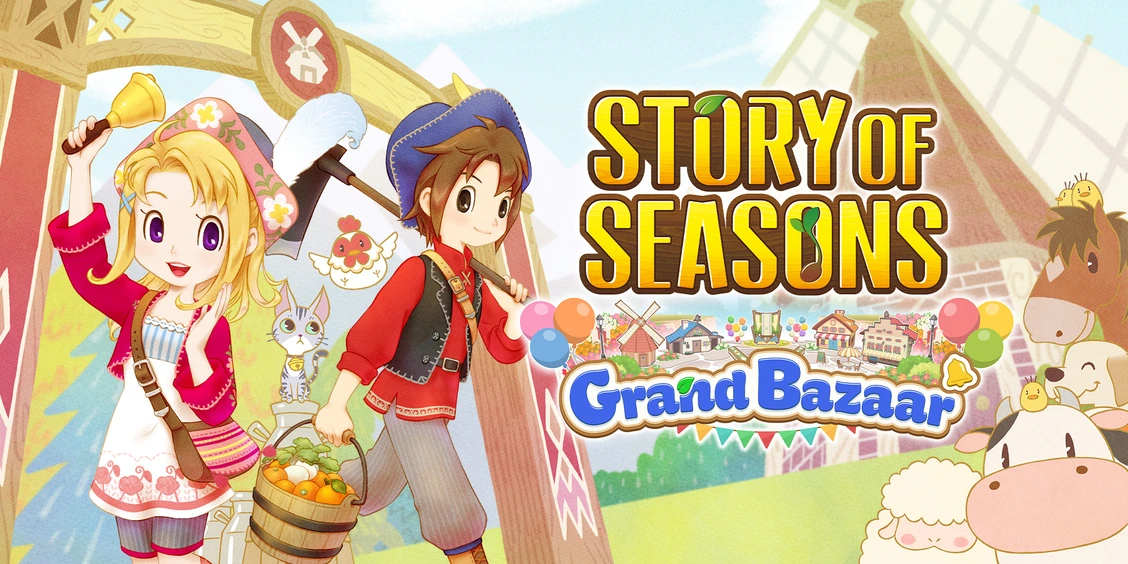
When Story of Seasons Grand Bazaar was announced, my reaction was muted at best. I assumed, wrongly, that it would be simply another remake of an old game. In reality, what Marvelous have accomplished here goes far beyond that, completely reimagining the DS title’s bones into a truly fresh and unique take on the genre, which has absolutely hooked me. 100 hours in, I’m ready to give you my thoughts.
Welcome to Zephyr Town
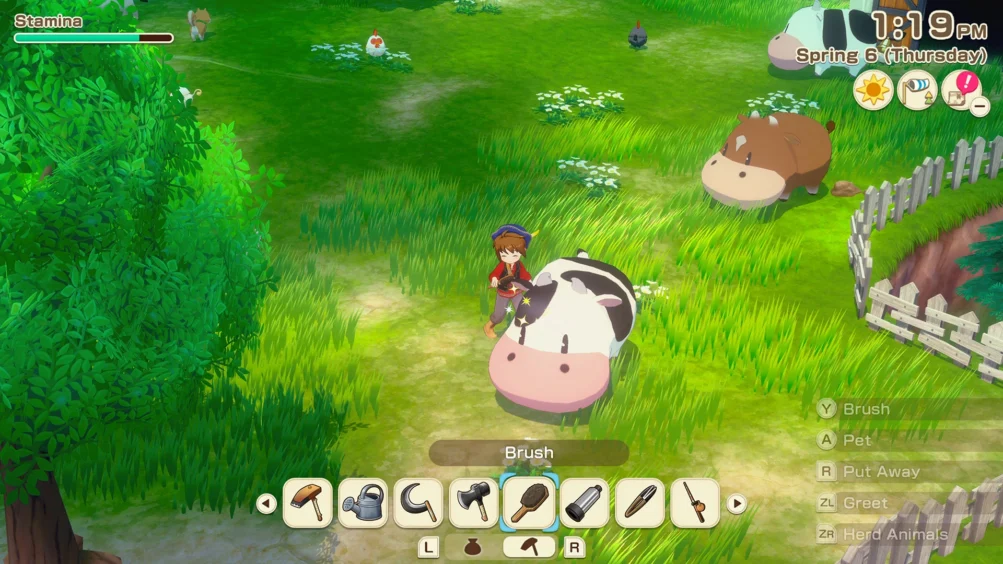
Like any Story of Seasons title, you play as a farmer newly arrived in town, but as in every game, there is a twist which acts as a unique selling point. Your new home, Zephyr Town, hosts a weekly bazaar at which you can sell your produce at slightly higher prices! It doesn’t sound massively exciting, and with this comes the absence of a daily crop collection bin and the limiting of most purchasing options to Bazaar day. Your aim is to expand the bazaar and return the town to its former glory by selling goods and encouraging neighbours to open stalls.
The Bazaar System – Restriction That Feeds Progression
I was sceptical, but the more I played, the more it made sense and pushed me forward. Condensing your shopping opportunities forces you to rethink your approach, prioritise and plan ahead. I found myself building a mental schedule and routines throughout the week, which only really changed on bazaar day. This restriction was oddly liberating and also served as a driving beat that pulled me through the seasons. Could I complete my artisan goods in time?
Would I be able to complete the side-quest to get another stall opened? It truly nurtured that “one more day” feeling in a way few games can. The bazaar days aren’t all shopping, though, as you have to manually set up your stall, choose furniture (which offers bonuses) and actually sell to the punters manually. It’s a simple mini-game affair of running around and tapping “sell“, but it scratched that satisfying itch to see numbers go up, and I always looked forward to it.
Seasonal Trends and Replayability
Compounding this is the trends system, which randomly chooses four categories of goods and gives them a desirability and price boost for a single season, encouraging you to grow and process certain crops over others and increasing replayability season after season. It’s an interesting idea which I hope we see in other titles going forward. So, the element I thought would be the game’s downfall was actually the highlight, but how does it handle the actual farming?
Farming and Crop Management
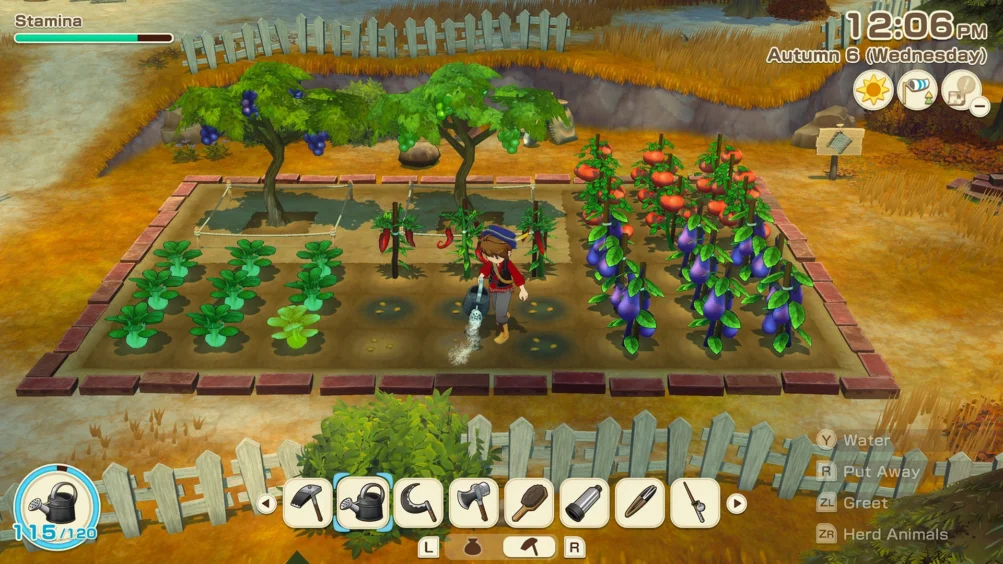
As you’d expect, really; you hoe the ground, plant seeds, water and wait. One key mechanic I haven’t seen before, however, is the ability to water crops multiple times in one day; as long as you do it fast enough that you can wait around 10 hours between rounds of hydration. This small but significant action pays off handsomely by significantly speeding up the growth rate of your crops. It’s a mechanic that perfectly aligns with the game’s focus on preparation for the weekly market, rewarding diligence and smart planning.
Complementing this engaging care system is a truly impressive variety of crops to cultivate across the seasons. You are given an expansive catalogue of field crops, multi-seasonal favourites, and tree fruits, offering ample choice for any farming strategy. From staples like Turnips and Potatoes to more profitable fare like Melons, Pineapples and an array of Tea Leaves for processing, the sheer number of seeds available ensures that farming never becomes monotonous, especially considering the seasonal trends which encourage mixing up your fields year on year.
Crops are also perishable, encouraging you to sell or process them quickly, but it’s been implemented in a fair way, which pushes you to use them without penalising you for being too slow.
Windmills, Crafting and Cooking
You can sell crops as is, but like with most similar titles, it’s better to turn them into a product for sale. All of the crafting in Story of Seasons Grand Bazaar is done at the windmills, which each have their own recipes built in. Whilst I found the condensing of creating items to three “stations” a net positive, I did often feel restricted and frustrated by the limits put on them.
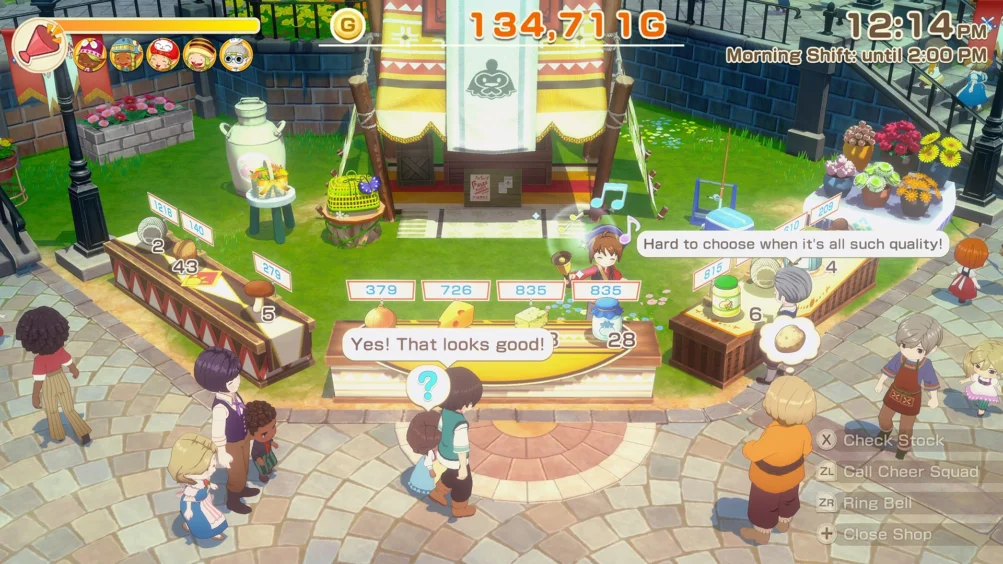
This was somewhat relieved when I gained access to wonderstones in the late game, which modify how they work, but even this only helped matters a smidge. The game also suggests that windier days cause objects to be processed faster, but the difference seemed mostly negligible in the scheme of things.
The exception to this is cooking, which is done in your home kitchen. You start with very few recipes, but more are earned through quests and by eating bought foods – magically, you learn the recipe simply by eating! Logic aside, I think it’s a brilliant idea that more games should use. I also like how you can add other ingredients to certain recipes to improve their overall rating, thus allowing more flexibility and freedom to use your resources in a multitude of ways. Overall, the farming and crafting mechanics are some of the most engaging seen in the series so far.
Exploration and Discovery
Exploring the town is also a joy. Early on, you are given a glider, allowing you to easily travel on the town’s strong winds to inaccessible areas, and overall, you’re given a lot of freedom to just run, jump and climb all over town.
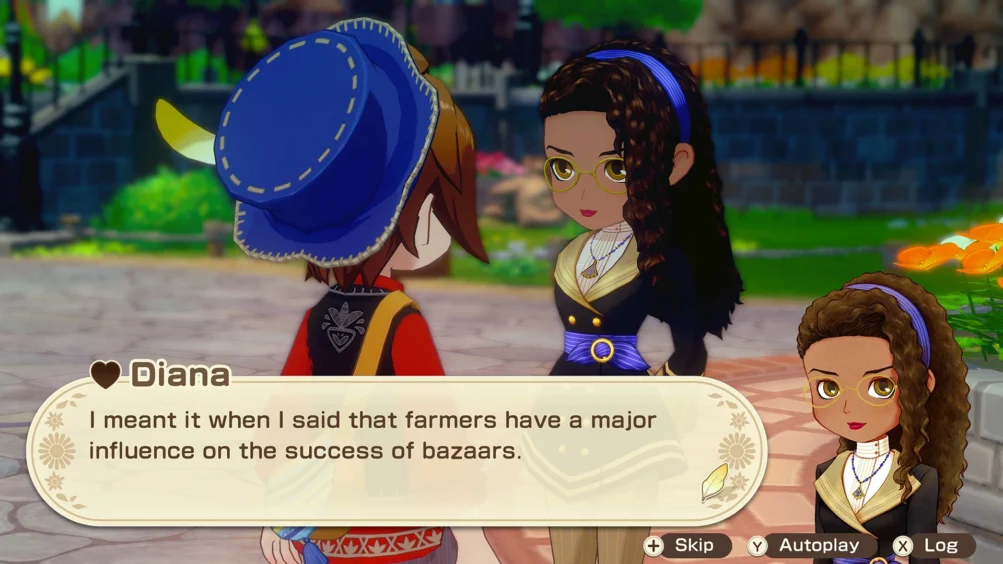
Every day, items like flowers, herbs, mushrooms, rocks, and wood respawn on the ground across your farm, the Waterfall area, and the town. These are collected using your standard tools – thankfully kept separate from your inventory. It’s a simple pick-up mechanic, but it encourages you to explore every corner of the map daily. Fishing in Story of Seasons Grand Bazaar is also more engaging than your typical button-mashing mini-game.
Fishing and Gameplay Variety
When a fish bites, you start a reeling mini-game where you must quickly and accurately follow directional prompts on screen to wear the fish out. Fail to follow the prompts, and your line strength (the green bar) drops. If it empties, the fish gets away. It’s a nice balance between patience and quick reflexes. To make catching the biggest fish manageable, you can buy the Reel Power technique from Felix at the Bazaar, which gives you a random chance to trigger a button prompt that massively tires out the fish.
Usually, I actively avoid fishing, but Story of Seasons: Grand Bazaar makes it a genuinely interesting and addictive pursuit.
Characters, Relationships, and Events
As you go about your gentle life, you can interact with a cast of varied and vibrant characters, each with their own relationships, likes and dislikes. It’s pretty standard, but the voiced events, daily banter and quality of writing are a real step up from previous SoS titles. I enjoy the straightforward way events and side quests are flagged on the map, though the fact that these automatically push the time forward did catch me off guard a few times and mess up my plans.
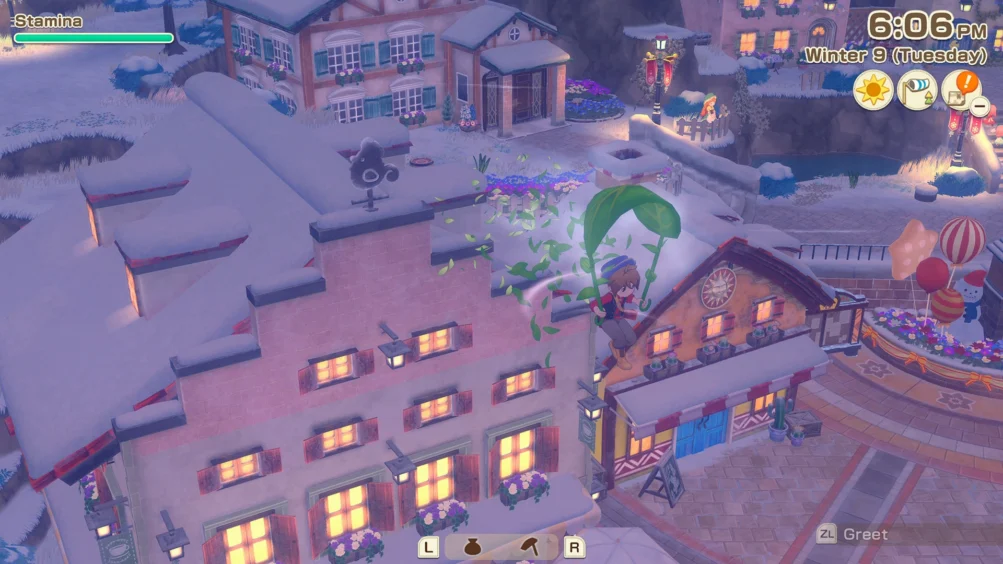
You build relationships through chatting to villagers, giving them gifts, taking part in seasonal events and completing requests, though a feature I found really useful was the ability to greet without having to actually enter conversations, speeding up my daily rounds. You also build relationships with your pets, and an interesting extra level here is the way in which pets can be trained; yes, you can actually put your feline freeloaders to work taking livestock out to graze.
Final Thoughts
There’s a lot more I could go into, from the multitude of unique and interesting seasonal events which never felt unwelcome, the ability to upgrade the base level of foraged goods through sprites and the various competitions which offer trophies and crop upgrades in the long run, but suffice to say there is a lot of content here and it kept me constantly engaged for tens of hours.
It’s not all perfect; I would have liked a bit more post-story content, the actual main questline could have been deeper, and I’d have preferred the ability to customise my home and appearance a little more to my tastes, but these are minor issues. I haven’t been this engrossed in a farming sim since I first played Stardew Valley, and frankly, Marvelous have done a fantastic job of making Story of Seasons Grand Bazaar stand out from the competition.
I can easily recommend Story of Seasons Grand Bazaar as a breath of fresh air in a crowded genre. Whether this is your first Story of Seasons or you’re a veteran, you’re sure to find something to love.
A Brief Note on Platform Differences
I was able to experience Story of Seasons Grand Bazaar on both the original Nintendo Switch and Nintendo Switch 2. On Nintendo Switch 2, it’s a flawless experience which runs at a solid 60fps and looks brilliant both in docked and handheld. On Nintendo Switch 1, however, things aren’t as smooth, with a much lower frame rate, noticeable drops and a somewhat delayed feel to the controls. Whilst it’s enjoyable on both, I’d definitely recommend playing on Switch 2 or PC if you can.
Story of Seasons Grand Bazaar Trailer
Read more awesome reviews >>here<<.
Game code was provided to us for the express purpose of reviewing.




You must be logged in to post a comment.