
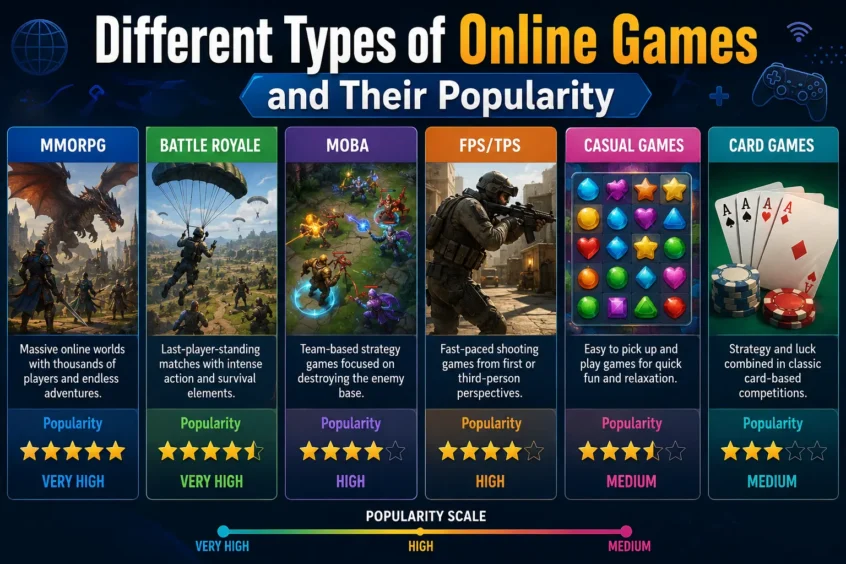
Online games have become a major part of modern entertainment, attracting millions of players worldwide every day. People join online games for different reasons: competition, cooperation with friends, or simple relaxation after work or study. A key reason for this popularity is the wide variety of game formats available today. Some online games focus on large shared worlds where players develop characters and complete long-term objectives, while others are designed for quick sessions that last only a few minutes on a phone or computer.
Different formats appeal to different player habits, devices, and levels of commitment. Let’s look at the most popular types of online games to understand why certain genres attract large and active gaming communities.
Massively Multiplayer Online Games
Massively multiplayer online games remain one of the most recognizable forms of online gaming. These titles place thousands of players inside the same persistent world where they can cooperate, compete, and build long-term characters. Games such as World of Warcraft, Final Fantasy XIV, and EVE Online demonstrate how large virtual environments can maintain player communities for years. Players often join guilds, participate in large-scale raids, and trade resources within complex in-game economies.
The long lifespan of these games comes from continuous updates that introduce new regions, storylines, and challenges. One reason MMO games maintain strong popularity is their ability to create social commitment. When players invest time developing a character or building relationships with other players, they are more likely to return regularly. For example, Final Fantasy XIV experienced a dramatic surge in players after its major expansion updates, demonstrating how strong narrative content and community engagement can revive interest in an existing title.
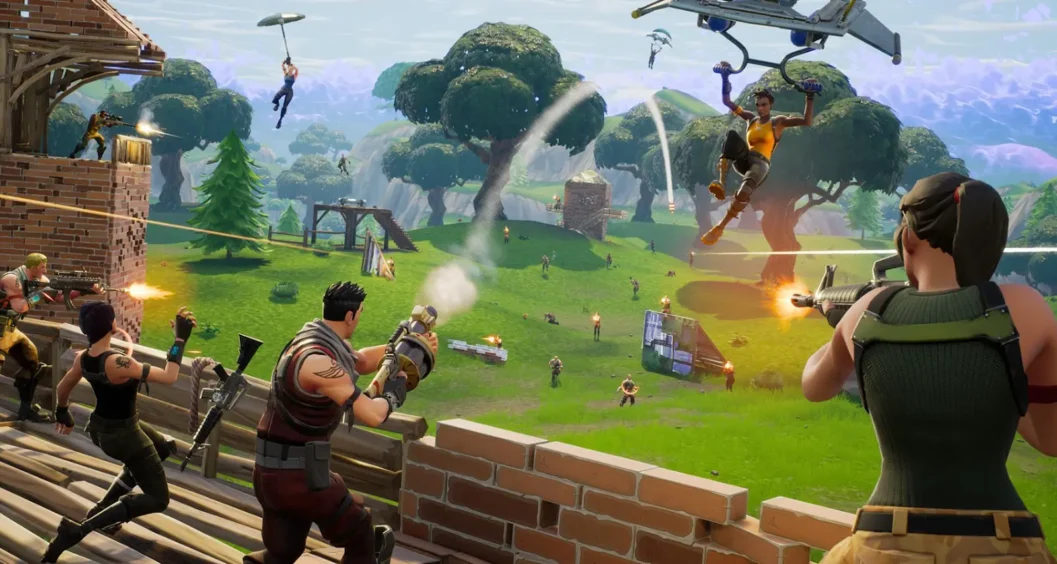
Some large-scale online titles such as Fortnite also rely on frequent seasonal updates that introduce new mechanics, environments, and cosmetic items. MMOs combine persistent social worlds and ongoing updates, appealing to dedicated gamers and driving sustained high engagement.
Mobile Games
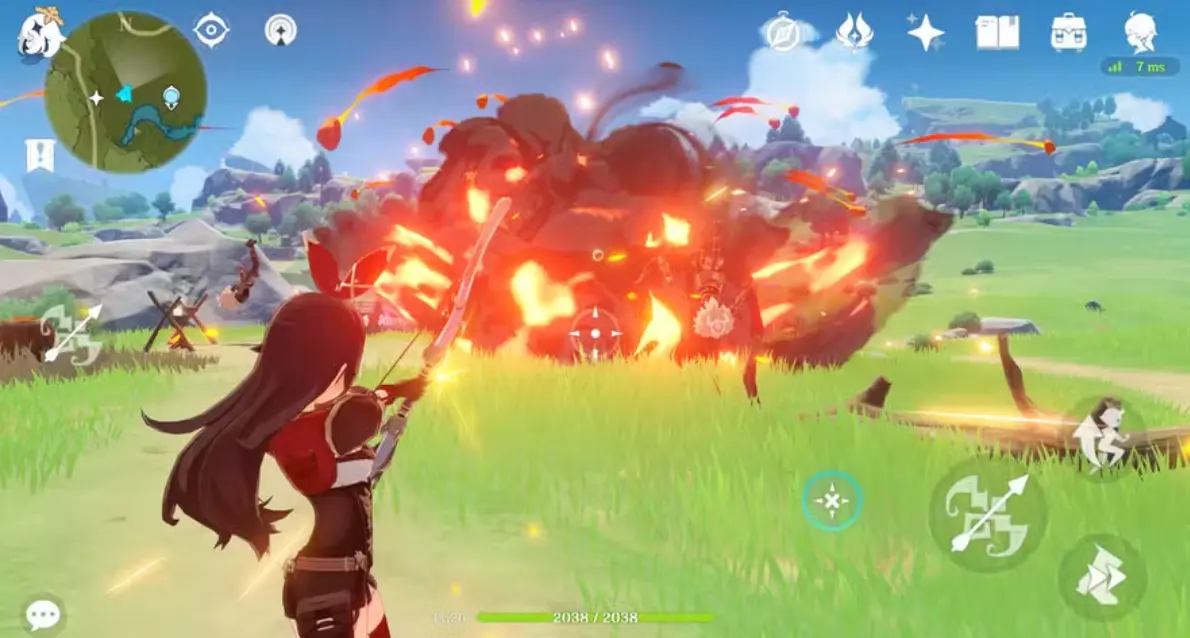
Mobile games are titles designed primarily for smartphones and tablets. They range from simple puzzle games to complex RPGs, but all are designed around touchscreen controls and constant internet connectivity. Well-known titles in this category include Candy Crush Saga, Clash of Clans, Genshin Impact, and Pokémon GO. Candy Crush Saga alone has been downloaded over 2.7 billion times (across its series) and has generated more than $20 billion in lifetime revenue.
This highlights the massive scale mobile games can achieve. Mobile games are hugely popular because virtually everyone carries a powerful gaming device in their pocket. Their appeal comes from convenience (play anywhere, anytime), short session lengths (ideal for casual play), and often a free-to-play business model with in-app purchases. Many mobile titles incorporate social features (friend leaderboards, multiplayer raids) that further boost engagement. Frequent updates, daily rewards, and live events (for example, limited-time challenges in Genshin Impact) keep players returning. Mobile games thrive on accessibility and engaging gameplay loops supported by social features.
Online Casino Games
Online casino games are digital versions of traditional gambling activities played through websites or mobile applications, usually involving real-money wagers. This category includes slot machines, poker, blackjack, roulette, and live dealer tables that stream real hosts in real time. Players choose this format because it allows them to access familiar casino games without visiting a physical venue. Modern platforms are optimized for both desktop and mobile devices, which means players can join a session at almost any moment of the day.
Continuous improvements in graphics, streaming quality, and game variety have helped this segment grow steadily in recent years. Many operators also attract new players through welcome bonuses or trial offers that allow them to explore the platform. For example, some players discover platforms such as Jackpot City through welcome offers that may include a voucher code, giving them an opportunity to try several games and understand how the platform works before committing to longer sessions.
Combined with convenient access and a large catalog of games, these bonuses explain why online casino platforms continue to attract a significant audience.

Competitive Online Games
Competitive online games revolve around direct matches between players where skill, teamwork, and strategic decisions determine the result. These games focus on fair competition supported by ranking systems and matchmaking that pairs participants with opponents of similar ability. Most matches last from twenty minutes to about an hour, giving players enough time to coordinate tactics, communicate with teammates, and react to changing situations during play.
Some of the most influential competitive games are Counter-Strike 2, League of Legends, Valorant, and Dota 2. Each title has built a long-lasting player community through ranked divisions that allow players to progress as their skills improve. League of Legends attracts millions of active players thanks to regular seasonal updates and evolving character balance. Counter-Strike remains relevant after more than two decades because its gameplay rewards precision, teamwork, and tactical planning.
Competitive online games are also closely connected to professional esports. International tournaments for games such as Dota 2 and Valorant gather large online audiences and offer substantial prize pools. Live broadcasts and streaming platforms allow players to follow professional teams, study advanced strategies, and improve their performance in ranked matches. This competitive environment encourages long-term engagement and keeps player communities highly active.
Browser-Based Games
Browser-based games are online titles that run directly in a web browser without requiring installation. Modern versions rely on HTML5 and WebGL technologies that allow developers to create multiplayer and visually complex experiences directly on the web. Popular examples include Agar.io, Slither.io, and strategy titles such as Forge of Empires. One reason these games remain popular is their instant accessibility on almost any device with an internet connection.
A user can open a browser tab and start playing within seconds, which makes this format particularly appealing for short sessions during breaks or casual play with friends. Although mobile games dominate the global market today, browser games continue to maintain a stable audience thanks to their convenience and cross-platform accessibility. Many multiplayer .io games demonstrate how simple browser formats can still attract large communities through competitive gameplay and easy access.




You must be logged in to post a comment.