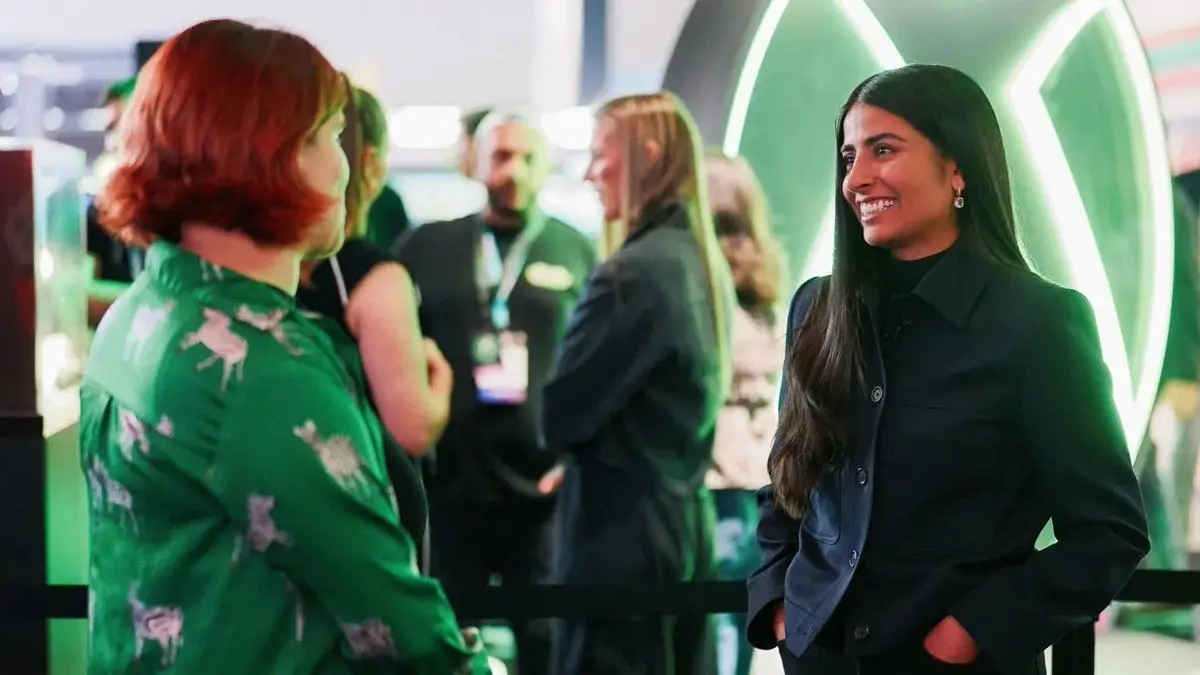
Xbox is facing a very different hardware market than the one it entered with the Xbox Series generation, but according to Xbox CEO Asha Sharma, the answer isn’t to retreat — it’s to rethink what an Xbox actually is.
Speaking to the BBC at Gamescom 2026, Asha Sharma discussed everything from the rising cost of hardware and components to physical game ownership, backwards compatibility, Project Helix, Halo and Microsoft’s ambitions to dramatically expand the Xbox audience.
And perhaps most importantly, Xbox appears increasingly willing to accept that the future of the platform won’t necessarily mean everyone playing on an Xbox-branded console.
That could be one of the biggest changes to Microsoft’s strategy yet.
Xbox Admits the Industry Is Going Through a Hardware Crisis
One of the most interesting parts of the interview was Asha Sharma ‘s description of the current gaming industry as being in a period of significant disruption.
She pointed towards changing consumer behaviour following the COVID-era boom, the arrival of new technologies and, particularly, the rising cost and availability of components.
For Xbox, that means the traditional approach of simply pushing hardware performance higher isn’t enough anymore.
Asha Sharma said the next generation needs to consider efficiency and affordability alongside performance.
That’s a particularly important statement when you consider how expensive gaming hardware has become.
GPUs, memory and storage have all faced pricing pressures, while the enormous demand for components from the AI industry has added another layer of competition.
From our perspective, this could ultimately be good news for consumers.
The console industry has traditionally been about selling the next machine as something faster and more powerful than the previous one. But if the cost of producing that hardware continues to rise, manufacturers may have to become considerably more creative.
Instead of simply asking “How powerful can the next Xbox be?”, Microsoft increasingly seems to be asking:
“How much gaming can we deliver for the money?”
That could be far more important.
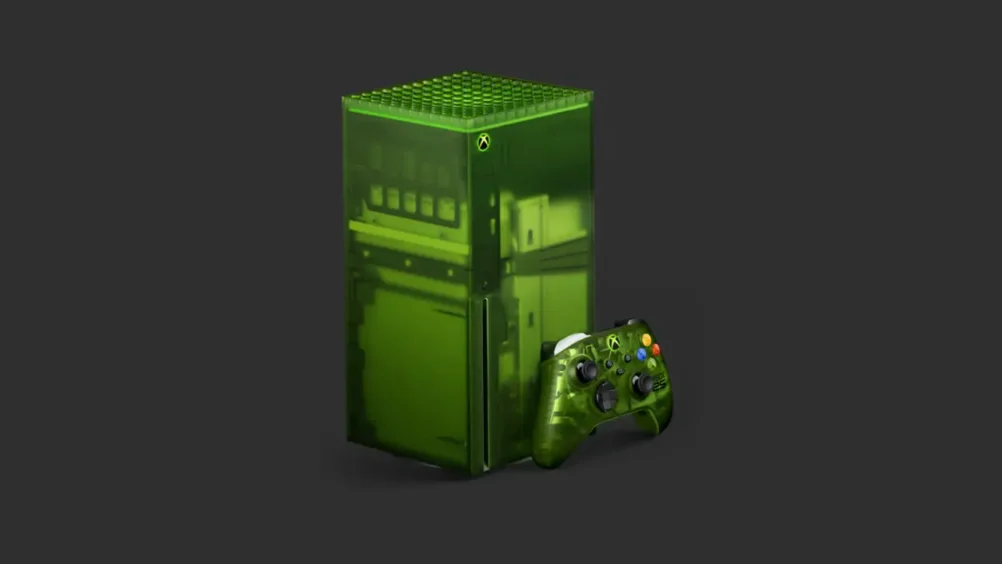
Physical Games Aren’t Being Abandoned
Microsoft also used Gamescom to announce an interesting development for physical game owners.
According to Asha Sharma , around 1,000 Xbox titles with physical discs are being given a digital entitlement, allowing players to benefit from digital library functionality while still owning the physical version.
Microsoft’s broader message is that players shouldn’t have to choose between physical and digital gaming.
That’s something we strongly welcome.
Physical media has increasingly felt like the forgotten part of the gaming ecosystem. While digital libraries are convenient, physical games provide something digital purchases often don’t: something tangible that players can actually keep.
There’s also the second-hand market to consider.
Asha Sharma explained that the digital entitlement is tied to the physical ownership model, meaning that if the physical disc is sold, the associated entitlement goes with it.
That’s an interesting approach because it attempts to bridge two worlds that have traditionally been kept separate.
Whether this becomes a genuinely consumer-friendly solution will depend heavily on exactly how Microsoft implements it across the wider Xbox ecosystem.
But the direction itself is encouraging.
Your Xbox Library Is Becoming More Important Than Your Xbox
This brings us to one of the biggest questions surrounding Microsoft’s strategy.
If your games can follow you between devices, why do you actually need an Xbox console?
It’s a perfectly reasonable question.
Asha Sharma ‘s answer was essentially that the Xbox console will remain the reference experience, but Microsoft also accepts that people increasingly want to play elsewhere.
PC is already a major part of Microsoft’s strategy. Xbox games and services are increasingly appearing on Windows, while Microsoft’s wider gaming ecosystem now extends well beyond a traditional console.
And that’s where Xbox’s future becomes particularly interesting.
Microsoft isn’t necessarily trying to make every player buy an Xbox.
It appears to be trying to make Xbox something players can access wherever they happen to be playing.
That’s a significant distinction.
Sony and Nintendo still have enormous value tied to their dedicated hardware ecosystems. Microsoft appears increasingly comfortable treating hardware as one doorway into Xbox rather than the entire house.
Project Helix Remains Microsoft’s Big Mystery
Naturally, the BBC interview attempted to get more information about Microsoft’s next-generation hardware, currently known as Project Helix.
Asha Sharma wasn’t giving anything away.
Asked whether Helix would be disc-free, the response was effectively a polite version of “nice try”.
Microsoft confirmed that it is working on a new generation and a family of devices, but declined to provide further details.
That lack of information is becoming increasingly interesting.
Microsoft has already spoken about the next generation being capable of bringing PC gaming and console gaming closer together, while also placing greater emphasis on efficiency and affordability.
If that really is the philosophy behind Helix, we could be looking at a considerably different Xbox hardware strategy.
Rather than one expensive flagship console, Microsoft could potentially offer a family of devices designed around different price points and ways of playing.
For consumers, that could be considerably more attractive than forcing everyone into the same hardware tier.
Halo Isn’t Being Forgotten
There was also some reassurance for Halo fans.
The franchise has struggled to maintain the same cultural dominance it enjoyed during its peak, and the BBC directly asked what Microsoft intends to do to bring the series back to the top.
Asha Sharma described Halo as an important part of Xbox’s portfolio and highlighted its history and heritage.
More importantly, Microsoft says there will be more news about Halo in the future.
That’s not exactly a huge announcement, but it does confirm something that has become increasingly important: Microsoft still sees Halo as a major Xbox franchise.
And frankly, it needs to.
Halo isn’t simply another Xbox game. For many players, particularly those who grew up with the original Xbox and Xbox 360, Halo is part of the identity of the platform itself.
The challenge for Microsoft isn’t necessarily creating another Halo game.
It’s creating a Halo game that feels important again.
Elder Scrolls 6 Gets the Most Xbox Answer Possible
There was inevitably a question about The Elder Scrolls 6 and whether it will remain exclusive to Xbox.
Asha Sharma ‘s answer?
It’s a beautiful game.
That’s about as close to a non-answer as you can get.
However, the wider comments were more revealing.
Microsoft acknowledged that a platform needs exclusive experiences, pointing towards games such as Gears and Fable as examples.
That suggests that despite Microsoft’s increasingly multiplatform approach, exclusives haven’t completely disappeared from the strategy.
Instead, Microsoft appears to be trying to decide where exclusivity makes the most sense while balancing the commercial reality of selling games to as many players as possible.
That makes the eventual strategy surrounding The Elder Scrolls 6 particularly fascinating.
Xbox Wants a Billion Players a Day
Perhaps the most ambitious statement from the interview was Microsoft’s continuing aspiration to dramatically expand the Xbox audience.
Asha Sharma talked about Xbox ultimately reaching one billion players a day.
That isn’t a target that can realistically be achieved by selling traditional consoles alone.
And that’s the point.
Microsoft already has access to enormous audiences through Windows, PC gaming, cloud services, mobile gaming and its growing publishing operation.
The Xbox brand is therefore becoming much broader than the plastic box sitting underneath your television.
Microsoft also highlighted its growing relationship with independent developers, particularly in Europe.
According to Asha Sharma , a significant proportion of the indie developers added to the Xbox ecosystem over the previous six months came from Europe.
That’s particularly relevant at Gamescom.
Europe remains one of the most important gaming regions in the world, and Cologne gives Microsoft a chance to put Xbox directly in front of developers and players from across the continent.
Microsoft Says Xbox Is Growing in Europe
The European market has traditionally been a challenging one for Xbox compared with some other territories.
Asha Sharma nevertheless claimed that Xbox is growing in Germany and across Europe, while also pointing to year-on-year growth in the UK.
Microsoft clearly believes its upcoming software line-up can help strengthen that position.
And there’s certainly plenty for Xbox to point towards.
Fable, Gears, Call of Duty, Dungeons and other major releases give Microsoft a substantial software pipeline heading into the next stage of the generation.
There’s also Grand Theft Auto VI looming over the entire industry.
Asha Sharma suggested that the Xbox Series S could become the most affordable way to play GTA, which could give Microsoft’s lower-cost console an interesting second wind when Rockstar’s blockbuster finally arrives.
Whether that translates into a meaningful boost for Xbox remains to be seen.
Xbox Doesn’t Want One Business Model
Another particularly important point was Microsoft’s rejection of the idea that Xbox will eventually become purely subscription-based.
Game Pass is obviously central to Microsoft’s strategy, but Asha Sharma made it clear that Microsoft doesn’t expect there to be a single business model that works for everyone.
That’s sensible.
Gaming audiences are incredibly diverse.
Some players want to buy £70 games individually. Others prefer subscriptions. Some buy physical discs. Others haven’t purchased a physical game in years. Some play exclusively on consoles, while others move between PC, console and mobile devices.
Trying to force every player into one model could ultimately limit Microsoft’s audience.
Instead, Microsoft appears to be heading towards a world where Xbox provides multiple ways to access games and services.
And that may ultimately be the company’s biggest competitive advantage.
Xbox Isn’t Retreating — But It Is Changing
Perhaps the most important takeaway from the interview is Asha Sharma ‘s repeated insistence that Xbox isn’t retreating.
Microsoft knows it is operating in a difficult environment.
Hardware costs are increasing. Component demand is changing. Consumer habits have shifted. PC gaming continues to grow. Subscription models are evolving. And the traditional console market is no longer the only place where players spend their time.
But rather than doubling down on the old Xbox model, Microsoft appears to be attempting something considerably more ambitious.
It’s trying to turn Xbox from a console into an ecosystem.
Your games can follow you.
Your physical purchases can potentially become part of digital libraries.
Your Xbox experience can exist on console and PC.
New hardware is being designed around affordability as well as performance.
And Microsoft wants billions of people to interact with Xbox regardless of what device they use.
That strategy carries risks.
If Xbox becomes too platform-agnostic, Microsoft could potentially weaken the reason for consumers to actually purchase its hardware. On the other hand, if the company can make Xbox synonymous with gaming access rather than simply a particular piece of hardware, its potential audience becomes enormous.
For us, that’s the most interesting part of Microsoft’s current strategy.
The next Xbox may not simply be about building a better console.
It could be about deciding whether “Xbox” even needs to mean console anymore.
This article is based on comments made by Xbox CEO Asha Sharma during an interview with BBC News at Gamescom 2026. The BBC interview provided the source material and context for the comments discussed above; this article has been independently written and includes our own analysis and commentary.
Source: BBC News, Xbox CEO on the “crisis” facing gaming hardware, Gamescom 2026.
If you enjoy games and gaming and want more NEWS from the Gaming World Click Here