
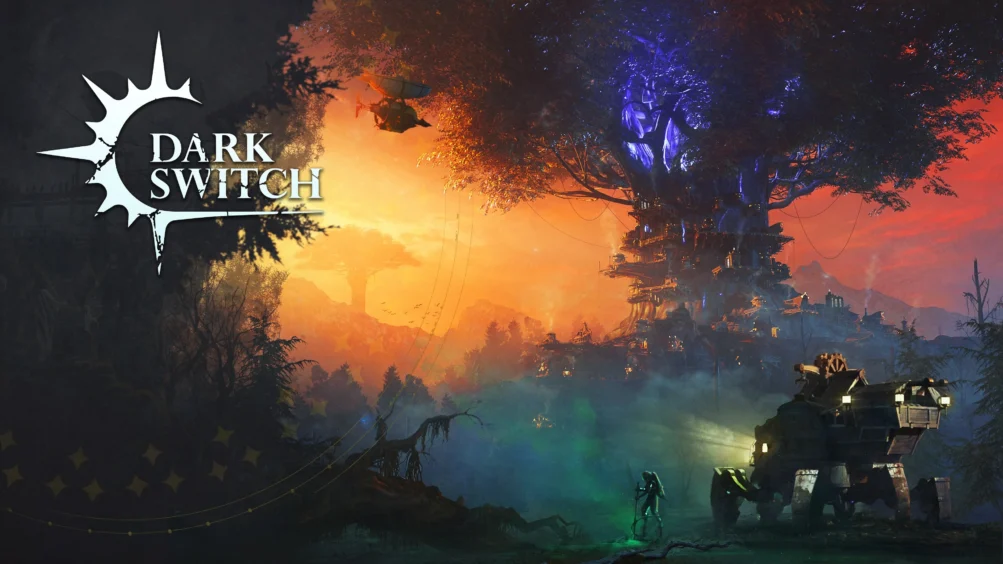
There are moments in DarkSwitch where everything suddenly clicks together. Your settlement is hanging onto survival by a thread, the fog is slowly climbing the roots beneath your city, citizens are panicking, resources are drying up, and yet somehow you are still trying to expand upwards into the branches of a colossal tree that now feels like humanity’s final sanctuary.
Those moments are where Cyber Temple’s ambitious survival strategy game becomes genuinely unforgettable.
But there is another side to DarkSwitch, and unfortunately it appears almost as often as the brilliance. Camera frustrations, AI pathfinding issues, balancing problems, interface annoyances, and technical bugs regularly interrupt what could have been one of the most creative city builders in years.
That leaves DarkSwitch in a strange position. It is one of the most interesting strategy games released in 2026, yet also one of the most frustrating.
After spending dozens of hours with the PC version, it feels like a game that is balancing on the edge of greatness while constantly threatening to collapse under the weight of its own ambition.
DarkSwitch launched on PC in April 2026 from developer and publisher Cyber Temple, combining vertical city building, survival management, exploration, and tower defense mechanics inside a dark fantasy world dominated by a deadly fog. The game quickly drew comparisons to Frostpunk, but once you begin playing it becomes clear that DarkSwitch is trying to carve out its own identity rather than simply imitate existing survival builders.
A Brilliant Core Concept
The central idea behind DarkSwitch is exceptional.
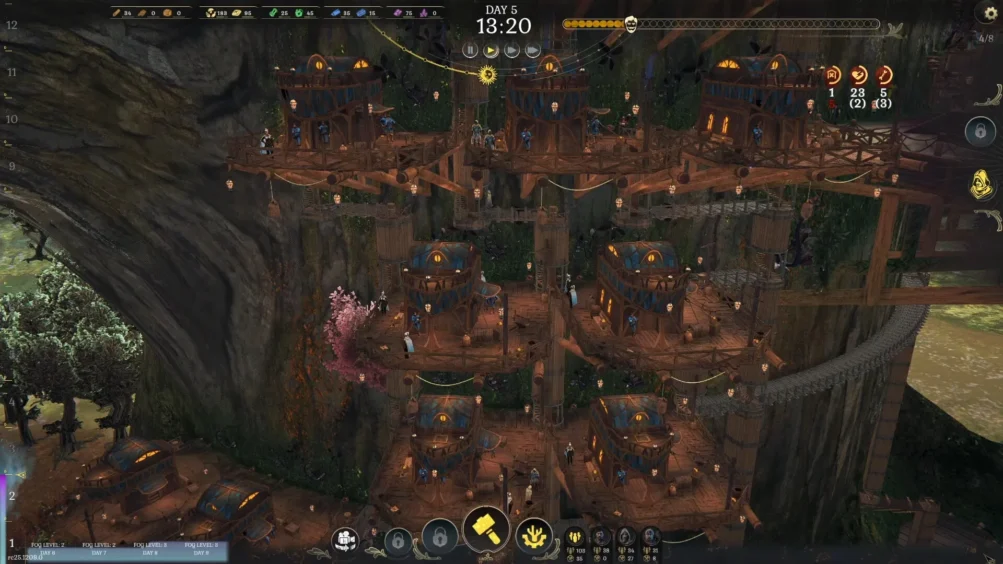
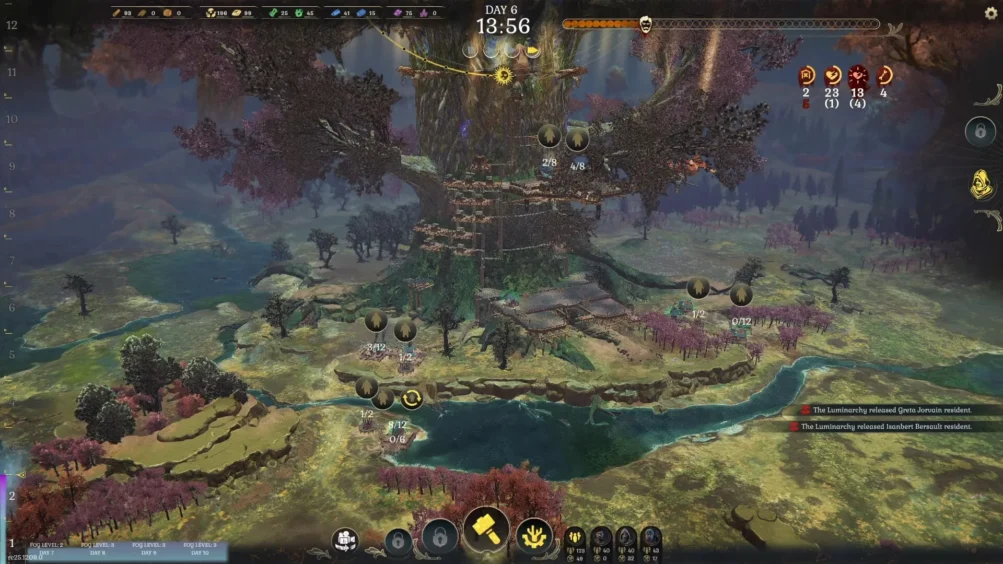
Instead of building across open land like most strategy games, your entire civilisation exists vertically around a gigantic tree towering above a lethal sea of fog. The world below has effectively become uninhabitable, forcing survivors to build upwards across branches, platforms, suspended bridges, stairways, elevators, and ziplines.
That single design choice changes the entire flow of city management.
Space becomes incredibly limited. Expansion requires careful planning. Logistics suddenly matter far more than expected because transporting resources vertically is significantly slower than simply laying roads across flat terrain. Important facilities need to remain higher up the tree where the fog cannot reach as easily, while lower districts constantly risk being swallowed by darkness during dangerous surges.
The result is a strategy game where city layout feels genuinely important rather than simply aesthetic.
Many survival city builders eventually fall into predictable routines where players optimise placement patterns and repeat them every playthrough. DarkSwitch avoids that problem surprisingly well because the vertical structure forces constant adaptation.
You are never simply expanding outward. You are trying to survive within a limited, layered ecosystem where every new structure creates additional complications.
That tension remains engaging for most of the campaign.
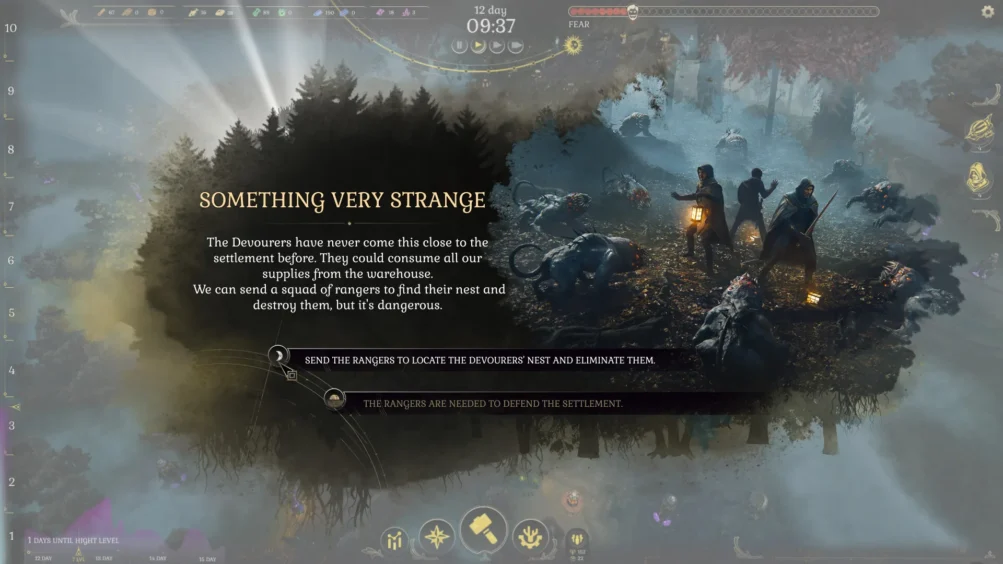
The fog itself is also an excellent mechanic. Rather than acting as a simple environmental hazard, it becomes the defining threat hanging over every decision you make. Exposure damages morale, causes madness, creates panic, and unleashes creatures that attack your settlement. Managing light sources becomes essential, creating a constant balancing act between exploration, defence, production, and survival.
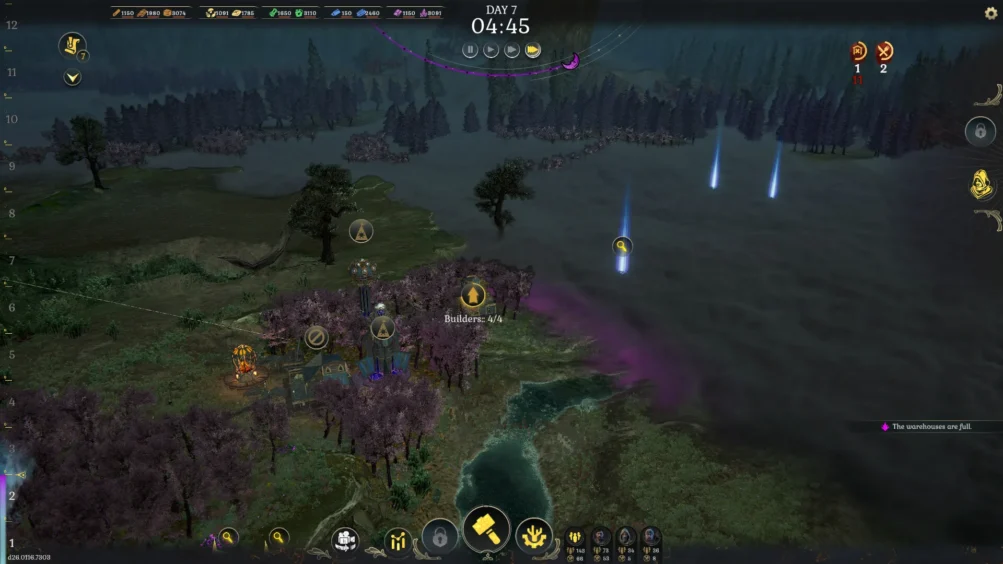
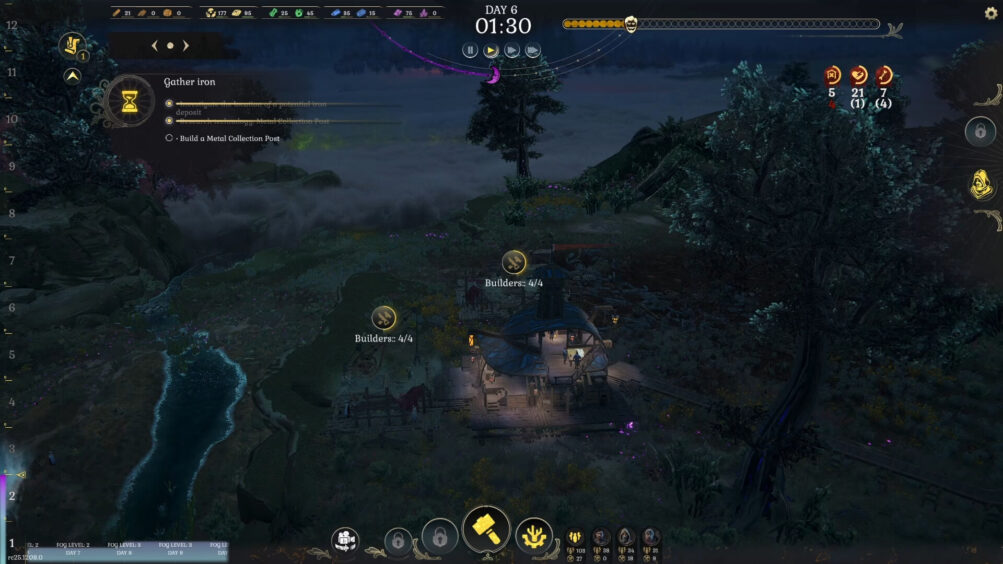
There is a heavy horror atmosphere throughout the game that genuinely works. The visual design constantly reinforces the feeling that civilisation is barely surviving against an overwhelming force. Lanterns flicker in the darkness while enormous roots disappear into endless fog below your city.
At times it almost feels closer to survival horror than a traditional city builder.
The soundtrack deserves enormous praise as well. Akira Yamaoka, best known for his work on Silent Hill, delivers exactly the kind of oppressive, melancholic atmosphere this world needed. The music constantly enhances the dread without becoming overbearing, and several quieter tracks during late-night resource management sessions become strangely hypnotic.
The Best Parts Feel Truly Original
What makes DarkSwitch stand out is how many systems interlock together.
Exploration missions matter because resources are scarce. Resource scarcity matters because your settlement requires constant expansion. Expansion matters because the fog keeps evolving. The fog matters because citizen morale can spiral into disaster if you lose control.
Few modern strategy games create this level of interconnected pressure.
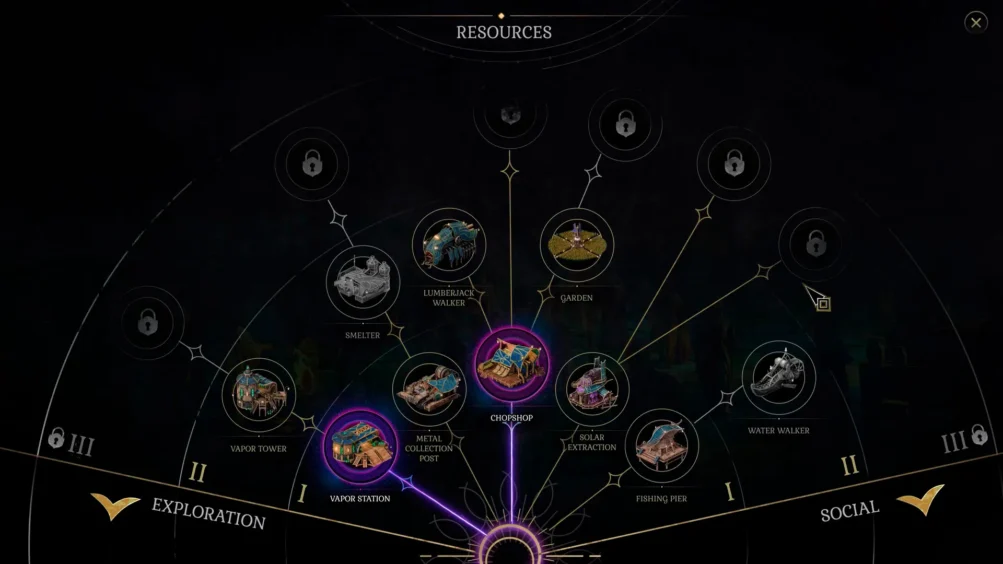
The moral decision system also deserves credit. Choices are rarely simple good-versus-evil decisions. Instead, they often feel like desperate compromises designed to preserve survival at the cost of humanity.
Some decisions involve sacrificing lower districts to protect essential infrastructure higher up the tree. Others force you to choose between preserving morale or ensuring long-term sustainability. The game repeatedly asks uncomfortable questions without offering clean solutions.
When everything works together, DarkSwitch becomes incredibly immersive.
You stop thinking about menus and systems and instead begin thinking like a leader trying to prevent societal collapse. That is where the game reaches its highest points.
The campaign structure also helps maintain momentum. Story-driven objectives constantly introduce new pressures, new mechanics, and fresh complications before systems become repetitive. There is enough narrative focus to give progression meaning without overwhelming the strategy mechanics.
Visually, the game has a distinctive identity as well. The giant tree remains impressive throughout the entire campaign, and some late-game settlements genuinely look stunning once zipline networks, defensive lighting systems, suspended housing districts, and industrial machinery begin covering the branches.
There is a strong sense of physical presence to your city.
Unfortunately, The Technical Problems Are Real
As strong as the core design is, the PC version of DarkSwitch regularly struggles to support its own ideas.
The biggest issue is consistency.
One hour everything feels fantastic. The next hour a bug destroys an entire production chain, citizens stop responding properly, or the camera begins fighting against you during an attack sequence.
Camera control is arguably the game’s single most frustrating problem.
Because your city wraps around an enormous tree, visibility constantly becomes an issue. Buildings disappear behind branches, foliage blocks important structures, and rotating the camera often feels awkward rather than smooth. Trying to locate specific facilities during emergencies becomes unnecessarily difficult.
In calmer moments this is merely irritating. During large-scale fog attacks it becomes genuinely disruptive.
The interface design also lacks clarity in places. Certain management menus feel overcomplicated while some vital information becomes harder to access than it should be. Strategy games live or die based on readability, and DarkSwitch sometimes forgets that.
Then there are the bugs.
And unfortunately, there are a lot of them.
During my time with the game I encountered pathfinding problems, workers becoming stuck, strange AI behaviour during combat sequences, inconsistent resource calculations, and occasional progression issues. Some bugs are minor annoyances while others can completely derail hours of careful planning.
That inconsistency creates a strange emotional disconnect while playing.
You can clearly see the incredible game hidden underneath everything. The ambition is obvious. The creativity is obvious. The atmosphere is excellent.
But the polish simply is not there yet.
Performance On PC
Performance is mixed depending on hardware and settlement size.
On stronger systems the game generally runs well during early and mid-game sections, but larger settlements can introduce noticeable framerate drops, especially once multiple layered districts and large fog effects begin appearing simultaneously.
Loading times remain reasonable, and visually the game scales well across different settings, although optimisation still needs additional work overall.
The art direction often compensates for technical roughness. Even when performance dips, the atmosphere remains compelling thanks to strong lighting, environmental design, and audio work.
Still, this definitely feels like a game that would benefit from several more months of updates and optimisation.
A Strong Foundation That Needs More Time
There is something genuinely exciting about DarkSwitch.
Too many modern strategy games play safely, repeating formulas that have already proven successful. Cyber Temple deserves credit for trying something far more ambitious and creatively risky.
The vertical city-building system is not a gimmick. It fundamentally changes how you approach survival management. The fog mechanics create constant pressure. The atmosphere is outstanding. The soundtrack elevates the experience enormously.
When the game enters its rhythm, it becomes difficult to stop playing.
Unfortunately, it is also difficult to ignore the technical problems holding everything back.
This is not a disaster by any means. In fact, for strategy fans willing to tolerate rough edges, there is still a lot worth experiencing here. But it absolutely feels like a game that launched before reaching its full potential.
If Cyber Temple continues improving stability, AI behaviour, camera functionality, and interface clarity through future patches, DarkSwitch could eventually become one of the standout strategy games of this generation.
Right now though, it remains a fascinating but flawed experience.
DarkSwitch is one of the most creative survival city builders in years, delivering an atmospheric and genuinely original strategy experience. Unfortunately, technical problems and frustrating design issues stop it from fully reaching its incredible potential.
Darkswitch Trailer
Read more awesome reviews >>here<<.
The game was provided to us for the express purpose of reviewing.
Written by myself then edited and formed by my partner.
Reviewed on PC.



You must be logged in to post a comment.