
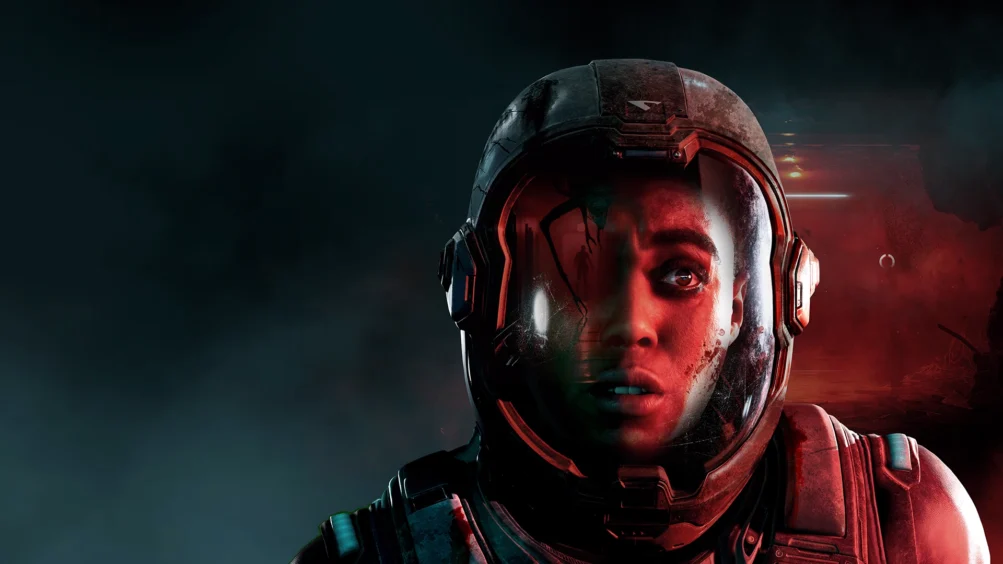
Directive 8020 is the latest cinematic horror game in the Dark Pictures Anthology of games by Supermassive Games. It is unlike anything that has come before in Supermassive’s portfolio of horror, and the main reason for this is that it delves into the vast world of science fiction.
Now you’ll see throughout this review that I’ll be referencing the Riddley Scott film ‘Alien’ quite a lot and that’s because (and I believe) Directive 8020 draws a lot of inspiration from this film. If I was to give a brief summary of what this game is like, I would say, picture a mix of Alien/Alien Covenant, Prometheus and John Carpenter’s The Thing all rolled into one.
When you think of Supermassive Games, you instantly think of their standout title ‘Until Dawn’. That game was the perfect concoction of cinematic gameplay and storytelling with a rich choice system and the perfect blend of horror (plus the standout cast). And Supermassive haven’t stopped there. Hidden Agenda, The Quarry and The Dark Pictures Anthology have all brought something new to the table while being able to tell interesting (and some B-Movie) style stories.
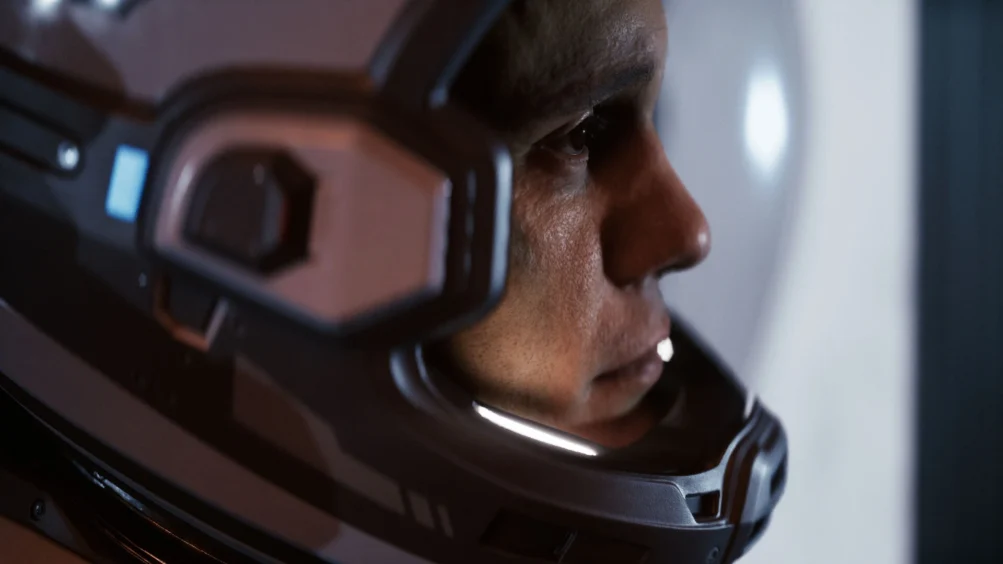
Why Should You Play Directive 8020?
So why should you play Directive 8020?
Firstly it takes everything from previous games and expands upon it. From gameplay, graphics and the choice system. Everything feels both fresh and upgraded at the same time.
But what sets it apart from say Alien Isolation?
Well for one it is a more cinematic experience in the sense you are playing out an 8 part movie rather than moving through a space station being hunted by an Alien. Each moment of Directive 8020 draws you further and further into the story and increases the tension.
Story
So what’s the story?
Earth is dying, and humanities only hope lies 12 light years away on the distant planet of Tau Ceti F. The crew of the Cassiopeia arrive in the system ahead of the sister ship the ‘Andromeda’. A colony ship carrying colonists ready to call Tau Ceti F their new home. While the crew of the Cassiopeia is 10 strong, 8 of them are in cryo-sleep. The other two ‘Carter’ and ‘Simms’ are sleep technicians and have been awake for the entire 4 year journey, monitoring the crew and the ships functions. A bit like David keeping a watchful eye over the Prometheus and her crew in ‘Prometheus’.
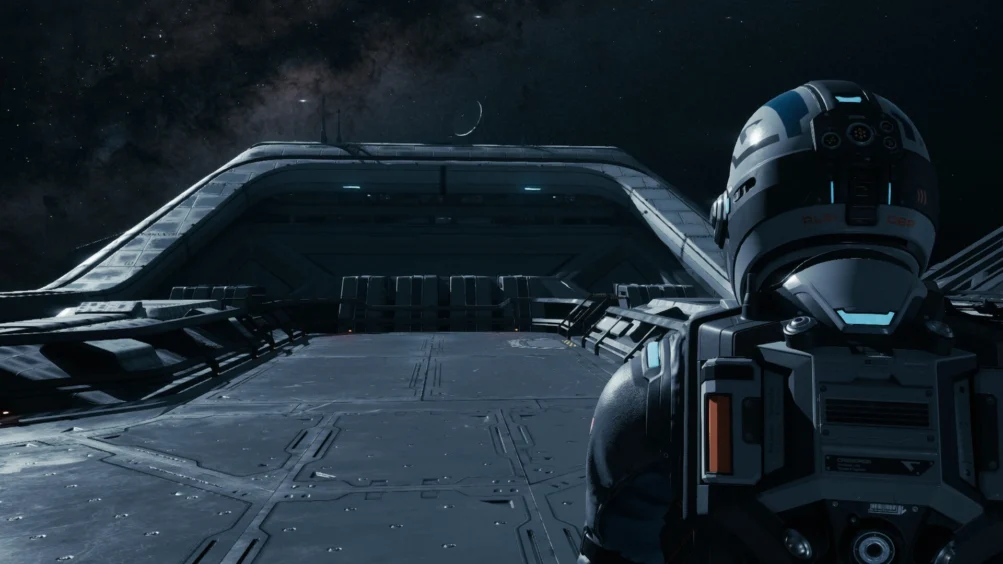
You spend the first episode as the sleep technicians, learning the backstory, the ship and where you are going. Near to the end of the first episode the ship is hit by an asteroid carrying an unknown lifeform and then Simms goes missing.
I will stop the story explanation there as this is one I really don’t want to spoil. However depending on the choices you make, you could have a completely different set of outcomes to what I experienced.
Which leads me onto the main crux of the gameplay. The choice system.
Most narrative driven games give the players choice to impact the story and give them different endings based on how they played. We’ve seen it in games like ‘Mass Effect’, previous ‘Supermassive’ games and most notably the games by Tell Tale. Directive 8020 makes no exception. It leans heavily on choice to the point that it encourages you to make multiple choices to see how the story plays out differently.
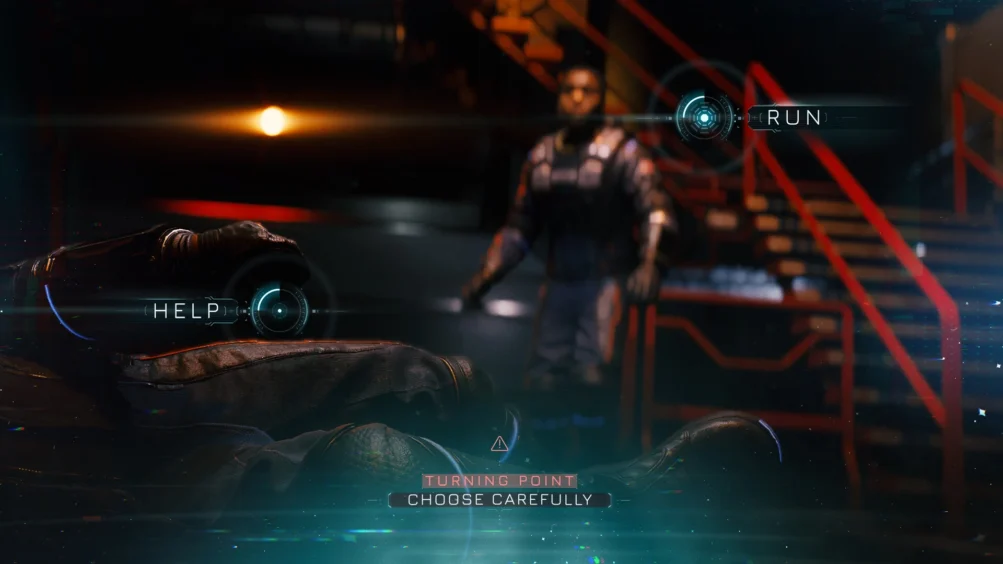
All of your choices are laid out for you on a timeline for each episode. When you make a choice that impacts the main plot, this is called a turning point. On the timeline turning points are highlighted and have multiple outcomes branching out from them. You can see which story path you are on as the branch from the turning point is highlighted. The beauty of this and what is special about Directive 8020 is that it gives you the ability to rewind turning points.
So if you made a choice that say got a character killed, you can rewind back to that turning point and try a different path. It gives the player freedom to experiment and to see the outcome of their choices in a new way that feels fresh. It also offers a ton of replayability by offering even more hours of fun to explore a different story path to the one you were on.
Gameplay
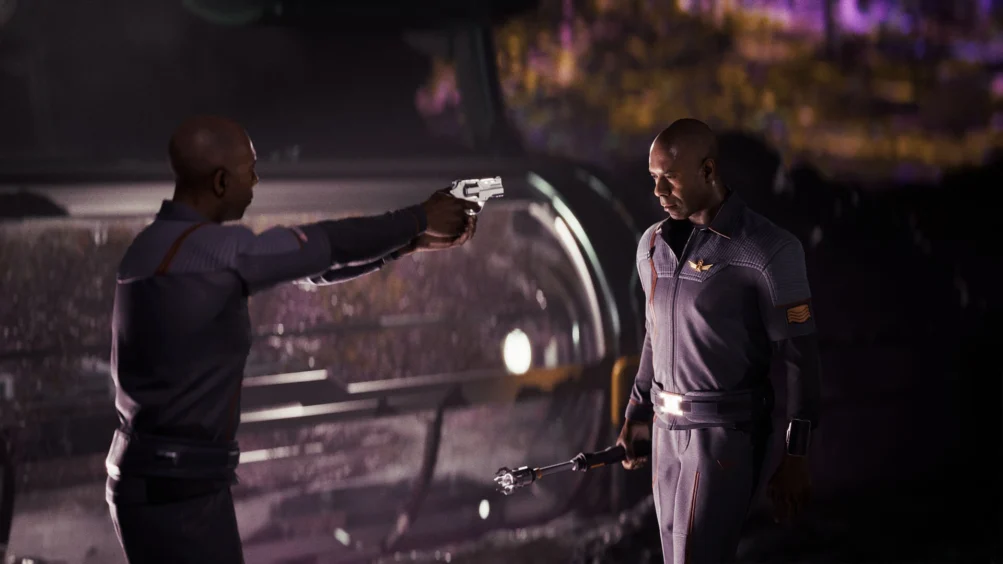
Aside from the choice system (and as previously mentioned) Directive 8020 is a pure cinematic experience. You have different mechanics at play to break it apart from falling prey of being a ‘walking simulator’. It has quick time events that are designed to catch you out and cause bad outcomes and character deaths.
Tense stealth sections where you must remain undetected from Alien ‘Mimics’ by crouching and carefully making your way around rooms without being spotted. In these sections glass on the floor can be your downfall as simply stepping on it can cause a loud crunch and instantly alert the aliens to your presence. However you can also distract the aliens to make a quick escape by activating nearby screens wirelessly via your wrist pad.
There is also a tense mini game involving unlocking doors, having to time your trigger clicks to the grey markers going around in a circle. Hit all of them and the door opens. However you are given an opportunity to open it in one go via an orange marker, however these are smaller and harder to hit. The action around you though doesn’t stop for you. So you could be attempting to open a door only to have an alien crop up behind you and kill you.
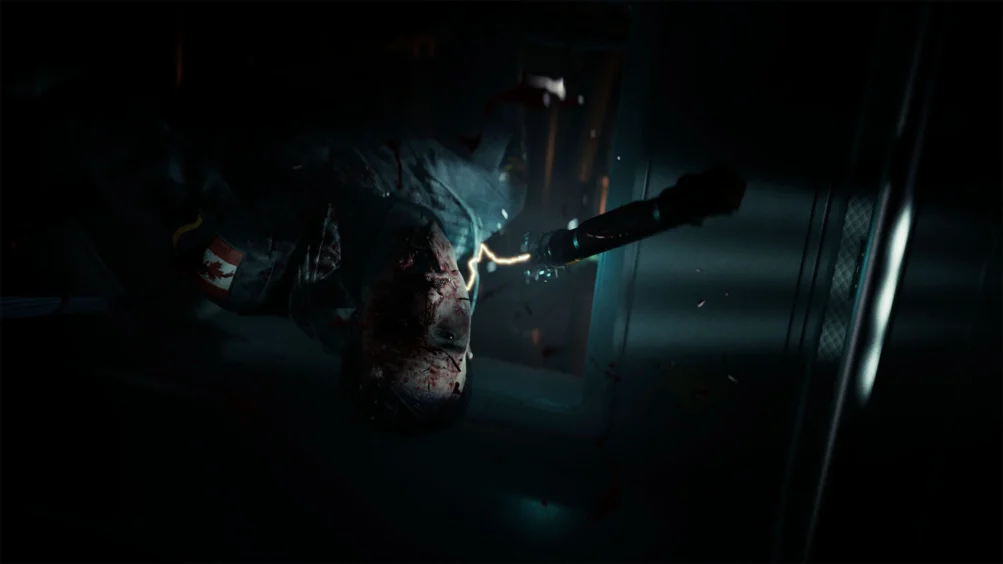
You do have the opportunity to stun the aliens with your electrical baton, however you have to time a quick time event in order to perfectly fend them off. You can also influence your character destinies and how each character is perceived by interacting with other members of the crew via emails on your wrist pad. I found this extremely helpful in gathering information to help me with who to trust as human.
Sound Design, Voice Acting & Music
The sound design in Directive 8020 is out of this world (pardon the pun). From the creepy sound effects of walking around the infected areas of the ship, to the sounds of the aliens moving through the air shafts with the potential to creep up on you at any moment all added to the tension and cinematic scope of the game. Other sound effects like the hum of the ship and the way the environment reacts to you all added to the level of immersion that this game creates.
The voice acting and overall motion capture of the actors was on par with some of the best that I’ve seen. Each character felt authentic with their performances. There wasn’t one week performance throughout. Each actor gave something to their role that made you feel for them and really root for them. (Honestly by the end of the game I was rooting for everyone and was so happy I managed to save them all).
The stand out performances for me was that of Captain Stafford played by Danny Sapani, ‘Young’ played by Lashana Lynch and ‘Mitchell’ played by Colin Bates. However hats off to the entire cast for a truly great collective performance throughout.
The music from composer Jason Graves also deserves a shout out for the level of immersion and tension that it brings to each scene and sequence. Along with that each episode ends with a well picked music track to reflect the events that transpired.
One slight draw back from the sound was that dialogue would on occasion cut out before the sentence was finished. Luckily this didn’t happen all the time.
Graphics & Performance
Now to the graphics.
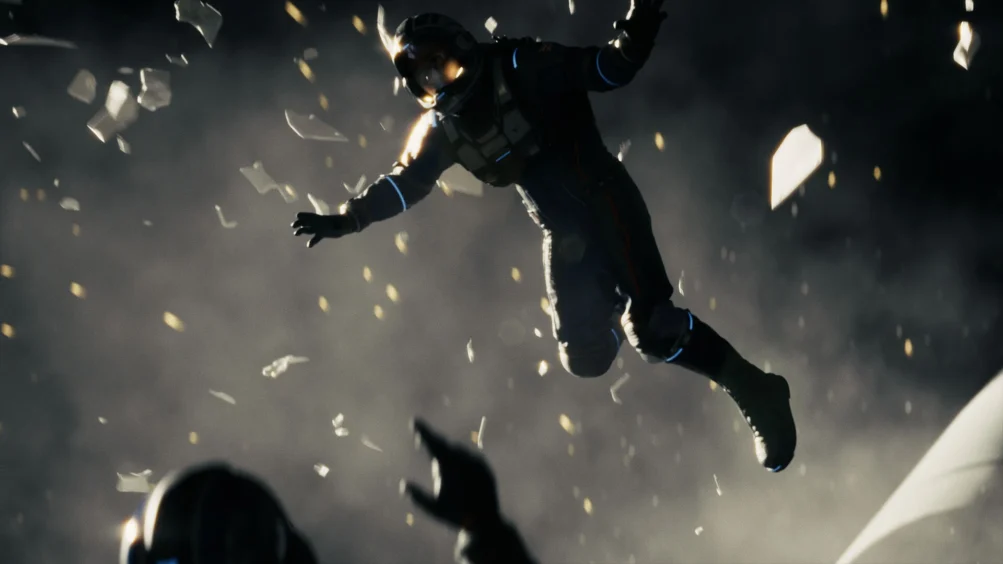
As I mentioned the Motion capture on the character faces is a highlight of this game allowing each character to be fully expressive and show that level of emotion that they are feeling in each scene. However it’s not just the character models that stand out in this game. It’s the overall graphics that need high praise. The environments alone are one to talk about with dynamic lighting really bringing the ship to life and also creating high tension at the same time.
The game offers 3 graphics modes that can be previewed to help you pick the one that’s right for you. Quality mode targets 30fps giving you the best visual experience. Balanced offers 40fps with slightly lower (but not overly noticeable) resolution. This mode works best on 120hz TVs. Performance then offers 60fps but at the cost of a lower resolution with slightly softer textures. For me, playing on a 4k HDR 120hz TV, balanced mode offered the best experience.
However their were a few slight technical issues that I did pick up on throughout my playthrough. One of these being that while inside the Cassiopeia and near a window that showed the exterior of Tau Ceti F, the weather effects would at times look pixelated or often playing at a slightly lower resolution or frame rate.
There are a few moments during cutscenes where the soft focus can be distracting. The shallow depth of field and focus pulls are clearly used to achieve a cinematic look, however there’s noticeable edge blending around character models that leaves a thin transparent outline. I’ve seen similar artifacts in other games, so it doesn’t feel unique to this title, but it can still (at times) pull attention away from a scene.
A Love Letter to Science Fiction Horror
So why should you play Directive 8020?
You should play it as it’s a love letter to science fiction horror.
The amount of influences I felt when playing this game made me respect it in a way a lover of science fiction will understand. And I want to list a few of my RAW thoughts below to express this.
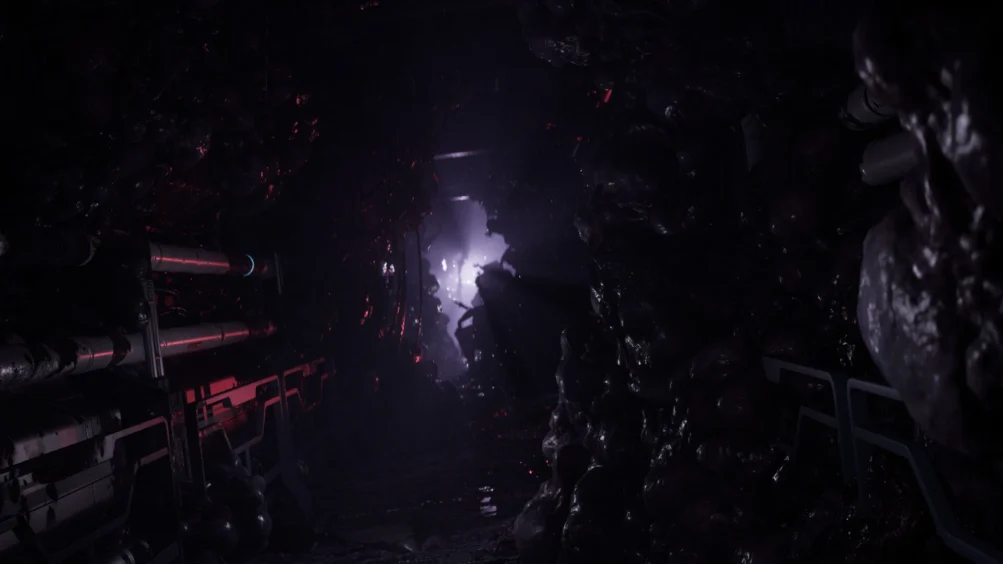
The ship design is beautiful and (in my opinion) borrows heavily from the USCSS Prometheus interior design and aesthetic, to bring a grounded science fiction environment that feels both futuristic and familiar to fans of Sci-Fi films. When this beautiful interior is suddenly taken over by the alien substance spreading throughout the decks it reminded me of the assimilated parts of the Enterprise E by the Borg in Star Trek First Contact which gave me a feeling of dread.
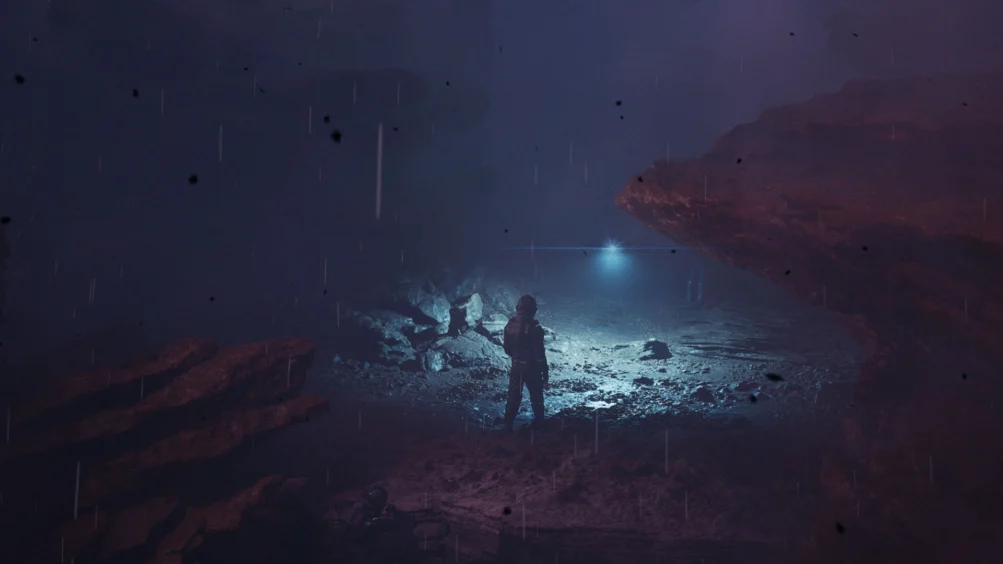
The landscape of Tau Ceti F with its weather effects and harsh environment is very reminiscent of LV426 (Acheron) from Alien and Aliens. A final observation on the topic of the Alien films is that Episode 4 pays a direct homage to Alien when Dallas moves through the air ducts of the Nostromo trying to trap the Xenomorph. This leads to a very tense gameplay sequence.
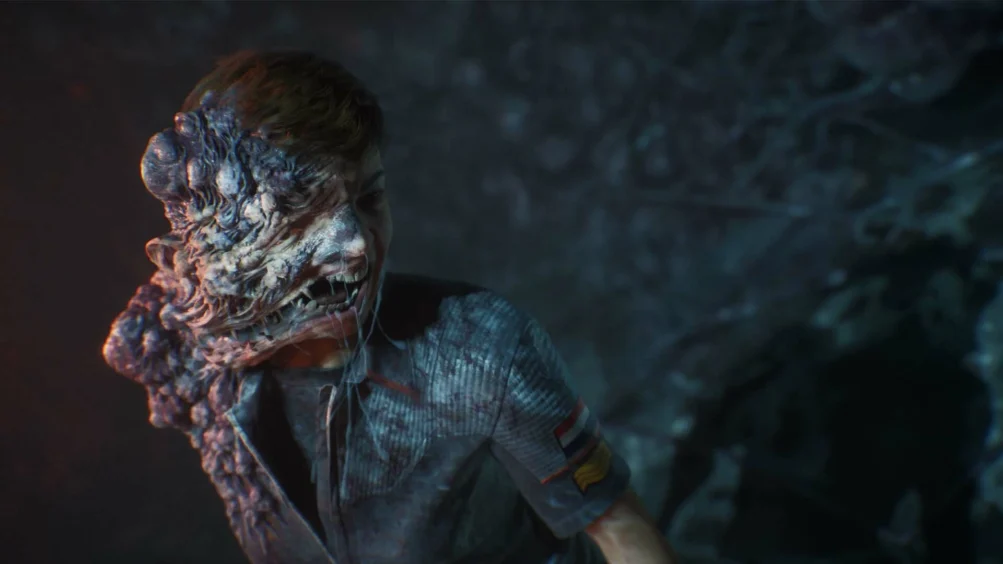
The alien it self bleads into the narrative choices because it copies and mimics the likeness of the crew. This adds a level of tension and paranoia throughout the final episodes of the game as you don’t know who to trust. However none of this could amount to when I saw the alien monster in it’s full form for the first time. I was in a tense state of disbelief to what I was seeing. My jaw was wide open followed by me saying “No, no, absolutely not. I’m getting the hell out of here.”
So yes, this game is very appealing for lovers of science fiction and survival horror.
Story Presentation & Pacing
The final point I wanted to talk about was the way the story is presented and its replayability.
Firstly the games pacing is what makes this stand out for its immersion and tension. Its not a slow burn, but it takes its time setting up the horror that unfolds in the later episodes perfectly.
Each episode (par episode one) starts off with a section that takes place prior to the launch or so many hours ahead of the current events.
This gives both backstory to the main characters of Stafford and Young while also giving you a glimpse of the chaos that ensues onboard the Cassiopeia before jumping back to the present time of the story. You also get to see which characters have been mimicked in the future events which adds to that paranoia factor in the present time.
All these ‘future events’ sections come to a head mid-way through episode 6 when the timeframe catches up to the present events with all hell breaking loose. You get to see which characters you’ve managed to save from previous episodes. Which then leads into one stand out scene where the tension is at an all-time high, where you will watch each crew member slowly make their way through a scanner which will indicate if they are human or not with a green light. I was literally on the edge of my seat at this point as I was starting to have doubts who was real.
This is then followed by a massive twist reveal in episode 7 which flips the story on its head.
Yet this is then superseded by an extremely satisfying final episode filled with tension, choices coming to a conclusion including character destinies for each character. It is also filled with the fear of loosing any crew member at any point in the final with multiple quick time events designed to trip you up. The stakes are high and the tension even higher.
Replayability
Now for the games replayability.
The game is separated into 8 episodes. Each episode offers around an hour of gameplay giving you a total runtime of 7-8 hours. However with the ability to rewind turning points and play through different choices and witness each of the 7 endings, this gives you even more play time.
But wait, theirs more.
In the game there are collectables you can find to unlock secrets. These span from watching the video diaries of sleep technician Simms, to finding letters, emails and pictures. These all give you additional insight into the already vast and interesting lore this game has to offer.
There are also O Death secrets that add to the replayability. I found my first one in the final episode which then gave me the ability to go back through previous episodes to find them all. One thing to mention is that as soon as I found my first O Death secret a mysterious man in a trench coat kept popping up in cutscenes just out of shot in a blink and you’ll miss them moment. This makes you want to find them all to find out who this mysterious person is.
Finally the end credits offers a nice send off to the crew showing interviews with each of them prior to the launch. Which really goes a long way in the character development and how you connect to each character. Also stick around until after the credits as there is a cutscene you won’t want to miss.
The game also offers couch co-op, which allows you to play along with friends taking turns to play different characters and tracking the character destinies to that player. However I was unable to test this.
Final Verdict
Overall I had a blast with Directive 8020. I kept on wanting to come back for more, having been fully immersed in its story and setting. I can’t wait to dive back in to unlock all the endings, see every turning point and to find out who the O Death person is.
If you love Science fiction or are a fan of survival horror, or simply love the games that Supermassive Games puts out, then Directive 8020 is definitely for you.
Directive 8020 gets a well deserved 10/10. And I hope they make it into a movie like they did with Until Dawn.
Directive 8020 Trailer
Directive 8020 is available now on PlayStation 5, Xbox Series S & X and PC.
This review was based off a PlayStation 5 playthrough.
Read more awesome reviews >>here<<.
The game was provided to us for the express purpose of reviewing.


You must be logged in to post a comment.