
Back when the first Mechanicus released, it surprised a lot of people.
Not because it was attached to the Warhammer 40,000 name — there have been plenty of strategy games set in Games Workshop’s universe over the years — but because it genuinely understood why the Adeptus Mechanicus are so fascinating in the first place.
The mechanical chanting. The absolute obsession with knowledge. The weird mixture of religion and machinery. Somehow Bulwark Studios managed to make a turn-based tactics game feel oppressive, atmospheric, and strangely hypnotic all at once.
Warhammer 40K Mechanicus II takes that foundation and goes considerably bigger with it.
This time there are larger battlefields, more unit variety, expanded tactical systems, and most importantly, a full Necron campaign alongside the Adeptus Mechanicus storyline. It is clearly a more ambitious game in almost every area.
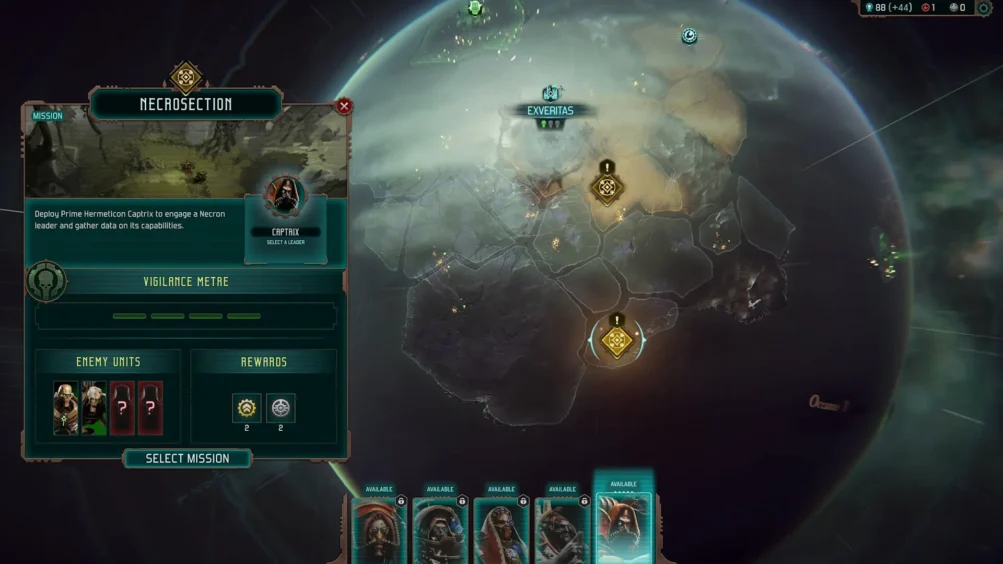
For the most part, that ambition pays off.
After spending a good amount of time with the PC version, this feels like the sequel fans were hoping for. It keeps the identity of the original intact while pushing the tactical side much further.
That said, it also inherits a few of the same problems.
Mission pacing can drag later on, some encounters start to blur together after extended sessions, and the writing occasionally loses some of the strange personality that made the original game so memorable.
Even with those issues though, Mechanicus II still ends up being one of the stronger Warhammer 40K strategy games in recent years.
The Dual Campaign Structure Changes Everything
The biggest improvement immediately becomes obvious once you start playing.
You are no longer just fighting the Necrons. You also get to command them.
And thankfully, this is not one of those situations where both factions basically play the same with different unit skins attached. The Adeptus Mechanicus and Necrons feel fundamentally different from one another.
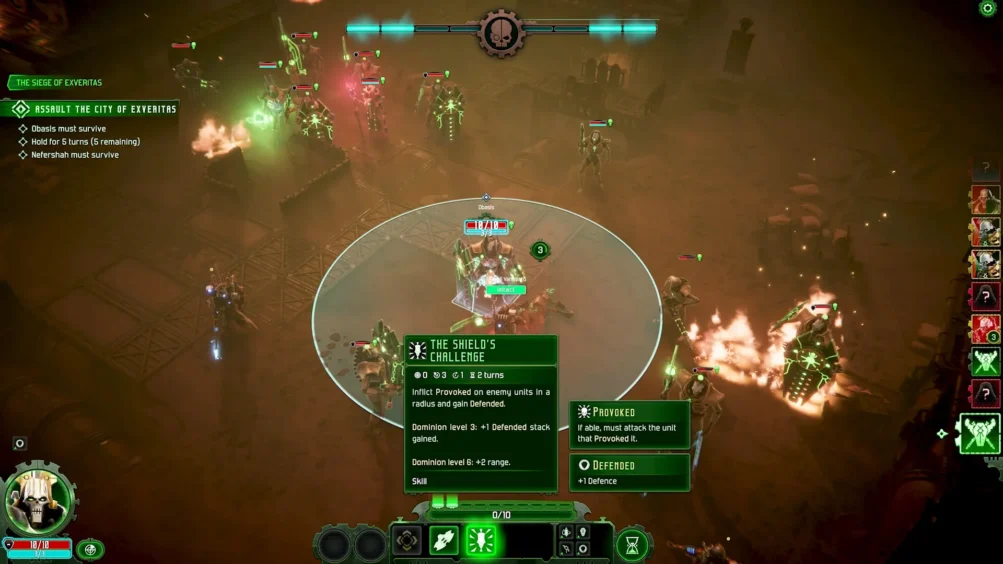
The Mechanicus side still leans heavily into calculated positioning, cognition management, support abilities, and carefully chaining attacks together. Battles feel methodical. You are constantly trying to maximise efficiency while protecting your more valuable units.
The Necrons are far more aggressive.
Reanimation systems allow destroyed units to return to combat, momentum builds quickly during encounters, and their abilities encourage constant pressure instead of defensive planning. Playing them almost feels like switching to an entirely different strategy game at times.
That variety helps the pacing massively because the campaigns never feel identical.
It also gives the story far more room to breathe. Seeing both sides of the conflict makes the universe feel bigger rather than simply presenting the Necrons as mysterious enemies hidden inside tombs again.
Some of the best moments come from the contrast between the two factions.
The Mechanicus are fanatics desperately chasing ancient knowledge they barely understand, while the Necrons see themselves as superior beings cleaning up the remains of lesser civilizations. Neither side comes across as remotely heroic, which is exactly how Warhammer should feel.
The atmosphere absolutely nails that grimdark tone too.
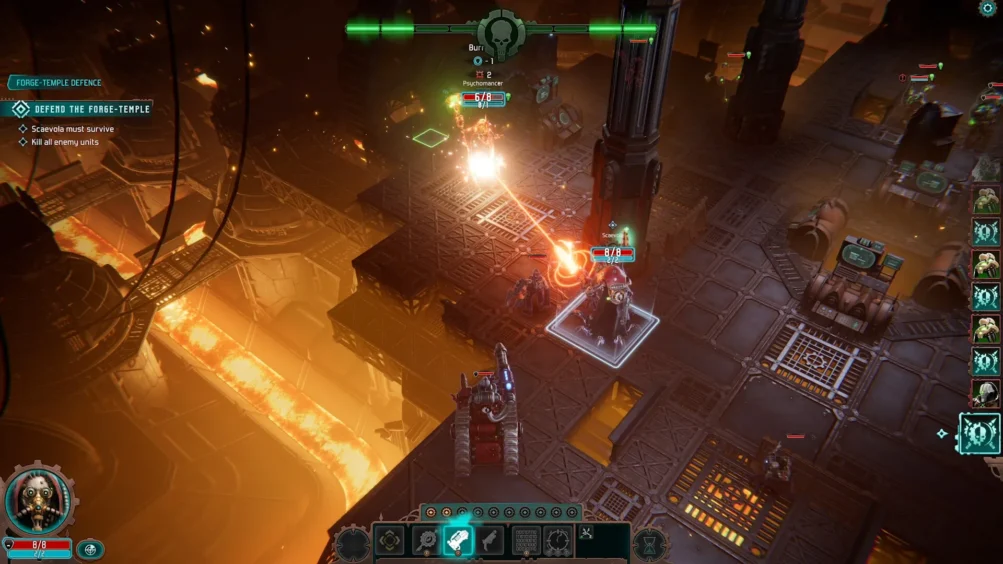
Every environment looks like it belongs inside a gigantic industrial nightmare. Massive forge worlds, ancient metallic cathedrals, endless tomb complexes glowing green beneath ruined planets — the art direction carries so much weight throughout the campaign.
Then there is the soundtrack.
Honestly, the audio work deserves almost as much credit as the gameplay itself. The industrial chanting and distorted mechanical music constantly create this feeling of tension sitting underneath every battle. There were several moments where I ended up just sitting on menus listening to the soundtrack longer than necessary.
It has that same oppressive quality the first game captured so well.
The Tactical Combat Is Much Deeper This Time
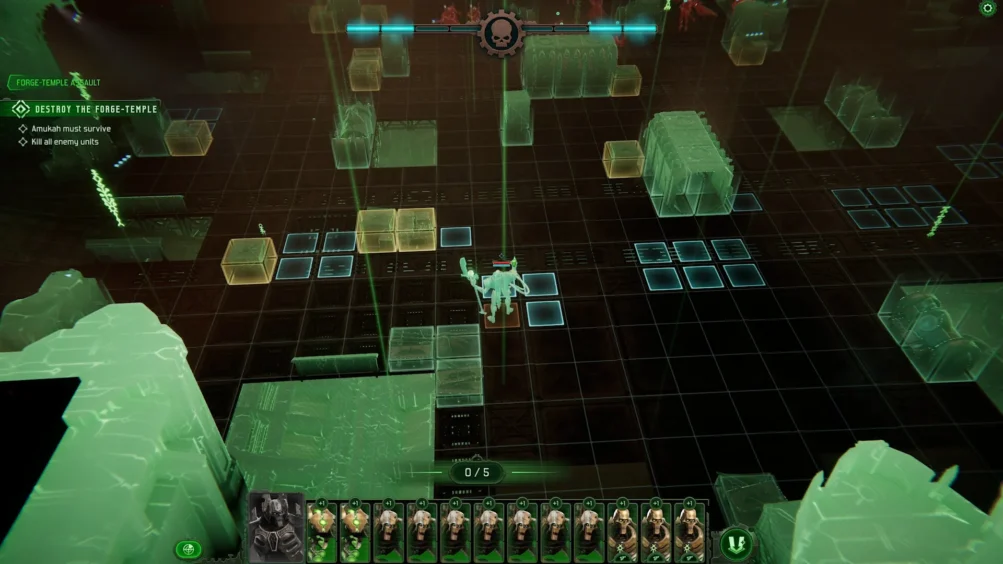
The original game already had solid tactical combat, but the sequel adds far more flexibility and variety.
Unit roles are much more specialised now.
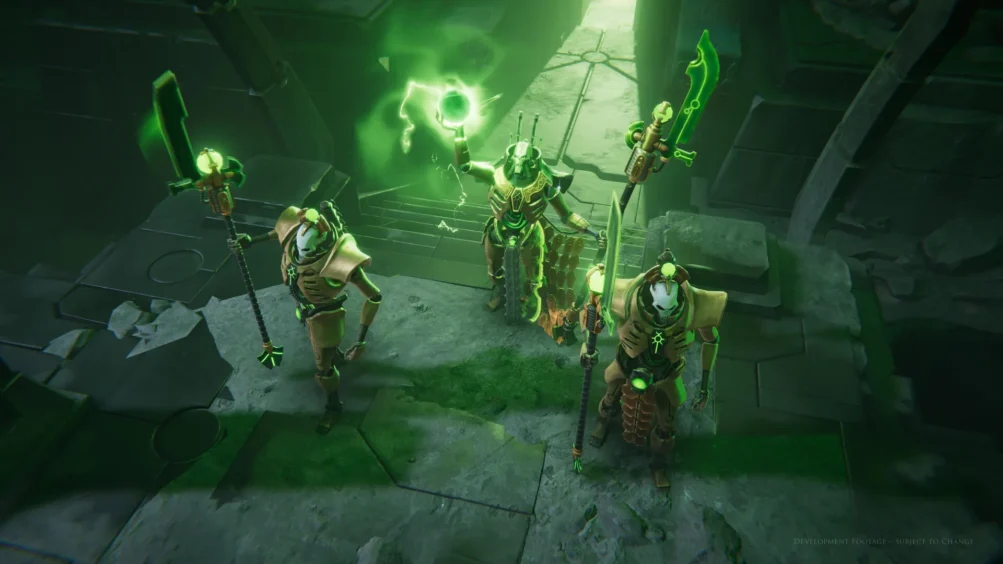
Some troops exist purely to manipulate positioning. Others generate resources for the rest of your army. Certain units are designed to absorb damage while support characters buff surrounding allies or weaken enemies from distance.
The game constantly rewards smart combinations instead of brute force.
There were multiple fights where victory came down to properly chaining abilities together rather than simply having stronger units. Positioning matters a lot more now too, especially during larger encounters where enemy reinforcements can quickly overwhelm poor setups.
Hero units feel more important as well.
Losing key commanders during missions can completely derail a fight, which creates a different kind of pressure compared to the original game. Your soldiers are expendable. Your leadership units absolutely are not.
It fits the setting perfectly.
The Necron campaign ended up being the bigger surprise for me though. I expected it to mostly mirror the Mechanicus side mechanically, but the faction genuinely changes how you approach combat. Once reanimation chains and momentum systems begin stacking together, battles become much more aggressive and chaotic.
Visually, combat has improved noticeably too.
Animations are cleaner, maps are larger, and battles feel far more dynamic overall. There is simply more happening on-screen this time around.
At its best, Mechanicus II captures that feeling of commanding impossibly ancient armies inside a collapsing galaxy where absolutely nobody involved could be considered sane.
Which, again, is peak Warhammer.
Some Old Problems Still Linger
As much as I enjoyed the game overall, there are definitely moments where the pacing starts working against it.
The campaign is bigger than the original, but not every mission fully justifies its length.
Some battles drag on too long because of repeated reinforcement waves or overly dense enemy placements. Early on this is less noticeable because you are still learning mechanics and unlocking new units, but later missions occasionally become exhausting rather than tense.
That repetition slowly creeps in after long sessions.
You start recognising encounter patterns, objective structures, and reinforcement timing. The tactical gameplay itself remains strong enough to carry things most of the time, but the overall mission flow could have used a bit more variety.
The writing is another area where opinions will probably vary.
There are still strong moments throughout the campaign, especially when exploring the ideological conflict between factions, but the sequel occasionally loses some of the strange charm the original had.
The first game balanced dark humour and religious absurdity incredibly well. This sequel feels more serious overall, which works narratively, but it means fewer memorable character moments.
Not bad by any means. Just different.
Performance On PC
Performance on PC is generally solid.
On higher-end hardware the game runs smoothly even during larger encounters, and loading times stay fairly reasonable throughout the campaign. There are occasional interface hiccups and some camera awkwardness during crowded battles, but nothing severe enough to ruin the experience.
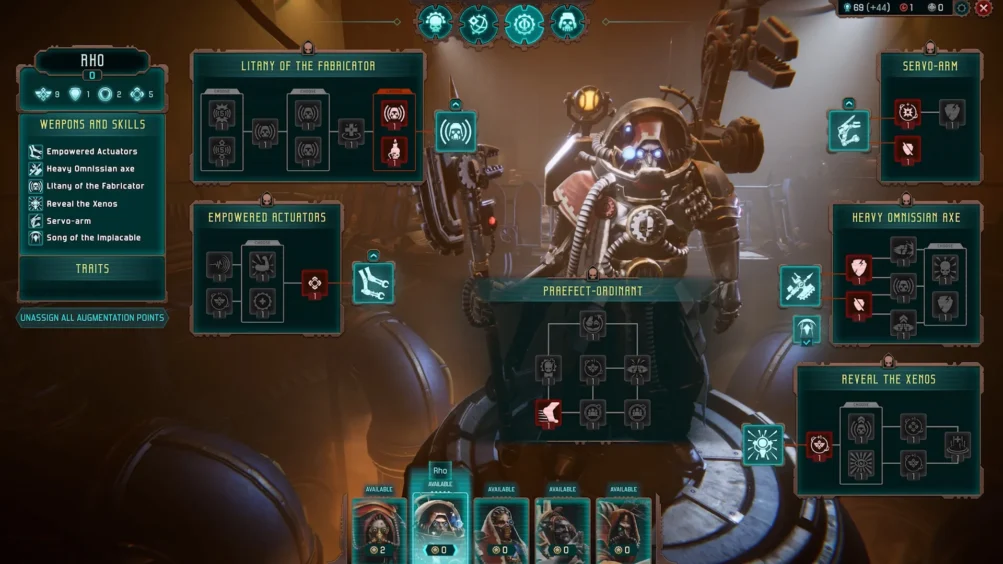
The interface itself is cleaner than the original overall, although some menus still become slightly cluttered once upgrade systems fully open up.
Visually though, this is easily one of the better-looking Warhammer strategy games released recently. The lighting, particle effects, and environmental detail do a lot of heavy lifting during combat encounters.
There is always something visually interesting happening on-screen.
A Strong Sequel That Understands What Fans Wanted
Warhammer 40K Mechanicus II succeeds because it does not try to completely reinvent the original formula.
Instead, it expands it in smart ways.
The dual campaigns add meaningful variety. Combat systems are deeper. The atmosphere remains excellent. The soundtrack is fantastic, and the tactical gameplay feels far more refined overall.
It is not perfect.
Mission pacing still becomes repetitive at times, and some of the original game’s eccentric personality feels toned down slightly in favour of a broader narrative approach.
But when everything clicks together — when massive mechanical armies are colliding while industrial chanting blasts through your speakers and half the battlefield is exploding in green Necron energy — this feels exactly like a modern Warhammer tactics game should.
For fans of turn-based strategy, there is a lot to like here.
And for Warhammer fans specifically, this is probably going to consume an unhealthy amount of your time.
Warhammer 40K Mechanicus II Trailer
Read more awesome reviews >>here<<.
The game was provided to us for the express purpose of reviewing.
Written by myself then edited and formed by my partner.
Reviewed on PC.



You must be logged in to post a comment.