

Hell Is Us is one of those games that doesn’t hold your hand, and honestly, that’s what makes it so refreshing. In an era where most games bombard you with quest markers, glowing trails, and endless tutorials, this one throws you into a broken land and simply tells you to pay attention. Listen to people. Follow their words. Explore. Figure it out. And you know what? It works. It reminded me of the early days of World of Warcraft when you had to actually read quest text, remember directions, and stumble your way through. No GPS, no “press here to win.” Just you, your instincts, and a dangerous world.

Old-School Exploration, Modern Tension
Exploration is the backbone of Hell Is Us. You’re given a compass, but it’s deliberately limited — it points you in a vague direction rather than hand-delivering you to your next objective. That subtle difference changes everything. I found myself stopping to talk to NPCs carefully, re-reading their words to catch every hint. If someone said, “follow the river until you see a collapsed bridge,” you’d better do exactly that. The joy comes when you finally stumble upon the place they meant, not because a glowing icon told you, but because you earned it.
There’s a genuine thrill in being lost, retracing your steps, and then suddenly breaking through to the right path. It makes the world feel alive rather than like a theme park attraction. Exploration here has weight, and the game rewards patience with secrets, lore, and challenges that you wouldn’t find otherwise.

Combat and Enemies
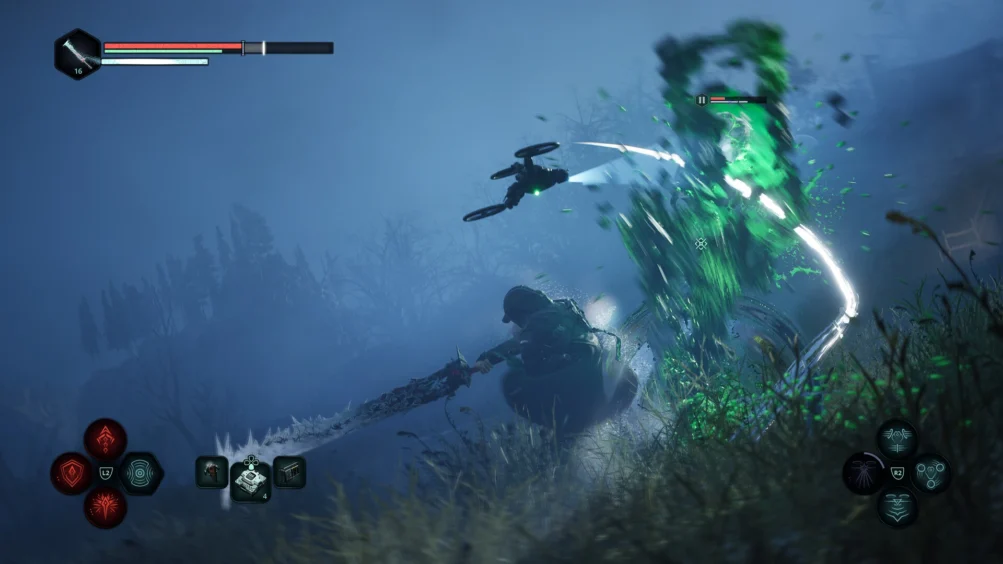
The enemies — both human and monstrous — aren’t pushovers. They demand timing and focus. Swing wildly and you’ll be punished. Learn their patterns, look for openings, and you’ll feel that sweet satisfaction when you finally land a clean strike. More than once, I found myself thinking, “Okay, this fight’s unfair,” only to realise later that I’d rushed in without using the tools the game gave me. When I slowed down, dodged properly, and paid attention, those same enemies went from frustrating to exhilarating.
The tension also extends to exploration. Some areas are gated not by invisible walls but by enemies that are simply too strong for you at first. It’s a throwback to when games respected your curiosity but also punished arrogance. Come back later, better equipped or smarter, and suddenly that impossible fight becomes a triumph.

The Drone — More Than a Gadget
The drone might look like a gimmick at first, but it quickly proves itself. Officially, it’s part of your gear, equipped with modules that give it unique abilities: distracting enemies, performing spinning or dive-bomb attacks, and even giving you mobility boosts like Surge Step. I leaned on the Distract ability constantly, luring enemies away from chokepoints to even the odds. It’s not just about making fights easier — it’s about creating openings you wouldn’t have otherwise.
Outside of combat, the drone doubles as a scanning tool and torch. That might sound simple, but it changes how you move through the world. In one fog-choked ruin, I remember sending it ahead, its light cutting through the haze just enough to steady my nerves before I pushed forward. Whether it’s picking out interactable objects or just helping you see, it’s a reminder that the world itself is part of the challenge, not just the enemies.
Mastering the drone feels like mastering the rhythm of Hell Is Us. At first, I ignored it. By the end, I couldn’t imagine exploring without it. It doesn’t trivialize the game — it simply gives you more options, and in a game that thrives on mystery and experimentation, that’s exactly what you want.
Puzzles and Progression
Puzzles in Hell Is Us are clever but never overwhelming. They lean on exploration as much as problem-solving. More often than not, I found the “solution” was just noticing something I’d missed earlier, or piecing together an environmental clue dropped in conversation. There’s no hand-holding, no flashing arrows. If a door is sealed or an area is blocked, chances are you’ll need to circle back later with a keener eye — or simply pay more attention to what the world is telling you.
Sound and Atmosphere
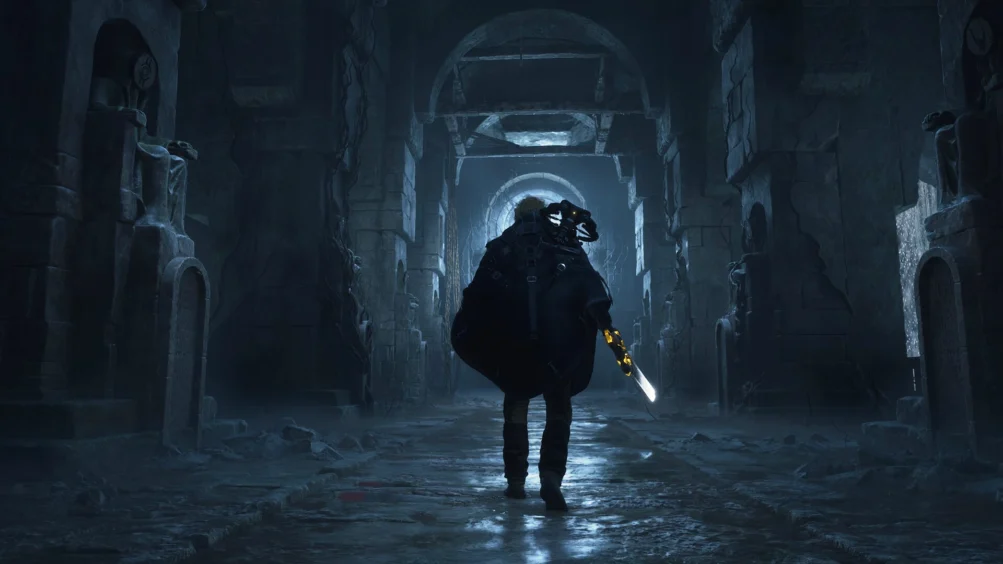
Sound design plays a huge role here. Quiet stretches are heavy with dread, broken only by the hum of your drone or the distant growl of something you’d rather not meet. The minimal score creeps in at the right moments, never overbearing, always enhancing the tension. Voice acting is subtle but effective, with NPCs delivering just enough to push you forward without spilling every secret.
Final Thoughts
Hell Is Us is not a game for everyone. If you want constant guidance, a minimap full of icons, and non-stop action, you’ll be frustrated. But if you miss the days of truly getting lost, of reading NPC dialogue carefully, of figuring things out by actually exploring — this game will feel like a homecoming. It captures that old-school spirit without feeling dated, layering in modern visuals, smart combat, and that surprisingly versatile drone to keep things fresh.
It’s a game that rewards patience, punishes carelessness, and leaves you with stories you’ll want to share — not because a cutscene told you to, but because you earned them in the field. That’s rare these days, and for me, it makes Hell Is Us something special.
The Score
Hell Is Us delivers a haunting, immersive adventure that rewards curiosity and patience. Exploration is deeply satisfying, combat is tense and fair, and the drone adds meaningful depth. It doesn’t get a 9 because early enemy variety is limited, some story threads feel underdeveloped, and the lack of guidance can frustrate less patient players. For those who love being challenged and discovering things on their own, this is a standout experience.
Hell is Us Gameplay Trailer
Read more awesome previews >>here<<.
Game code was provided to us for the express purpose of reviewing.
As always, I reviewed the game, and I had my partner help me with a written version.




You must be logged in to post a comment.